Turning Trash into Treasure: Gandhinagar's Vermicompost Innovation
Synopsis
Discover how Gandhinagar Municipal Corporation is revolutionizing waste management by transforming urban refuse into valuable organic fertilizer at its modern vermicompost plant.
Key Takeaways
The Gandhinagar Municipal Corporation is transforming urban waste into organic fertilizer.
This initiative supports sustainable waste management under the Swachh Bharat Mission.
High-quality organic fertilizer is produced with the help of earthworms.
The project aims to reduce landfill waste and promote zero-waste practices.
Local farmers benefit from access to premium organic manure.
Gandhinagar, March 16 (NationPress) The Gandhinagar Municipal Corporation is innovatively converting urban waste into precious organic fertilizer through its state-of-the-art vermicompost facility.
This initiative represents a significant advancement in sustainable waste management practices.
The project is part of the Swachh Bharat Mission, aiming to foster a “Green Gandhinagar” under the leadership of Chief Minister Bhupendra Patel.
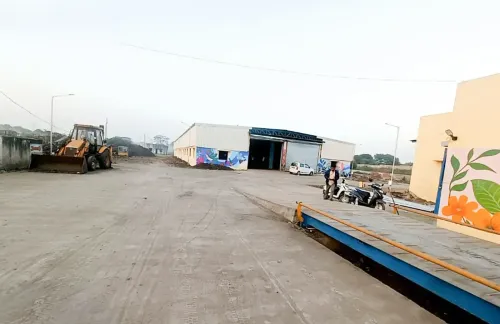
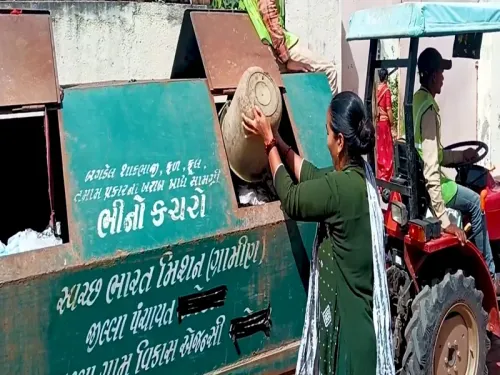
The municipal body has established a cutting-edge vermicompost plant that processes wet waste collected from local homes, hotels, and vegetable markets across Gandhinagar to create high-quality organic fertilizer.
According to Bhima Bhai Kharadi, the plant's supervisor, kitchen, garden, and vegetable refuse are collected and stacked together.
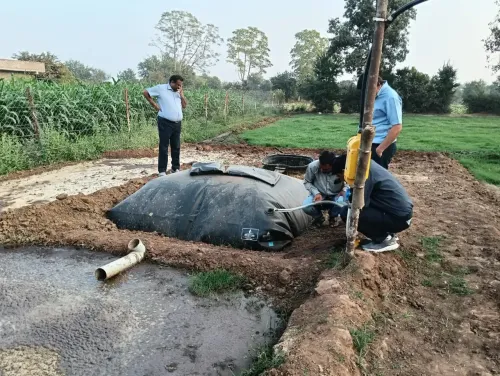
This waste is regularly watered and allowed to decompose over a span of 15 to 25 days. After initial decomposition, the material is further processed, and earthworms are introduced. In just 15 days, the organic fertilizer becomes ready for application.
The Gandhinagar Municipal Corporation collects approximately 100 metric tonnes of waste daily, with a significant portion being treated at the vermicompost facility. This initiative brings the city closer to achieving a zero-waste model while alleviating the burden on landfills.
The organic fertilizer produced here is utilized in city parks, green zones, gardens, and nurseries. It is also distributed to farmers in neighboring areas, supporting the government’s promotion of natural farming practices.
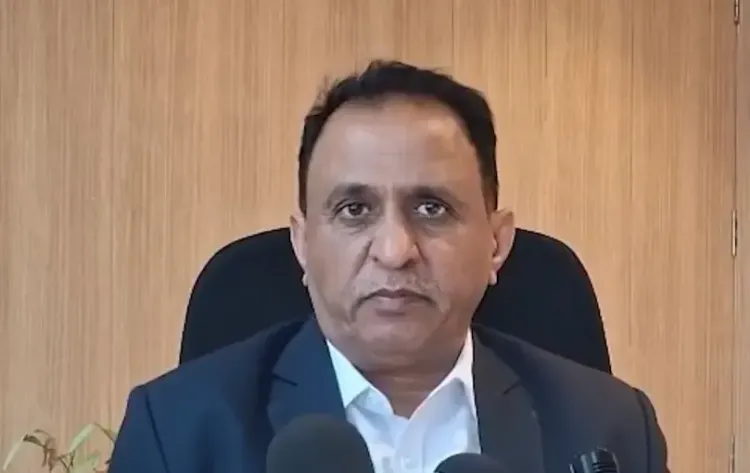
Municipal Commissioner J. N. Vaghela mentioned that the vermicompost plant has an annual processing capacity exceeding 2,000 tonnes, yielding high-quality worm-based organic fertilizer.
He noted that farmers from Gandhinagar and surrounding regions, including areas in North Gujarat like Bhiloda, frequently purchase this compost for their agricultural endeavors.
The corporation is also looking to expand its operations and is planning to brand the organic fertilizer produced at the facility.
According to officials, this move will enhance the municipality's revenue while providing farmers and residents with access to premium organic manure.
This project is emerging as a prime example of environmental conservation and effective waste management in Gujarat, showcasing how urban waste can be transformed into a valuable asset.
Point of View
Gandhinagar's vermicompost initiative demonstrates a proactive approach to environmental sustainability and effective waste management. The project not only addresses waste disposal challenges but also promotes organic farming, reflecting a commitment to ecological responsibility—a model for cities nationwide.
NationPress
11 Oct 2026
Frequently Asked Questions
What is the purpose of the vermicompost plant in Gandhinagar?
The vermicompost plant aims to convert urban waste into high-quality organic fertilizer to promote sustainable waste management and support local agriculture.
How does the vermicomposting process work?
Waste materials are collected, decomposed, and then processed with earthworms to produce organic fertilizer within a few weeks.
How much waste does the Gandhinagar Municipal Corporation process daily?
The corporation processes approximately 100 metric tonnes of waste from the city every day.
Who benefits from the organic fertilizer produced?
The organic fertilizer is used in city parks and gardens and is also supplied to local farmers, enhancing agricultural practices.
What are the future plans for the vermicompost plant?
The corporation plans to expand its operations and brand the organic fertilizer to increase revenue and accessibility for farmers.