Gen Bakshi: Pak tried to spark communal riots via Pahalgam, Kulgam attacks
Synopsis
Retd. Maj Gen G.D. Bakshi claims the Pahalgam and Kulgam attacks were not random — they were a calculated ISI operation, personally sanctioned by Field Marshal Asim Munir, to trigger communal riots in India by directing militants to screen victims by religion. That the plan failed, Bakshi argues, is a testament to Indian public awareness. His warning: Operation Sindoor was 'just a trailer.'
Key Takeaways
Bakshi alleged that Pakistan's ISI , sanctioned by Field Marshal Asim Munir , ordered militants to select victims by religion in Pahalgam and Kulgam to incite communal riots in India.
The strategy also aimed to cripple Jammu and Kashmir 's tourism economy, on which a large number of livelihoods depend.
Bakshi credited the Indian public and Kashmiris with seeing through the plan and maintaining peace.
He warned that Operation Sindoor was 'just a trailer' and any renewed terror activity would invite a stronger Indian military response.
Bakshi rejected third-party mediation on the Indus Waters Treaty , insisting renegotiation must be direct and bilateral.
He criticised domestic politicians including Farooq Abdullah and Mehbooba Mufti for advocating dialogue with Pakistan amid ongoing terror attacks.
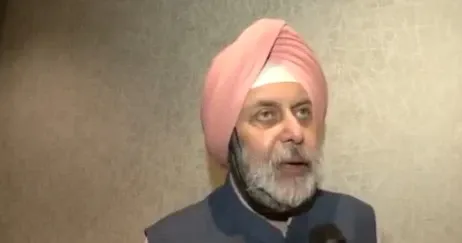
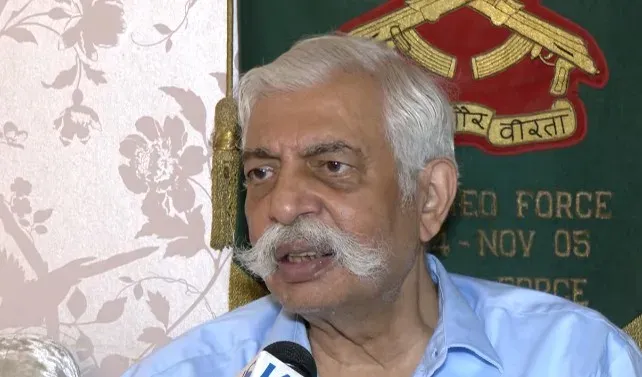
Major General (Retd.) G.D. Bakshi has alleged that Pakistan's intelligence apparatus orchestrated the recent terror strikes in Pahalgam and Kulgam with a deliberate aim: to trigger communal riots inside India by ordering militants to select victims on the basis of religion. Speaking in an exclusive interview, the former Army officer argued that the plan — which he attributed to Field Marshal Asim Munir — ultimately failed because ordinary Indians recognised and rejected the provocation.
The Alleged ISI Design
'The message they were trying to convey in Pahalgam... was as per a very ulterior design of the ISI sanctioned by Field Marshal Asim Munir. He ordered them to ask the people their religion before shooting them, so that riots start in India against the Kashmiris, against the Muslims. He aims to instigate riots and anger in India by selective killing based upon religion,' Maj Gen Bakshi said.
According to him, the secondary objective was to destabilise Jammu and Kashmir's economy by choking tourism — a sector on which, he noted, a large number of livelihoods in the region depend. 'So many livelihoods in J&K are dependent upon tourism. That is what they were trying to stop,' he said.
Why the Plan Failed, According to Bakshi
Bakshi credited the Indian public — and Kashmiris in particular — with seeing through the strategy. 'The Indian people showed tremendous intelligence in seeing through this design and the Kashmiri people understood that this was to try and get them murdered, to stop the tourism, economic gain that they get from tourism,' he said.
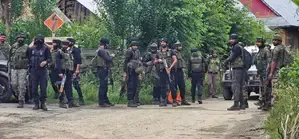
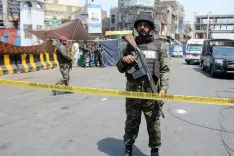
Notably, this assessment comes amid a broader debate about the security situation in the valley following a series of attacks over a two-to-three day period that Bakshi referenced in the interview.
Operation Sindoor and the Warning to Pakistan
The retired general warned that Operation Sindoor should not be read as the conclusion of India's military posture. He argued that any renewed cross-border terror activity would draw a significantly sharper response.
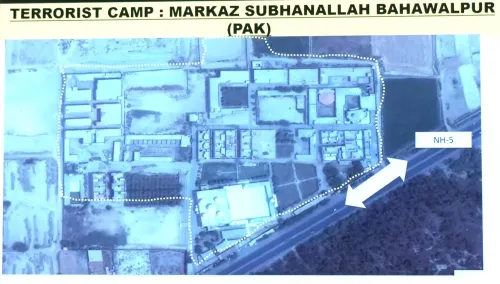
'As you saw in Operation Sindoor; that was just a trailer... If Pakistan has a death wish, it will provoke India, then it will be doomed... It is a country whose economy is on the verge of ruin, collapse,' Bakshi said. He added that India's approach would shift from defensive to offensive across the Line of Control and the International Border if provoked.
Indus Waters Treaty and Bilateral Talks
Bakshi dismissed any resumption of dialogue with Pakistan until cross-border terrorism ceases, echoing Prime Minister Narendra Modi's formulation that 'blood and water cannot flow together' — a reference to India's decision to suspend the Indus Waters Treaty (IWT).
He was sharply critical of the treaty's origins, arguing that it was signed by Pandit Jawaharlal Nehru in 1956 under the assumption of eventual peace with Pakistan — an assumption he said history has disproved. 'Pakistan attacked India in 1965, 1971, Kargil, and then for 40 years it has waged asymmetric warfare, created mass casualty terror strikes in India,' he said, questioning why India should honour what he called 'the most unequal treaty.'
Bakshi also ruled out any third-party mediation — including by the World Bank or the United States — on the IWT, insisting any renegotiation must be conducted directly between the two countries. He drew a pointed comparison to US water policy with Mexico, arguing that Washington applies a different standard when it is the upper-riparian state.
Criticism of Domestic Voices Calling for Talks
The former Army officer also took aim at Indian political figures he said were advocating dialogue with Pakistan, naming Omar Abdullah's father Farooq Abdullah and former Jammu and Kashmir Chief Minister Mehbooba Mufti among those he criticised. He reiterated that the entirety of Jammu and Kashmir, including Pakistan-occupied Kashmir (PoK) and Gilgit-Baltistan, legally acceded to India under Maharaja Hari Singh.
As cross-border tensions remain elevated, Bakshi's remarks reflect a hawkish strand of strategic opinion that is gaining visibility in Indian public discourse — and the coming weeks will test whether diplomatic or military signalling shapes the next chapter.
Point of View
If accurate, represent a chilling escalation in Pakistan's hybrid-war playbook — moving from mass-casualty attacks to religiously curated killings designed to fracture Indian social cohesion from within. The fact that this strategy failed should not obscure how close to the edge it cut. What mainstream coverage underplays is the economic dimension: tourism in J&K has been painstakingly rebuilt over the past decade, and even a partial collapse would set back both livelihoods and the Centre's political narrative on normalcy. Bakshi's dismissal of IWT mediation and his bracketing of Farooq Abdullah and Mehbooba Mufti as apologists for Pakistan will draw pushback — but it signals the direction of hawkish opinion that is increasingly shaping India's public strategic discourse.
NationPress
18 Sept 2026
Frequently Asked Questions
What did Gen G.D. Bakshi allege about the Pahalgam and Kulgam terror attacks?
Retd. Maj Gen G.D. Bakshi alleged that the attacks were part of a deliberate ISI strategy, sanctioned by Pakistan's Field Marshal Asim Munir, to direct militants to ask victims their religion before shooting them — with the goal of triggering communal riots in India against Kashmiris and Muslims. He said the plan failed because Indians recognised and rejected the provocation.
What is Operation Sindoor and why did Bakshi reference it?
Operation Sindoor was India's military response to cross-border terror activity. Bakshi described it as 'just a trailer,' warning that any renewed Pakistani-backed terrorism would invite a far stronger Indian military response, including action across the Line of Control and the International Border.
Why has India suspended the Indus Waters Treaty?
India suspended the Indus Waters Treaty (IWT) following the April 22 terror attack, with Prime Minister Modi stating that 'blood and water cannot flow together.' Bakshi argued the treaty was originally signed in 1956 on the assumption of peaceful relations with Pakistan — a premise he said decades of Pakistani-backed attacks have nullified.
Who does Bakshi blame for advocating talks with Pakistan?
Bakshi criticised Farooq Abdullah and former Jammu and Kashmir Chief Minister Mehbooba Mufti by name for calling for dialogue with Pakistan amid ongoing terror attacks. He argued that continued cross-border terrorism makes any talks untenable.
What is Bakshi's position on third-party mediation over the Indus Waters Treaty?
Bakshi firmly rejected any role for the World Bank or the United States as mediators on the Indus Waters Treaty, insisting that any renegotiation must be conducted directly between India and Pakistan. He argued that no third country has the standing to intervene in what he called a strictly bilateral matter.