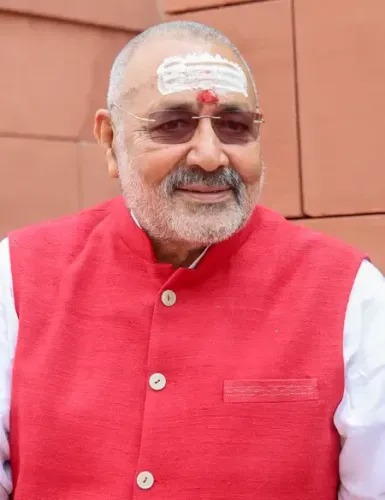
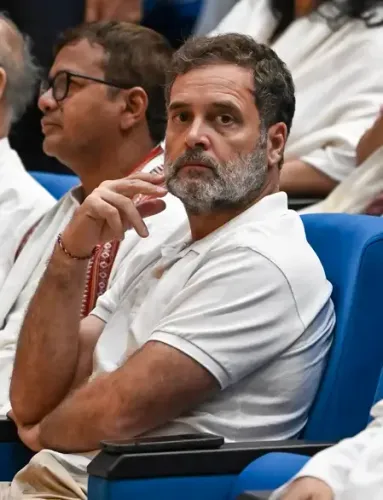
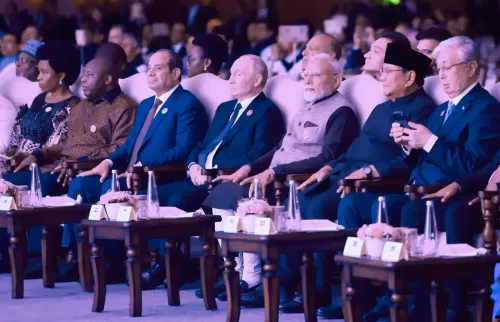
Dilip Ghosh hits back at Congress over BRICS vegetarian dinner row
Synopsis
A vegetarian dinner at the BRICS Summit has triggered a full-blown political row. BJP leader Dilip Ghosh turned the Congress critique — led by Rahul Gandhi's viral X post about India's non-vegetarian majority — into a broader charge against the opposition's priorities, while also defending the incoming UPI merchant fee and claiming a 33% revenue jump in West Bengal from curbing illegal mining.
Key Takeaways
West Bengal Minister Dilip Ghosh rebuked Congress on 16 September 2026 over criticism of the all-vegetarian BRICS Summit dinner menu.
The dinner featured more than 10 vegetarian dishes , including Khumb Galauti, millet pulao, and Shahdoot Firni.
Rahul Gandhi posted on X that 80 per cent of Indians are non-vegetarian , criticising the menu choice; P.
Chidambaram also raised objections.
Ghosh said foreign delegates who attended had no complaints and 'went home praising the Indian food.' Ghosh also backed the proposed 0.4 per cent UPI MDR on merchant transactions above ₹2,000 , capped at ₹300 , effective 15 October .
He claimed a crackdown on illegal resource extraction in West Bengal had boosted state revenue by 33 per cent .
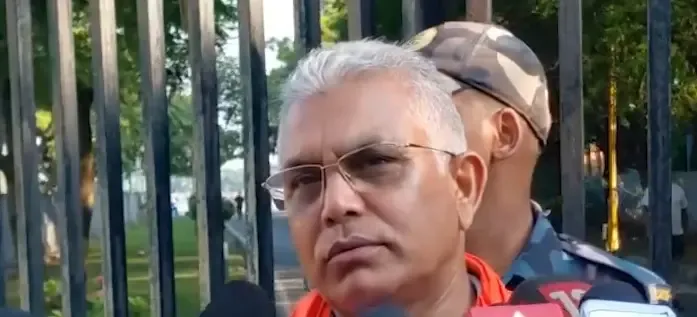
West Bengal Minister Dilip Ghosh on Wednesday, 16 September 2026, fired back at the Congress over its criticism of the all-vegetarian menu served at the high-profile BRICS Summit dinner, asserting that foreign delegates who actually dined had no grievances and returned praising Indian cuisine. The remarks sharpened a political flashpoint that had drawn in senior figures from both sides of the aisle.
The Dinner That Sparked the Dispute
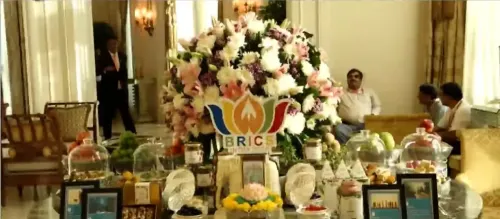
The BRICS Summit dinner featured more than 10 dishes, with starters including Khumb Galauti and desserts such as Shahdoot Firni and fruit cream with jalebi. The main course was entirely vegetarian, comprising paneer, mushrooms, millet pulao, and beetroot raita — all prepared with contemporary variations. Congress leaders seized on the menu, accusing the Bharatiya Janata Party (BJP)-led government of using a state occasion to advance a vegetarian agenda.
What Rahul Gandhi Said
Congress leader Rahul Gandhi, in a post on social media platform X, wrote: 'For the record: 80 per cent of Indians are non-vegetarian. Indian non-vegetarian food is delicious. As are my sister's chole bhature.' Senior Congress leader P. Chidambaram also reportedly raised objections to the menu choice.
Ghosh's Sharp Rebuttal
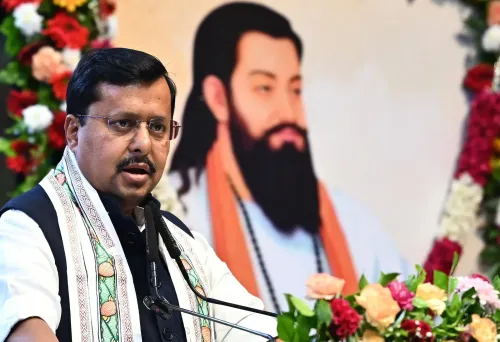
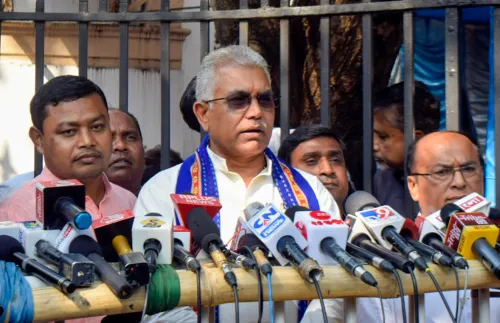
Responding to the criticism, Ghosh told reporters: 'Congress has given nothing to the people; it has only looted them. If the public feels it is too much, they will protest. They jump into everything, even expressing concern over what foreign guests will be served at BRICS, asking why beef or chicken wasn't served. Everyone from Rahul Gandhi to Chidambaram had an issue with it. But those who actually ate had no problem; they went home praising the Indian food. So, their mindset needs a change.' He urged Congress leaders to focus on issues of public concern rather than the food preferences of foreign delegates.
UPI Charges: Ghosh Defends New Framework
The minister also weighed in on the proposed 0.4 per cent charge on certain UPI merchant transactions exceeding ₹2,000, arguing that a nominal levy was necessary to sustain the digital payments infrastructure. 'Any company providing services charges a fee. The government's UPI service has provided great convenience, so a minimal fee should be charged to maintain system discipline and generate revenue,' he said. Under the new UPI Merchant Discount Rate (MDR) framework outlined by the National Payments Corporation of India (NPCI), the charge applies only to eligible merchant transactions above ₹2,000, is capped at ₹300 per transaction, and leaves person-to-person transfers untouched. The framework is set to come into effect from 15 October. The Finance Ministry has separately directed banks to ensure merchants do not pass the additional cost on to consumers.
West Bengal Revenue Claims
Ghosh additionally claimed that a crackdown on illegal extraction of natural resources — including coal, sand, and timber — in West Bengal had driven a 33 per cent increase in state government revenue. 'Natural resources like coal, sand, and timber in Bengal were being looted for years without yielding revenue for the state. Curbing this theft has led to a 33 per cent increase in government revenue, and this positive trend will continue,' he said. The claim could not be independently verified at the time of publication.
As the debate over the BRICS dinner menu broadens into a wider political exchange, attention will now shift to whether the ruling coalition uses the episode to further consolidate its cultural messaging ahead of upcoming state-level electoral cycles.
Frequently Asked Questions
Why did Congress criticise the BRICS Summit dinner menu?
Congress criticised the all-vegetarian menu served at the BRICS Summit dinner, accusing the BJP-led government of using the state occasion to promote vegetarianism. Congress leader Rahul Gandhi posted on X that 80 per cent of Indians are non-vegetarian and that Indian non-vegetarian food is delicious, while senior leader P. Chidambaram also raised objections.
What dishes were served at the BRICS Summit dinner?
The dinner featured more than 10 entirely vegetarian dishes. Starters included Khumb Galauti, the main course had paneer, mushrooms, millet pulao, and beetroot raita, and the dessert section offered Shahdoot Firni and fruit cream with jalebi, all prepared with contemporary variations.
What did Dilip Ghosh say about the BRICS dinner controversy?
Ghosh dismissed the Congress criticism, saying that foreign delegates who attended the dinner had no complaints and praised Indian cuisine. He accused Congress of jumping into everything and said 'their mindset needs a change,' urging the party to focus on people's issues instead.
What is the new UPI merchant charge that Ghosh commented on?
The National Payments Corporation of India (NPCI) has introduced a 0.4 per cent Merchant Discount Rate (MDR) on eligible UPI merchant transactions above ₹2,000, capped at ₹300 per transaction. Person-to-person transfers are unaffected, and the framework comes into effect on 15 October. The Finance Ministry has directed banks not to pass the charge on to consumers.
What claim did Dilip Ghosh make about West Bengal's state revenue?
Ghosh claimed that a crackdown on illegal extraction of coal, sand, and timber in West Bengal had led to a 33 per cent increase in state government revenue. The claim has not been independently verified.