Rahul Gandhi's BRICS dinner post sparks BJP backlash; SP backs diversity stand
Synopsis
A social media post about an all-vegetarian BRICS dinner has ignited a cross-party row: BJP leaders accuse Rahul Gandhi of trivialising India's landmark Delhi Declaration — unanimously signed by China, Russia, and all BRICS members — while the SP stands by his point on India's dietary diversity. The spat captures how domestic identity politics now shadow every major diplomatic event India hosts.
Key Takeaways
Rahul Gandhi posted that 80% of Indians are non-vegetarian after an all-vegetarian meal was served at the BRICS Summit dinner in New Delhi .
Maharashtra CM Devendra Fadnavis accused Gandhi of being unable to appreciate India's diplomatic achievements at the summit.
Fadnavis highlighted the unanimous adoption of the Delhi Declaration , signed by all BRICS members including China and Russia , which directly condemned Pakistan and terrorism.
Madhya Pradesh Minister Vishwas Sarang said Gandhi should focus on summit issues rather than the food menu.
SP MP Awadhesh Prasad backed Gandhi's broader point, saying all food traditions in India's diverse nation deserve respect.
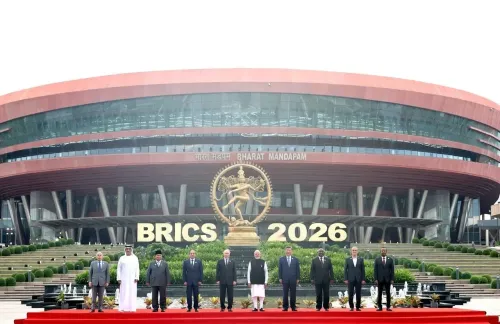
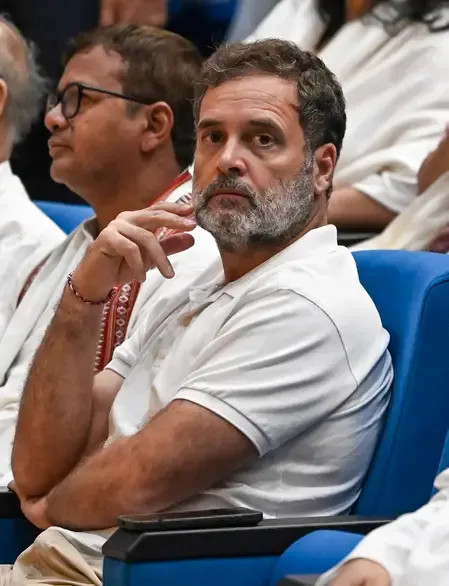
Congress leader and Lok Sabha Leader of Opposition Rahul Gandhi's social media posts on the all-vegetarian dinner menu at the BRICS Summit in New Delhi have triggered a sharp political debate, with Bharatiya Janata Party (BJP) leaders accusing him of undermining India's diplomatic achievements and the Samajwadi Party (SP) backing his broader point on food diversity.
Gandhi's Post and the Controversy
Following an all-vegetarian dinner served at the BRICS Summit in New Delhi, Gandhi took to his social media handles to highlight India's dietary diversity. 'For the record: 80% of Indians are non-vegetarian. Indian non-vegetarian food is delicious. As are my sister's chole bhature,' he wrote, accompanying the post with a picture of chole bhature on a dining table. The remark quickly drew fire from BJP leaders across states.
BJP's Response: Focus on Diplomatic Wins
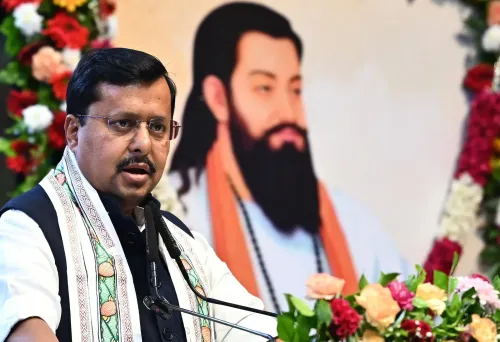
Maharashtra Chief Minister Devendra Fadnavis said Gandhi appeared incapable of appreciating the country's diplomatic successes. 'I believe that when someone is narrow-minded and feels hurt even by their own country's success, they make such statements,' Fadnavis claimed. He pointed to the unanimous adoption of the Delhi Declaration — signed by all BRICS member nations including China and Russia — as the summit's defining achievement. 'The Global South strongly welcomed the declaration that directly condemned Pakistan and terrorism. There cannot be a greater strategic or diplomatic victory than this,' he added.
Madhya Pradesh Minister Vishwas Sarang also criticised Gandhi, arguing that the Leader of the Opposition in the world's largest democracy should rise above partisan politics when commenting on an international event. 'He should talk about the issues discussed at the BRICS Summit, but he is talking about the food menu. I wonder who his advisers are and when he will understand...' Sarang said.
SP Backs Food Diversity Argument
SP MP Awadhesh Prasad offered a contrasting view, stressing the importance of respecting India's plural food traditions. 'All kinds of food should be respected. Our country is a large and diverse nation with different types of attire and different kinds of food. We should respect all kinds of food. Our traditions and beliefs should also be preserved,' Prasad said.
The Broader Political Context
This comes amid a wider pattern of opposition-government sparring over the optics and outcomes of high-profile international events hosted by India. Notably, the BRICS Summit's Delhi Declaration — with its explicit condemnation of terrorism — has been cited by the ruling coalition as a landmark foreign policy win, particularly given its unanimous endorsement by member nations sometimes at odds with India's positions. Critics argue, however, that Gandhi's post was less an attack on diplomacy and more a comment on cultural representation at state events. The exchange reflects how domestic identity politics increasingly intersect with the optics of global summits.
With the summit now concluded, political attention is likely to shift to the implementation of the Delhi Declaration's commitments — and whether the diplomatic momentum translates into tangible outcomes.
Point of View
Multi-dietary nation do carry representational weight, and dismissing that conversation as narrow-mindedness sidesteps a legitimate question. The SP's quieter, pluralism-framing response arguably handles the politics more deftly than the BJP's combative rebuttal.
NationPress
14 Sept 2026
Frequently Asked Questions
What did Rahul Gandhi post about the BRICS dinner?
Rahul Gandhi posted on his social media handles that 80% of Indians are non-vegetarian, after an all-vegetarian meal was served at the BRICS Summit dinner in New Delhi. He accompanied the post with a picture of chole bhature and mentioned Indian non-vegetarian food is delicious.
How did BJP leaders respond to Gandhi's BRICS menu post?
Maharashtra Chief Minister Devendra Fadnavis said Gandhi was unable to appreciate India's diplomatic achievements, calling him narrow-minded. Madhya Pradesh Minister Vishwas Sarang said Gandhi should focus on the substantive issues discussed at the summit rather than the food served at dinner.
What was the Delhi Declaration at the BRICS Summit?
The Delhi Declaration was a joint statement unanimously adopted by all BRICS member nations at the New Delhi summit, including China and Russia. It notably included a direct condemnation of Pakistan and terrorism, which BJP leaders described as a landmark strategic and diplomatic victory.
What was the SP's position on Gandhi's remarks?
SP MP Awadhesh Prasad supported the broader sentiment behind Gandhi's post, saying all kinds of food should be respected in India's large and diverse nation. He stressed that food traditions and cultural beliefs must be preserved alongside other forms of diversity.
Why does this political debate matter beyond the dinner menu?
The row reflects a broader pattern of domestic identity and cultural politics intersecting with the optics of India-hosted international events. It also highlights the tension between celebrating India's diplomatic wins and addressing questions of cultural representation at state events attended by a globally diverse nation.