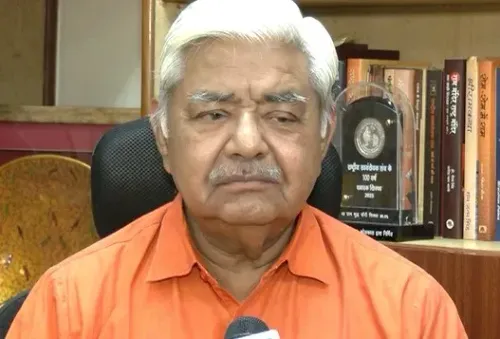
Ranveer Brar on BRICS 2026 all-veg menu: 'We must show a united front'

Synopsis
Celebrity chef Ranveer Brar has stepped into the debate over India's all-vegetarian menu at the BRICS 2026 summit, calling it a savvy diplomatic call — not an ideological one. With beef taboo in some nations and pork in others, Brar argues vegetarianism is the one cuisine that offends nobody. His MasterChef parallel adds a neat counter to critics who see the menu as a cultural imposition.
Key Takeaways
Ranveer Brar defended the exclusively vegetarian menu served at the 18th BRICS Summit in New Delhi in September 2026 .
Brar argued that vegetarian food avoids global controversy since different nations have conflicting restrictions on beef and pork .
Left-leaning critics had argued the menu should have been more diverse to reflect participating nations' food cultures.
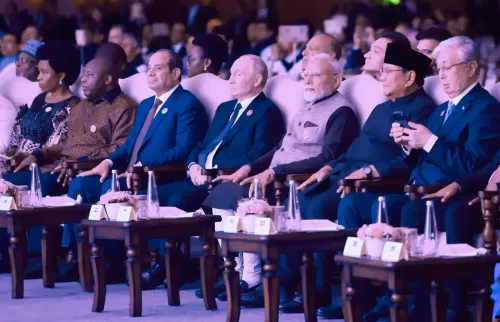
The 18th BRICS Summit was attended by all 11 member nations and 10 partner countries , along with UN Secretary-General António Guterres .
The summit adopted the New Delhi Declaration , a 140-point document on governance, trade, climate, and security.
Brar was speaking during promotions for his new streaming show 'Yess Chef' in Mumbai .
Celebrity chef and actor Ranveer Brar has weighed in on the controversy surrounding the exclusively vegetarian menu served at the 18th BRICS Summit, held in New Delhi on 12 and 13 September 2026, defending the choice as a pragmatic diplomatic decision that sidesteps global food sensitivities.
Brar's Defence of the Vegetarian Choice
Speaking during promotions of his new streaming show 'Yess Chef' in Andheri West, Mumbai, Brar explained the rationale: “We make that thing a mandate. Sometimes, you want to stay away from the global controversy. Some countries eat beef, some countries eat pork, so sometimes you want to stay away from it and you want to serve food that stays away from controversy. Vegetarian food stays away from controversy, internationally.”
His remarks come after left-leaning sections of society criticised the all-vegetarian spread, arguing that the menu could have been more diverse to reflect the varied culinary traditions of participating nations. Brar's rebuttal, however, reframes the decision as a unifying gesture rather than an ideological one.
The MasterChef Parallel
Brar drew a parallel with his own professional experience to challenge the notion that a vegetarian menu signals a permanent culinary shift. “In MasterChef there was a vegetarian season last year. People were like, 'MasterChef has turned vegetarian'. But, that was not the case. It was only that we wanted to highlight the vegetarian food of our country,” he said.
He added: “The world is talking about vegetarianism, veganism, so this time, we celebrated our vegetarianism and we should see it that way. We have to put a united front in front of the whole world.” The comments reflect a broader global trend — plant-based diets are increasingly foregrounded at major international events as a nod to sustainability and inclusivity.
About the 18th BRICS Summit
The 18th BRICS Summit was hosted in New Delhi under the theme 'Building for Resilience, Innovation, Cooperation and Sustainability'. All 11 BRICS member nations were represented — Brazil, Russia, India, China, South Africa, Egypt, Ethiopia, Iran, UAE, Indonesia and Saudi Arabia — along with representatives from 10 partner countries including Malaysia, Vietnam, Thailand, the Philippines, Nigeria, Uganda, Cuba, Belarus, Kazakhstan and Uzbekistan.
UN Secretary-General António Guterres and heads of institutions including the World Health Organization (WHO), the World Trade Organization (WTO), the Asian Infrastructure Investment Bank (AIIB) and the New Development Bank also attended. The summit concluded with the adoption of the New Delhi Declaration, a 140-point document covering global governance, peace and security, trade, finance, technology, health and climate.
Why the Menu Debate Matters
The controversy over India's food choices at a summit of this scale is not purely culinary — it touches on soft power, national identity and cultural diplomacy. Notably, India's global profile as a vegetarian-friendly nation is both an asset and a flashpoint, particularly when hosting delegations from nations where meat-heavy cuisines are central to national identity. Brar's framing — that vegetarianism is a neutral, controversy-free default for multicultural gatherings — echoes arguments that have surfaced at previous multilateral events hosted by India.
As the BRICS bloc continues to expand its membership and influence, how India projects its culture on the world stage — including through food — is likely to remain a recurring conversation.
Point of View
Several of which have strong meat-eating cultures, receiving a menu that reflects the host's dominant dietary tradition is not ideologically neutral — it is a soft-power choice. Framing vegetarianism as the universally 'safe' option also risks flattening the food identities of nations like Brazil, Russia and Ethiopia. The more interesting question mainstream coverage has missed is whether India's food diplomacy was deliberate messaging — 'this is who we are' — or a logistical default. Brar's MasterChef analogy is charming, but a state banquet and a television cooking show serve very different audiences.
NationPress
29 Sept 2026
Frequently Asked Questions
Why was an all-vegetarian menu served at the BRICS 2026 summit?
The all-vegetarian menu at the 18th BRICS Summit in New Delhi was reportedly a deliberate diplomatic choice to avoid food-related controversies, given that different participating nations have varying cultural and religious restrictions around meats such as beef and pork. Celebrity chef Ranveer Brar publicly defended this rationale.
Who is Ranveer Brar and why is he commenting on the BRICS menu?
Ranveer Brar is a well-known Indian celebrity chef and actor, recognised for his appearances on MasterChef India. He commented on the BRICS vegetarian menu controversy during promotions of his new streaming show 'Yess Chef' in Mumbai.
What was the 18th BRICS Summit and what did it achieve?
The 18th BRICS Summit was held in New Delhi on 12 and 13 September 2026 under the theme 'Building for Resilience, Innovation, Cooperation and Sustainability.' It brought together all 11 BRICS member nations and 10 partner countries, and concluded with the adoption of the New Delhi Declaration, a 140-point document covering global governance, trade, climate, and security.
Who criticised the vegetarian menu at BRICS 2026?
Left-leaning sections of society criticised the all-vegetarian menu, arguing it lacked diversity and did not adequately reflect the varied food cultures of the many nations represented at the summit.
Which countries participated in the 18th BRICS Summit?
All 11 BRICS member nations participated — Brazil, Russia, India, China, South Africa, Egypt, Ethiopia, Iran, UAE, Indonesia and Saudi Arabia — along with 10 partner countries including Malaysia, Vietnam, Thailand, the Philippines, Nigeria, Uganda, Cuba, Belarus, Kazakhstan and Uzbekistan.