GreenLine Mobility expands LNG truck fleet with Tata Steel at Meramandali
Synopsis
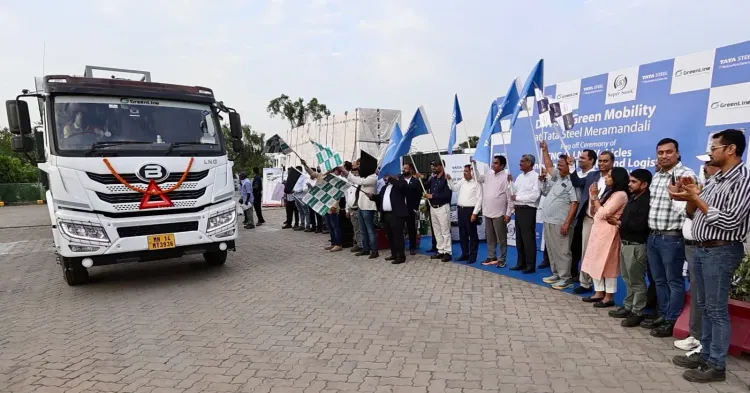
GreenLine Mobility and Tata Steel have taken their decarbonisation partnership to the plant level, flagging off LNG trucks at Meramandali in Odisha. With 90 million km already clocked and a target of 10,000 trucks and 1 million tonnes in annual emission cuts, this is one of the most concrete industrial clean-freight plays in India right now.
Key Takeaways
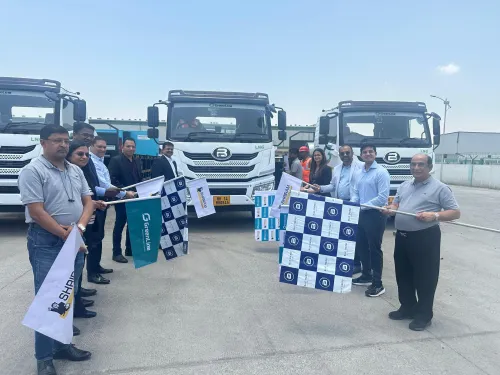
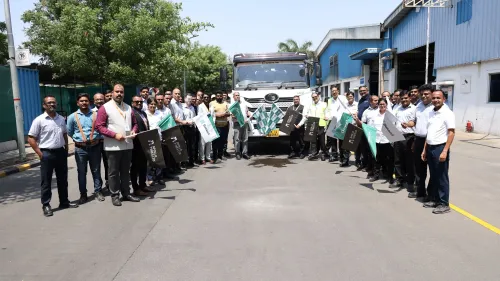
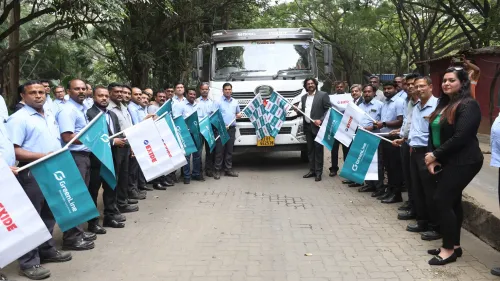
GreenLine Mobility Solutions flagged off LNG-powered trucks at Tata Steel's Meramandali facility in Odisha on 22 May .
GreenLine's fleet of over 1,000 LNG and EV trucks has covered more than 90 million kilometres , reducing over 24,000 tonnes of CO2 emissions.
LNG trucks offer up to 1,200 km range on a single fill ( 2,400 km with dual tanks) and cut CO2 by up to 40% versus diesel.
GreenLine plans to scale to 10,000 trucks and 100 LNG refuelling stations , targeting 1 million tonnes of annual emission reductions.
The Essar-backed company serves steel, cement, mining, FMCG, and chemicals sectors across major freight corridors.
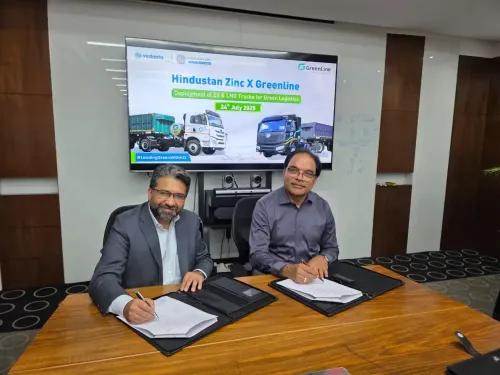
GreenLine Mobility Solutions Ltd., an Essar venture, deepened its partnership with Tata Steel on 22 May with the flag-off of LNG-powered trucks at Tata Steel's Meramandali facility in Odisha. The deployment marks a fresh milestone in the two companies' shared effort to decarbonise long-haul road freight across multiple locations in India.
What Was Deployed and Where
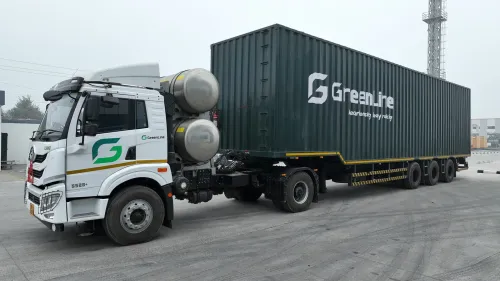
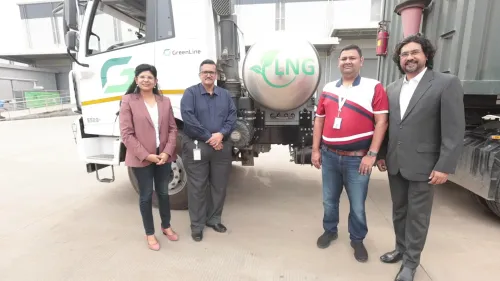
The flag-off at Meramandali adds to an already active collaboration between the two organisations across several operational corridors. GreenLine's LNG-powered trucks offer a driving range of up to 1,200 km on a single fill, extendable to 2,400 km with dual tanks — making them viable for the kind of long-haul routes that steel supply chains demand.
Compared to conventional diesel trucks, LNG vehicles reduce carbon dioxide emissions by up to 40%, while also cutting particulate matter, SOx, NOx, and CO emissions significantly.
GreenLine's Fleet and Emissions Record
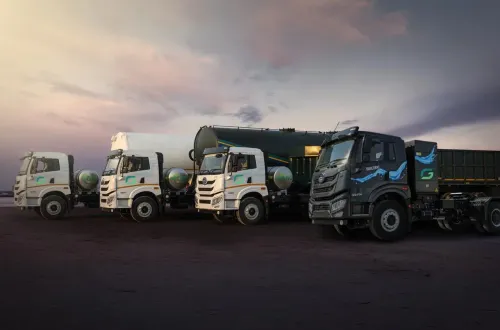
GreenLine currently operates over 1,000 LNG- and EV-powered trucks across major freight corridors, serving sectors including steel, cement, mining, FMCG, and chemicals. The fleet has collectively covered more than 90 million kilometres, contributing to the reduction of over 24,000 tonnes of carbon dioxide emissions to date.
The company serves some of India's most carbon-intensive industries, positioning itself at the intersection of industrial logistics and the country's broader net-zero ambitions.
Long-Term Expansion Plans
As part of its clean freight roadmap, GreenLine plans to scale its fleet to over 10,000 LNG and EV trucks, backed by a nationwide network of 100 LNG refuelling stations, EV charging hubs, and battery-swapping facilities. The company targets an annual reduction of 1 million tonnes of carbon emissions once this infrastructure is fully operational.
This comes amid growing policy and industry pressure on heavy logistics — one of India's harder-to-abate emission sectors — to shift away from diesel dependence.
What the Companies Said
Madhur Taneja, CEO of GreenLine Mobility Solutions Ltd., said, 'We are pleased to further strengthen our partnership with Tata Steel through this deployment. With growing concerns around fuel dependence and energy security, LNG is increasingly emerging as a practical and scalable alternative for long-haul logistics in India. The transition towards greener logistics will accelerate meaningfully as more industries adopt cleaner transportation solutions at scale.'
Prabhat Kumar, Vice President — Supply Chain at Tata Steel, acknowledged the interdependence required for such transitions: 'All this alone is not possible. If Tata Steel decides that we want to green our vehicles and our logistics, it will not happen unless we have support and coordination from our partners, like GreenLine. I'd like to thank them for their contribution.'
Why This Matters for Indian Freight
India's road freight sector is among the largest contributors to transport emissions in the country, and heavy trucks running on diesel represent a significant share of that load. The GreenLine-Tata Steel model — where an anchor industrial client partners with a clean-fleet operator — is being watched as a potential template for other steel, cement, and mining majors. Notably, this is one of the few deployments at the plant level rather than just on inter-city corridors, signalling a deeper integration of clean logistics into core industrial operations.
As India edges toward its 2070 net-zero target, fleet electrification and LNG adoption in heavy freight will be critical levers — and partnerships like this one may define how quickly that transition scales.
Point of View
Not just on peripheral corridors. India's heavy freight sector has largely been a spectator in the energy transition — this partnership is one of the few instances where an anchor industrial client is actively pulling a clean-fleet operator deeper into its supply chain. The real test will be whether the economics hold without subsidy support as LNG infrastructure scales. If GreenLine's 10,000-truck and 100-station target is met on commercial terms alone, it could reshape how India's logistics sector approaches decarbonisation.
NationPress
26 Sept 2026
Frequently Asked Questions
What is the GreenLine Mobility and Tata Steel LNG fleet partnership?
GreenLine Mobility Solutions, an Essar venture, has partnered with Tata Steel to deploy LNG-powered trucks at Tata Steel's Meramandali facility in Odisha as part of a broader effort to decarbonise long-haul road logistics. The collaboration spans multiple operational locations across India.
How do LNG trucks compare to diesel trucks in emissions?
LNG-powered trucks reduce carbon dioxide emissions by up to 40% compared to conventional diesel trucks, while also significantly cutting particulate matter, SOx, NOx, and CO emissions. GreenLine's fleet has already contributed to a reduction of over 24,000 tonnes of CO2.
What is GreenLine Mobility's expansion plan?
GreenLine plans to deploy over 10,000 LNG and EV trucks supported by 100 LNG refuelling stations, EV charging hubs, and battery-swapping facilities across India. The company targets annual carbon emission reductions of 1 million tonnes once the full network is operational.
What driving range do GreenLine's LNG trucks offer?
GreenLine's LNG-powered trucks can cover up to 1,200 km on a single fill and up to 2,400 km with dual tanks, making them suitable for long-haul freight routes across India.
Which sectors does GreenLine Mobility serve?
GreenLine serves sectors including steel, cement, mining, FMCG, and chemicals, operating over 1,000 LNG- and EV-powered trucks across major freight corridors in India.