How Can Gujarat CM Strengthen Police-Public Trust to Combat Crime?
Synopsis
Gujarat's Chief Minister Bhupendra Patel emphasizes the crucial need for enhancing trust between police and the public to ensure effective crime control. This initiative, discussed during a state-level Crime Conference, aims to foster community engagement and improve overall safety across the state.
Key Takeaways
Enhancement of trust between police and public is crucial for crime control.
Utilizing technology effectively in policing is essential.
A humane approach towards drug addiction is advocated.
Community engagement is necessary for effective policing.
Discussions at the conference will influence public safety initiatives.
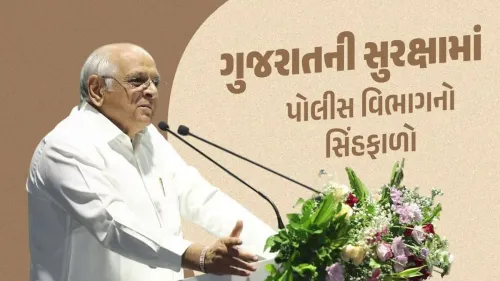
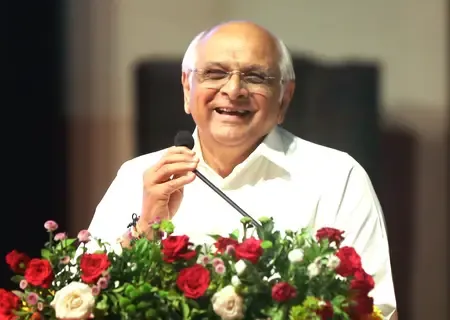
Gandhinagar, Dec 23 (NationPress) The Chief Minister of Gujarat, Bhupendra Patel, urged senior police officials to enhance the trust between the police force and the community, emphasizing that public trust serves as the most efficient "intelligence bureau" for managing crime.
He highlighted that citizens should have no barriers in reaching out to law enforcement and that people-centric policing must be implemented at all levels, including rural areas.
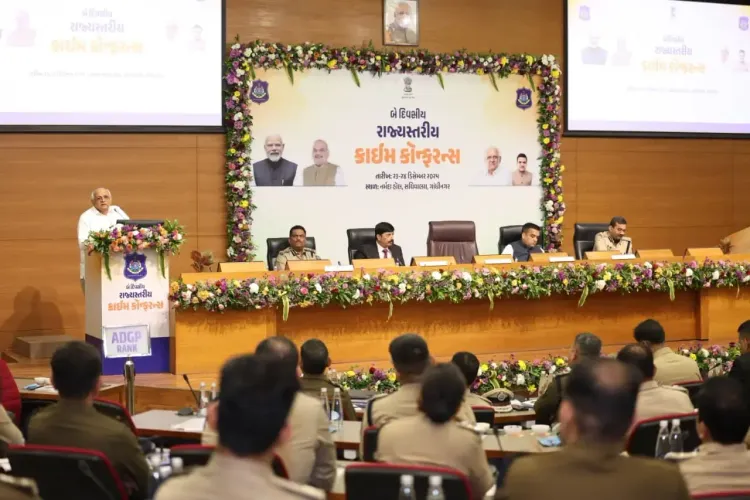
The Chief Minister made these remarks during the opening of a two-day state-level Crime Conference in Gandhinagar, with Deputy Chief Minister Harsh Sanghavi also in attendance.
Senior police officials, including the State Police Chief, Additional Directors General, IGPs, Range IGs, and District Superintendents of Police, are taking part in the conference.
In his address, CM Patel highlighted Gujarat's stable law-and-order situation, stating that the state's safety has positioned it as a national development model.
He acknowledged that global businesses are attracted to Gujarat due to its secure atmosphere, crediting the state police's vigilance and dedication for this success.
While addressing new challenges, the Chief Minister pointed out that although the Gujarat Police are utilizing technology for crime prevention and detection, criminals are also exploiting advanced tools.
He stressed the necessity for enhanced vigilance and the greater use of modern technologies, including artificial intelligence, to combat cybercrime and tech-related offenses.
Moreover, he provided insights on coastal security and insisted on the uniform application of people-centric policing across the state.
CM Patel further emphasized a compassionate approach towards drug-addicted youth, advocating for rehabilitation through understanding, counseling, and guidance, rather than relying solely on punitive measures.
He expressed optimism that the conference would inspire productive discussions aimed at enhancing public safety.
Deputy Chief Minister Harsh Sanghavi highlighted that the Gujarat Police have excelled not just in maintaining law and order, but also in crime detection, prevention, and community engagement.
He praised the force for its decisive actions against anti-social elements, effective cybercrime crackdowns, and ongoing efforts to tackle social issues. Sanghavi encouraged officers, from junior IPS ranks to senior leadership, to remain open to new ideas and best practices shared during the conference.
He noted that involving DCP- and SP-level officers from various cities and districts aims to foster meaningful idea exchange, promote innovative technology use, and facilitate mutual learning throughout the force. Chief Secretary M.K. Das referred to crime conferences as crucial platforms for the state.
He remarked that discussions would also focus on ensuring that the key takeaways from the recent DG–IG Conference, chaired by Prime Minister Narendra Modi alongside Union Home Minister Amit Shah, are effectively communicated and executed at the operational level.
Topics like border and coastal security, investigations, operations, and crime prevention are on the agenda, Sanghavi noted.
Point of View
I believe that fostering a robust relationship between law enforcement and the community is paramount. By prioritizing public trust, Gujarat is setting a benchmark for effective policing nationwide, aligning with national interests.
NationPress
30 Sept 2026
Frequently Asked Questions
What is the main focus of the Crime Conference?
The Crime Conference primarily focuses on strengthening the relationship between the police and the public to enhance trust and improve crime prevention strategies.
How is technology being utilized by the Gujarat Police?
The Gujarat Police are increasingly using technology, including artificial intelligence, to prevent and detect crime, although they also face challenges from criminals exploiting these advancements.
What is the approach towards drug addiction discussed by CM Patel?
CM Patel advocates for a compassionate approach towards drug-addicted youth, emphasizing rehabilitation through counseling and support rather than relying solely on punitive measures.
Who attended the Crime Conference?
The conference saw participation from several key figures, including Chief Minister Bhupendra Patel, Deputy Chief Minister Harsh Sanghavi, and various senior police officials.
What key outcomes are expected from the conference?
The conference aims to lead to constructive discussions that strengthen public safety and ensure the effective implementation of recent directives from higher-level conferences.