Gujarat Dy CM Harsh Sanghavi pushes food delivery EV switch at NRAI Summit 2026
Synopsis
Gujarat's Deputy CM used the NRAI Food Delivery Summit to make a hard economic case for EVs — not just an environmental one. A five-fold drop in per-km delivery costs, a ₹5.69 lakh crore sector on the cusp of ₹7.5 lakh crore, and a state government offering capex-free entry at tourist hotspots: this was as much an investment pitch for Gujarat as it was a green push.
Key Takeaways
Harsh Sanghavi addressed the fifth Food Delivery Summit-2026 organised by NRAI in Ahmedabad on 20 August 2026 .
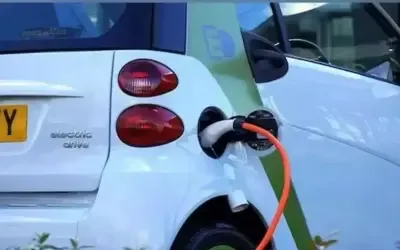
EV adoption could cut delivery costs from ₹2.5 per km to 50 paise per km , according to Sanghavi.
The food sector contributes approximately ₹5.69 lakh crore to the economy, projected to reach ₹7.5 lakh crore .
The sector employs over 75 lakh people , with potential to cross one crore jobs.
Gujarat is offering infrastructure support at tourist sites including the Statue of Unity , White Rann of Kutch , and Gir — with no capital expenditure burden on businesses.
The summit attracted over 5,000 participants from 1,500+ brands across 30+ cities .
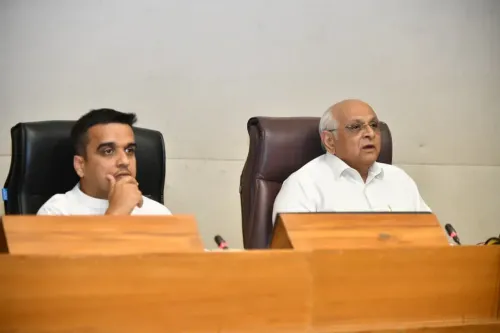
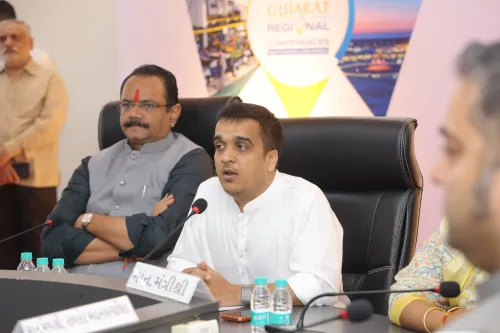
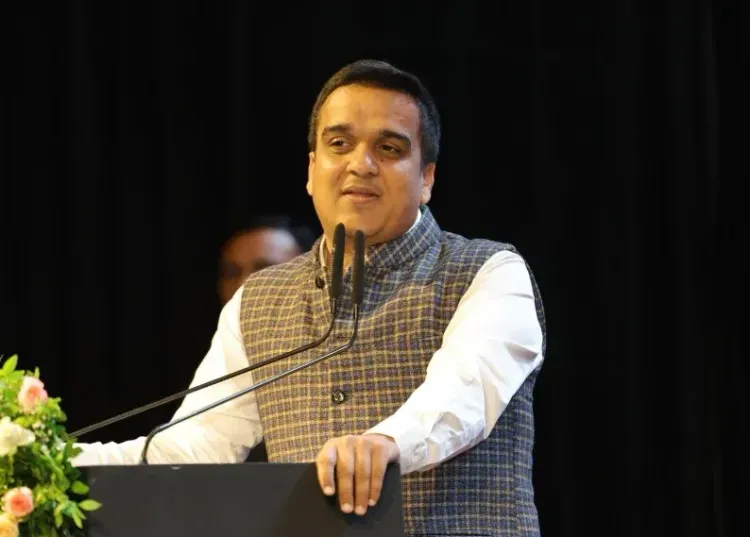
Gujarat Deputy Chief Minister Harsh Sanghavi on 20 August 2026 called on restaurant owners and food delivery operators across the country to transition from petrol-powered vehicles to electric vehicles (EVs), arguing the shift could slash per-kilometre delivery costs from approximately ₹2.5 to as little as 50 paise. He made the appeal at the inauguration of the fifth Food Delivery Summit-2026, organised by the National Restaurant Association of India (NRAI) in Ahmedabad.
The EV Cost Case
Sanghavi framed the EV push in straightforward economic terms: a five-fold reduction in per-kilometre running costs would directly improve margins for delivery operators already squeezed by fuel prices. He noted that the appeal coincided with Renewable Energy Day, adding an environmental dimension to what is primarily a cost-efficiency argument. The Deputy Chief Minister said the dual benefit — lower operational expenditure and a smaller carbon footprint — made the transition a logical priority for the sector.
Scale of the Food Sector
Sanghavi underscored the economic weight of the industry, citing figures that place the food and food-related business contribution at approximately ₹5.69 lakh crore to the national economy, with projections pointing toward ₹7.5 lakh crore in the coming years. The sector currently employs more than 75 lakh people, a number he said could exceed one crore as the industry expands. 'Very few sectors employ such a large scale,' he said, making a case for greater policy attention to the segment.
Gujarat's Tourism Destinations as Growth Frontiers
Beyond EVs, Sanghavi highlighted untapped opportunities at Gujarat's tourist locations, urging food businesses to establish ventures at the Statue of Unity, Shivrajpur Beach, Dharoi Dam, the White Rann of Kutch, and Gir. He assured businesses that the state government would provide the necessary infrastructure and facilities at these destinations, removing the burden of capital expenditure. 'Businesses would not have to take the risk of capital expenditure and can manage operational expenditure according to their requirements,' he said.
GIFT City and the Broader Investment Pitch
Sanghavi also pointed to GIFT City in Gandhinagar as a destination for food-sector investment, noting that Prime Minister Narendra Modi's original vision for the financial hub — once dismissed as a 'daydream' when conceived in 2007 — had since become a global fintech and bullion trading centre. He encouraged NRAI members to explore food-sector opportunities within GIFT City's growing ecosystem.
Summit Footprint and Next Steps
The one-day summit drew more than 5,000 participants representing over 1,500 brands from more than 30 cities, spanning sessions and workshops on industry trends. Sanghavi appealed to the NRAI to make Gujarat a regular host for annual events of this scale, pledging continued government support. The state's commitment to supporting the food delivery ecosystem — from the Statue of Unity to Kutch and Gir — signals a broader effort to position Gujarat as a hospitality and food-tech investment destination.
Point of View
Using state infrastructure as a subsidy in all but name. Whether operators actually make the EV switch will depend less on political encouragement and more on charging infrastructure density on delivery routes — a gap the speech did not address. The ₹7.5 lakh crore projection also deserves scrutiny: sector forecasts of this scale have historically outpaced verified employment and revenue outcomes.
NationPress
5 Oct 2026
Frequently Asked Questions
What did Gujarat Deputy CM Harsh Sanghavi say about EVs at the NRAI summit?
Sanghavi urged food delivery operators to replace petrol vehicles with EVs, arguing it could reduce per-kilometre delivery costs from ₹2.5 to as little as 50 paise. He made the appeal at the fifth Food Delivery Summit-2026 in Ahmedabad on 20 August 2026.
How large is India's food and food-related sector?
According to Sanghavi, the sector contributes approximately ₹5.69 lakh crore to the national economy and employs over 75 lakh people. Both figures are projected to grow, with the economic contribution expected to reach ₹7.5 lakh crore and employment potentially crossing one crore.
Which Gujarat locations did Sanghavi recommend for food businesses?
He specifically named the Statue of Unity, Shivrajpur Beach, Dharoi Dam, the White Rann of Kutch, and Gir as priority destinations. The state government has offered to provide infrastructure and facilities at these sites, removing the capital expenditure burden from businesses.
What is GIFT City and why did Sanghavi mention it?
GIFT City is a financial hub in Gandhinagar conceived by Prime Minister Narendra Modi in 2007. Sanghavi cited it as an example of a bold vision that became reality — now a global fintech and bullion trading centre — and encouraged NRAI members to explore food-sector opportunities there.
How large was the Food Delivery Summit-2026?
The one-day summit in Ahmedabad drew more than 5,000 participants from over 1,500 brands across more than 30 cities, covering sessions and workshops on industry trends and investment opportunities.