Gujarat EV sales surge 55% in Q1 2025, buyers credit state subsidies and tax breaks
Synopsis
Gujarat sold more EVs in a single quarter than it did in the entire previous year — 8,577 registrations in Q1 2025 against 5,545 for the full year before. State subsidies, a ₹50,000 saving on registration fees, and a 200–300% spike in dealer inquiries suggest this is not a blip but a structural shift in how Gujarat's middle class is thinking about personal transport.
Key Takeaways
Gujarat recorded 8,577 EV registrations in the first quarter of 2025 , up 55% from 5,545 sold across the entire previous financial year.
EV car buyers save up to ₹50,000 on registration fees; two-wheeler buyers pay only a nominal token fee versus the standard ₹5,000–₹6,000 .
The Bhupendra Patel government has prioritised electric mobility in its 2026–27 budget under a 'Green Initiatives' framework.
EV dealer inquiries have spiked 200%–300% , according to FADA , partly attributed to PM Modi's appeal to cut petroleum consumption.
Charging infrastructure expansion and middle-class adoption are identified as the twin pillars sustaining the growth curve.
Gujarat's electric vehicle market has recorded its strongest growth trajectory in recent memory, with 8,577 EV registrations logged in the first quarter of 2025 alone — a 55% jump over the 5,545 units sold across the entire previous financial year. The surge, concentrated in both two- and four-wheelers, reflects a convergence of state policy incentives, falling ownership costs, and growing environmental awareness among buyers.
Scale of the Growth
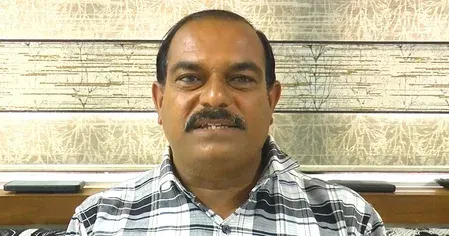
The numbers tell a striking story. Gujarat sold 5,545 EVs in the full preceding financial year. In just the first quarter of this year, that figure reached 8,577 — already surpassing the annual total by a wide margin. According to Pranav Shah, Head of the Federation of Automobile Dealers Associations (FADA), inquiries and conversions have spiked between 200% and 300% following Prime Minister Narendra Modi's public appeal to reduce petroleum consumption.
What the State Government Has Done
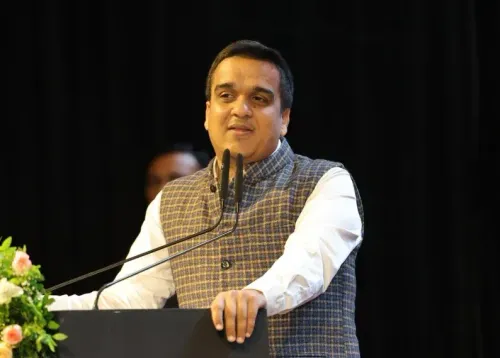
The Bhupendra Patel-led Gujarat government has embedded electric mobility as a priority within its 2026–27 budget, under a broader 'Green Initiatives' framework. The policy levers include tax exemptions, direct subsidies, and an active expansion of public charging infrastructure. Notably, registration fees for electric cars have been capped at around ₹10,000, compared with up to ₹60,000 for conventional vehicles — a saving of roughly ₹50,000 per car buyer, according to FADA's Pranav Shah. For electric two-wheelers, only a nominal token fee is charged in place of the standard ₹5,000–₹6,000 registration cost.
Why Buyers Are Switching
EV owners cite both environmental and economic motivations. Manit Shah, a recent EV buyer, said: 'Firstly, EVs generate less pollution. With solar panels now installed in many Indian homes, there is an added benefit: EVs are cost-efficient for consumers and effective in protecting nature.' Another buyer, Pankit Shah, pointed to the lower registration fees and running costs: 'RTO registration fees for EVs are lower, making the vehicle more affordable. Since they run on electric charging, EVs offer significant advantages compared to petrol-powered vehicles.'
Broader Context and What Comes Next
Gujarat's EV push sits within a national shift toward clean mobility, with the Centre progressively tightening emission norms and expanding the FAME subsidy framework. The state's charging infrastructure buildout is critical to sustaining this momentum — range anxiety remains a concern for prospective buyers in smaller cities and rural districts. Industry observers note that middle-class adoption, once considered a laggard segment, is now driving volume growth, aided by falling battery costs and the visible economics of lower fuel and maintenance bills. Whether Gujarat can maintain this pace will depend on how quickly the charging network expands beyond urban centres.
Point of View
But the 55% quarterly surge is partly a base-effect story — annual volumes were modest enough that a single active quarter could dwarf them. The more durable question is whether the state's charging infrastructure can keep pace with registration growth; subsidy-driven demand that outstrips grid and charging capacity tends to generate buyer regret and slow second-wave adoption. The ₹50,000 registration fee waiver is a blunt but effective demand lever, yet it is a recurring fiscal cost that will need to be rationalised as volumes scale. Gujarat's real test is not the Q1 spike — it is whether EV penetration holds once the incentive stack is eventually normalised.
NationPress
24 Sept 2026
Frequently Asked Questions
How much have EV sales grown in Gujarat in 2025?
Gujarat recorded 8,577 EV registrations in the first quarter of 2025 alone, compared with 5,545 for the entire previous financial year — a growth of approximately 55% . Dealer inquiries have reportedly surged between 200% and 300% over the same period.
What government incentives are driving EV adoption in Gujarat?
The Bhupendra Patel-led state government has introduced tax exemptions, direct subsidies, and reduced registration fees for EVs as part of its 2026–27 budget. EV car buyers pay around ₹10,000 in registration fees versus up to ₹60,000 for conventional vehicles, saving roughly ₹50,000. Two-wheeler EV buyers pay only a nominal token fee.
Who is Pranav Shah and what did he say about Gujarat EV sales?
Pranav Shah is the Head of the Federation of Automobile Dealers Associations (FADA). He confirmed that Gujarat recorded 5,545 EV registrations in the previous year and 8,577 in the first quarter of this year, and attributed a 200%–300% spike in inquiries to PM Modi's appeal to reduce petroleum consumption.
Why are Gujarat buyers choosing electric vehicles?
Buyers cite both environmental and economic reasons. Lower running costs, reduced registration fees, zero tailpipe emissions, and compatibility with home solar panels are the most commonly cited factors. The expanding charging network and falling battery costs have also made EVs more practical for middle-class households.
What challenges remain for Gujarat's EV market?
Despite strong sales growth, charging infrastructure outside major urban centres remains limited, and range anxiety continues to deter some prospective buyers. Sustaining growth once state subsidies are eventually rationalised is also a key long-term challenge for the sector.