Gujarat's Shala Praveshotsav 2026 enrols 11.20 lakh students across 17,338 villages
Synopsis
Gujarat's 24th Shala Praveshotsav enrolled over 11.20 lakh students in just two days — with Balvatika admissions actually exceeding the number of identified eligible children. Launched from PM Modi's childhood school in Vadnagar, the drive's community-funding model pulled in ₹9.19 crore in donations, signalling that this annual ritual has become something more than a government exercise.
Key Takeaways
11.20 lakh students enrolled in the first two days of Shala Praveshotsav 2026 across Gujarat.
The drive covered 17,338 villages and 24,716 schools , with 60,184 officials and public representatives participating.
Balvatika enrolments exceeded eligible children identified, with 1.40 lakh admissions against 1,39,925 eligible students.
5,664 girl students received Vidhyalakshmi Bonds ; new transport provided to 847 schools .
Public contributions totalled more than ₹9.19 crore , including ₹7.95 crore in educational materials.
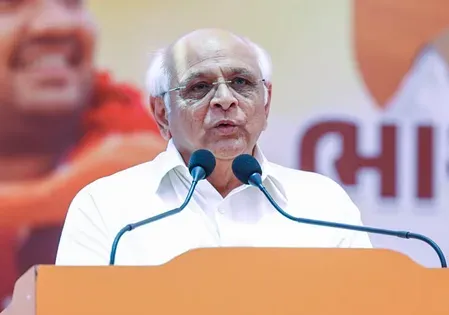
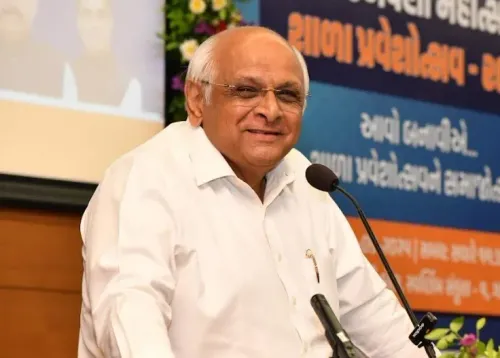
The campaign was launched by Chief Minister Bhupendra Patel from B.N.
High School, Vadnagar — PM Modi's alma mater.
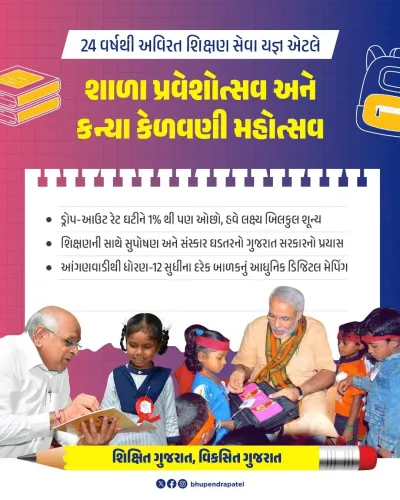
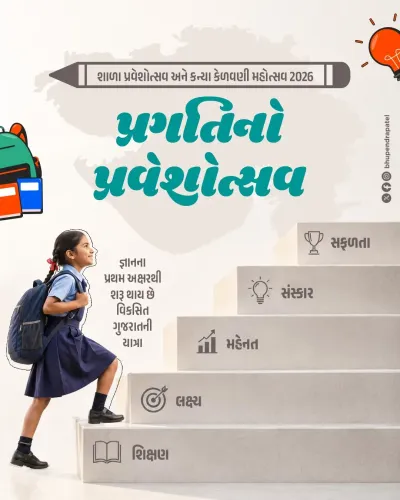
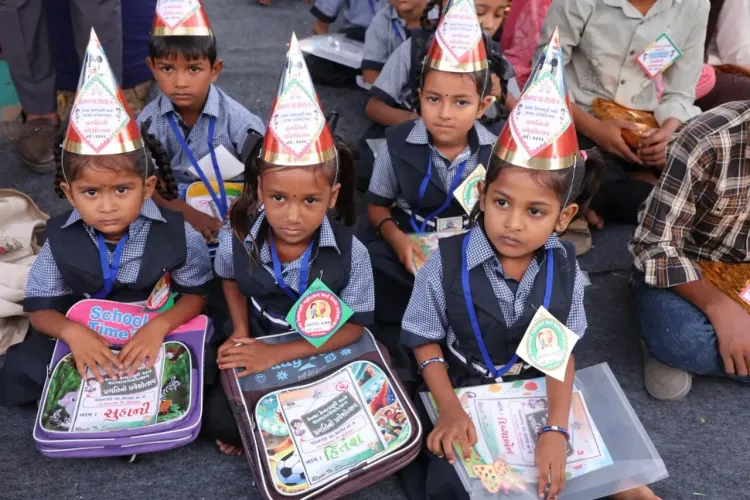
Gujarat's Kanya Kelavani Mahotsav and Shala Praveshotsav 2026 campaign has enrolled more than 11.20 lakh students in its first two days, reaching 17,338 villages and 24,716 schools across the state, according to official figures released on Wednesday, 24 June 2026. The 24th edition of the annual drive marks one of the state's most expansive school enrolment pushes since the initiative began in 2003.
Scale of the Drive
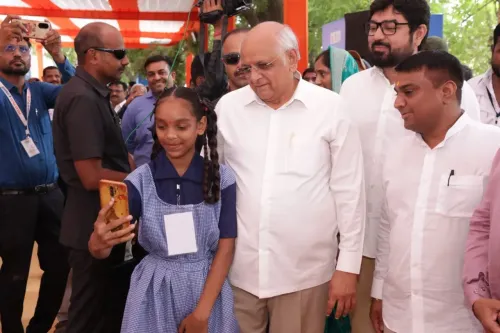
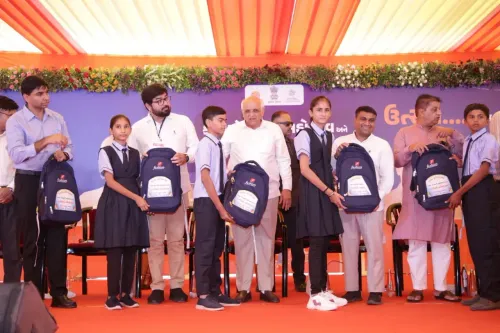
The second day alone saw enrolment programmes conducted in 8,173 villages and 11,987 schools, with 29,682 dignitaries — including ministers, elected representatives, and senior government officials — visiting campuses to welcome children. Across both days combined, 60,184 public representatives and officials participated in outreach events statewide.
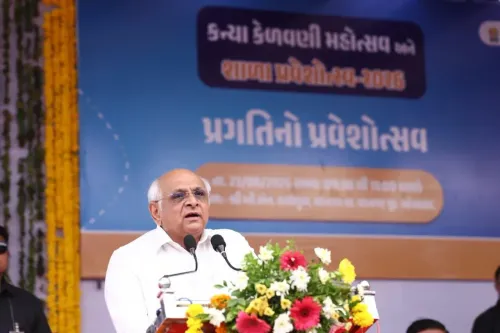
The campaign was launched on Monday by Chief Minister Bhupendra Patel from B.N. High School in Vadnagar — the school attended by Prime Minister Narendra Modi during his childhood — lending the inauguration symbolic weight beyond the administrative.
Enrolment by the Numbers
More than 62,000 children began their educational journey on Wednesday through admissions to Anganwadis and pre-primary institutions. In Balvatika classes, enrolments surpassed the pool of identified eligible children, with 1.40 lakh admissions recorded against 1,39,925 eligible students — a rare instance of demand exceeding official estimates.
Class-wise, the drive recorded more than 34,000 new admissions in Class 1, 1,96,755 in Class 9, and 1,01,759 in Class 11. Additionally, 21,892 students identified through the state's 'Back to School Survey' — a mechanism targeting dropouts and out-of-school children — were formally admitted during the campaign.
Support for Girls and Remote Students
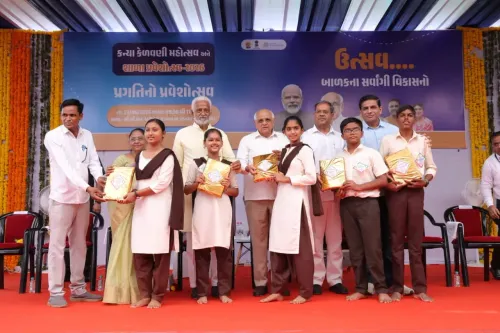
The government distributed 'Vidhyalakshmi Bonds' to 5,664 girl students during the programme, an instrument designed to incentivise continued schooling and support higher education aspirations. New transport facilities were extended to 847 schools, specifically aimed at improving access for students in remote and underserved areas — a persistent structural barrier to enrolment in rural Gujarat.
Community Contributions
Public participation added a notable financial dimension to the campaign. According to official figures, contributions worth more than ₹9.19 crore were received, comprising cash donations exceeding ₹1.25 crore and educational materials valued at more than ₹7.95 crore donated to schools across the state. This community co-funding model has been a hallmark of the initiative since its inception.
Background and Significance
The Kanya Kelavani Mahotsav and Shala Praveshotsav were launched by the Gujarat government in 2003 primarily to address low school enrolment among girls and children from disadvantaged communities. Held annually ahead of each new academic session, the programme has evolved into a large-scale mobilisation exercise involving government, civil society, and local communities. This year's edition continues that tradition, with the state aiming to ensure no eligible child is left outside the formal education system.
Point of View
Reducing state dependency. Yet the real accountability question is whether these enrolment numbers translate into retention: Gujarat, like most states, has historically seen a gap between Day 1 admissions and end-of-year attendance, particularly in Class 9 and Class 11 where dropout risk is highest.
NationPress
23 Sept 2026
Frequently Asked Questions
What is the Shala Praveshotsav 2026 campaign in Gujarat?
Shala Praveshotsav 2026 is the 24th edition of Gujarat's annual school enrolment drive, officially called 'Kanya Kelavani Mahotsav and Shala Praveshotsav', launched in 2003 to boost enrolment among girls and disadvantaged children. The 2026 edition enrolled more than 11.20 lakh students in its first two days, covering 17,338 villages and 24,716 schools.
Where was the 2026 campaign launched and why is the venue significant?
Chief Minister Bhupendra Patel launched the campaign from B.N. High School in Vadnagar — the school attended by Prime Minister Narendra Modi during his childhood. The choice of venue added symbolic significance to the inauguration beyond its administrative purpose.
How many girl students benefited from Vidhyalakshmi Bonds this year?
A total of 5,664 girl students received Vidhyalakshmi Bonds during the campaign. The bonds are designed to incentivise continued schooling and support girls in pursuing higher education.
What was the public contribution to the Shala Praveshotsav 2026 drive?
Public contributions totalled more than ₹9.19 crore, comprising cash donations exceeding ₹1.25 crore and educational materials valued at more than ₹7.95 crore donated to schools across Gujarat.
How many out-of-school children were brought back through the campaign?
A total of 21,892 students identified through the state's 'Back to School Survey' — a mechanism targeting dropouts and out-of-school children — were formally admitted to educational institutions during the campaign.