Gujarat, IN-SPACe ink deal for space manufacturing park in Khoraj with ₹100 crore facility
Synopsis
Gujarat has committed 50 acres and co-funding with IN-SPACe to build one of India's first shared space testing parks — complete with a 12-tonne vibration rig, thermo-vacuum chamber, and clean rooms — at Khoraj. For cash-strapped space start-ups that currently travel abroad or queue at ISRO for test access, this could be a genuine inflection point.
Key Takeaways
Gujarat government and IN-SPACe signed an agreement on 12 June to develop a Space Manufacturing Park in Khoraj .
IN-SPACe will contribute up to ₹100 crore for specialised equipment; Gujarat funds construction and operations.
The Common Technical Facility will include a vibration tester for payloads up to 12 tonnes , a thermo-vacuum chamber, EMI/EMC labs, and a Class 100,000 clean room.
50 acres allocated at Khoraj, with expansion provisions to 100 acres .
The park is anchored in Gujarat's Space Tech Policy 2025-30 and targets end-to-end spacecraft and payload development.
The initiative aims to reduce testing costs and timelines for Indian space start-ups and MSMEs .
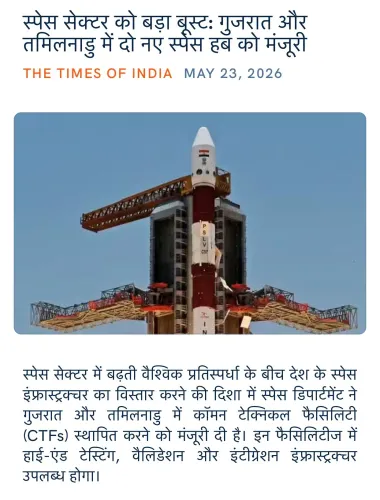
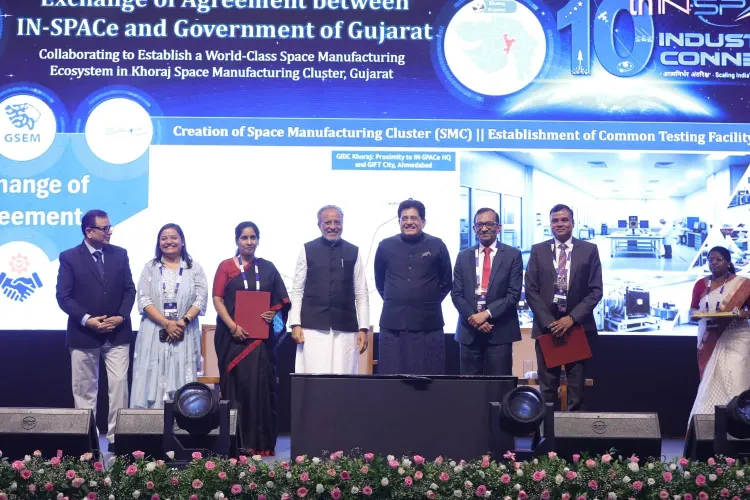
The Gujarat government and the Indian National Space Promotion and Authorisation Centre (IN-SPACe) on Thursday, 12 June signed an agreement to develop advanced Common Technical Facilities (CTF) at a proposed Space Manufacturing Park in Khoraj, marking a significant push to lower entry barriers for private space start-ups and MSMEs seeking access to specialised testing and validation infrastructure.
What Was Announced
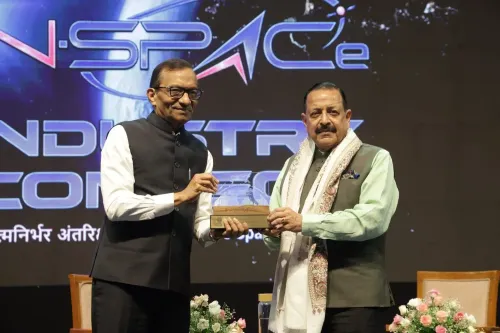
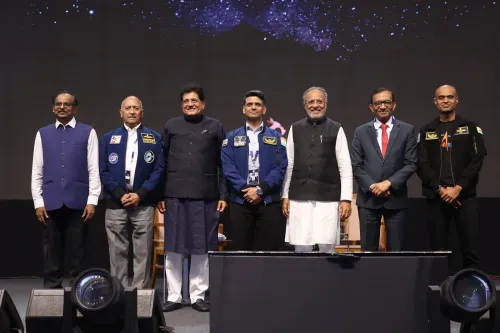
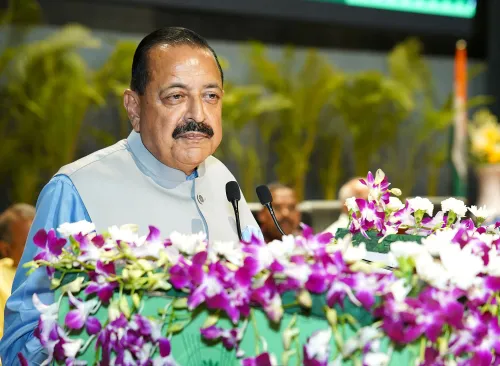
The agreement was unveiled on the inaugural day of the 10th IN-SPACe Industry Connect event in Ahmedabad, where Gujarat Science and Technology Minister Arjun Modhwadia presented the plans in the presence of Union Commerce and Industry Minister Piyush Goyal. The project will be developed under Gujarat's Space Tech Policy 2025-30, which positions the state as a hub for end-to-end spacecraft, payload, and space technology development.
What the Facility Will Include
The Common Technical Facility is designed to be among the most comprehensively equipped shared-access space testing centres in India. It will house a Class 100,000 clean room with integrated safety systems, a thermo-vacuum chamber for environmental simulation, and a vibration testing system capable of handling payloads of up to 12 tonnes. Additional infrastructure includes electromagnetic interference and electromagnetic compatibility (EMI/EMC) testing facilities, a climate test chamber, mass properties measurement systems, magnetic field testing infrastructure, and calibration facilities for Earth Observation optics.
According to the government statement, the objective is to 'provide start-ups and MSMEs with access to high-quality testing and validation infrastructure, which is often difficult and expensive to develop independently.' By pooling these resources, the facility aims to 'accelerate product development cycles, enhance the reliability of space-grade systems, and provide new momentum to India's space technology ecosystem.'
Funding and Land Allocation
Under the agreement, IN-SPACe will provide technical support and contribute up to ₹100 crore towards the procurement of specialised equipment. The Gujarat government will fund the remaining construction, operation, and maintenance costs. The state has allocated 50 acres of land at Khoraj for the Space Manufacturing Park, with provisions to expand the footprint to 100 acres in future phases.
Broader Context and Policy Backing
The initiative builds on the space sector reforms initiated by Prime Minister Narendra Modi, which led to the creation of IN-SPACe as the enabling, promotional, and regulatory body for India's private space industry. Officials noted that Gujarat was among the first states to introduce a dedicated space sector policy — one that includes provisions for industry participation, capacity building, and financial support — and that the Khoraj park draws on the legacy of space pioneer Vikram Sarabhai.
Science and Technology Department Secretary P. Bharati and Gujarat Space Electronics Mission (GSEM) Mission Director Neha Kumari said the park would focus on end-to-end design and development of spacecraft, payload systems, and space-based applications. Modhwadia expressed confidence that Gujarat's youth and industry stakeholders would help take the state's space economy to 'greater heights.'
What This Means for Start-Ups
The shared platform is expected to reduce dependence on external — often out-of-state or overseas — testing facilities, cutting development timelines for companies at early and growth stages. Critically, it addresses one of the most cited bottlenecks in India's private space sector: the prohibitive cost of qualifying components and systems to space-grade standards. This is the kind of infrastructure gap that has historically forced Indian space start-ups to seek testing access abroad or at ISRO facilities with limited commercial availability.
With India's space economy targeted to reach $44 billion by 2033, the Khoraj park represents an early but concrete step toward building the industrial base required to compete globally.
Point of View
Not incentives — a rare policy instinct in a sector where subsidy announcements typically outpace hardware. The ₹100 crore IN-SPACe equipment contribution is meaningful, but the real question is utilisation: shared facilities in India have a mixed track record of sitting underused when access protocols are cumbersome. Gujarat's Space Tech Policy 2025-30 is also still young, and translating a clean-room blueprint into a functioning, commercially accessible test range requires sustained administrative follow-through that outlasts election cycles. If the execution matches the ambition, Khoraj could genuinely reduce the 'go abroad to qualify' default that dogs Indian space start-ups — but that outcome depends on governance, not just ₹100 crore.
NationPress
13 Sept 2026
Frequently Asked Questions
What is the Space Manufacturing Park being built in Khoraj?
It is a dedicated industrial and testing campus in Khoraj, Gujarat, being developed jointly by the Gujarat government and IN-SPACe under Gujarat's Space Tech Policy 2025-30. The park will offer shared Common Technical Facilities — including clean rooms, vibration testers, and thermo-vacuum chambers — to space start-ups and MSMEs that cannot afford to build such infrastructure independently.
How much is IN-SPACe contributing to the Khoraj space park?
IN-SPACe will contribute up to ₹100 crore towards the procurement of specialised equipment for the Common Technical Facility. The Gujarat government will fund the construction, operation, and maintenance of the broader Space Manufacturing Park.
What testing equipment will the facility have?
The facility will include a Class 100,000 clean room, a thermo-vacuum chamber for environmental simulation, a vibration testing system for payloads up to 12 tonnes, EMI/EMC testing labs, a climate test chamber, mass properties measurement systems, magnetic field testing infrastructure, and Earth Observation optics calibration facilities.
How much land has been allocated for the park?
The Gujarat government has allocated 50 acres at Khoraj for the Space Manufacturing Park, with provisions for future expansion to 100 acres as demand from the space industry grows.
Why does this matter for Indian space start-ups?
Access to space-grade testing infrastructure is one of the biggest cost and timeline barriers for early-stage space companies in India. By providing a shared platform, the Khoraj facility aims to reduce dependence on external or overseas testing centres, shorten product development cycles, and make it commercially viable for smaller firms to qualify components to space-grade standards.