Gujarat expands natural farming network to 1,200 centres, honours 93 farmers
Synopsis
Gujarat quietly built one of India's largest state-run retail networks for naturally farmed produce — 1,200 outlets and counting. Paired with a SAC-ISRO geospatial MoU and awards for 93 pioneering farmers, Saturday's Gandhinagar event signals that the state is moving natural farming from a campaign slogan to a structured supply chain.
Key Takeaways
The Gujarat government inaugurated over 100 new natural farming sales centres on 3 October , taking the state total to 1,200 .
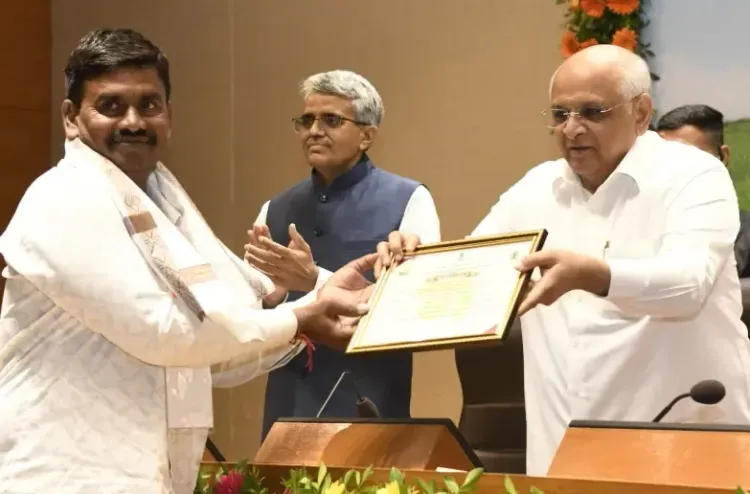
93 farmers were honoured with the Best ATMA Farmers Awards at the Gandhinagar ceremony.
Governor Acharya Devvrat , Chief Minister Bhupendra Patel , and Agriculture Minister Jitu Vaghani addressed around 50,000 farmers participating virtually.
An MoU was signed between the Directorate of Agriculture and SAC-ISRO to deploy satellite and geospatial technology in farming.
14 newly appointed Assistant Directors of Agriculture (Class-II) received appointment letters at the event.
Minister Vaghani noted Gujarat is the second state after Uttarakhand to receive Presidential assent for its Uniform Civil Code Bill .
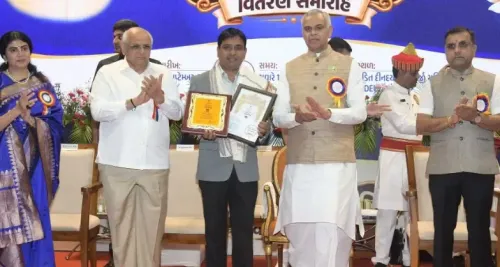
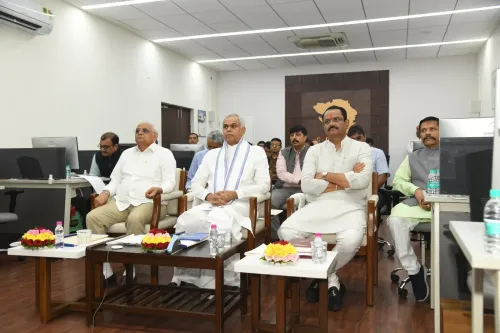
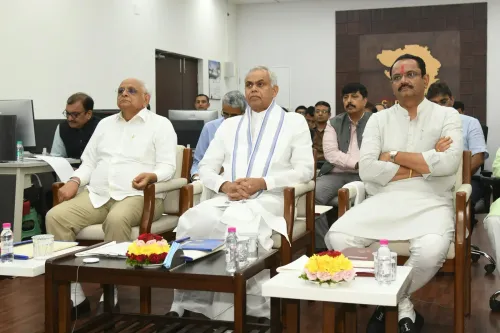
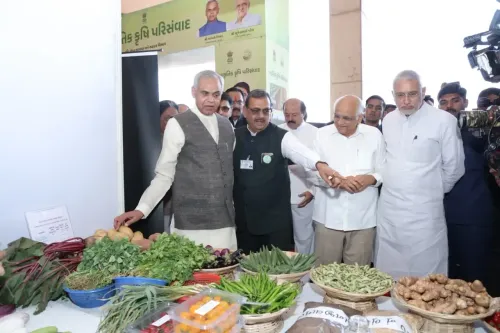
The Gujarat government on Saturday, 3 October inaugurated more than 100 new natural farming sales centres across the state, taking the total network of such outlets to 1,200, as 93 progressive farmers were recognised with the Best ATMA Farmers Awards at a ceremony in Gandhinagar. The event marked a significant step in the state's push to mainstream naturally farmed produce and connect farmers directly with consumers.
Key Developments at the Gandhinagar Ceremony
Governor Acharya Devvrat chaired the award function, held in the presence of Chief Minister Bhupendra Patel and Agriculture Minister Jitu Vaghani. The Governor called for wider adoption of natural farming, urging every farmer already practising the method to bring at least one more into the fold.
Devvrat cited Denmark as a reference point, noting that the country does not subsidise urea or DAP, and instead relies on cow dung and urine for biogas and organic fertilisers — a model that reportedly helps maintain soil organic carbon at 2 per cent. He stressed that reducing dependence on chemical fertilisers and pesticides was essential to protect soil, water, the environment, and human health.
On the new sales centres, the Governor said they must become 'centres of consumer trust' rather than mere retail points, and called for rigorous quality and purity standards alongside public awareness campaigns.
What the Chief Minister Said
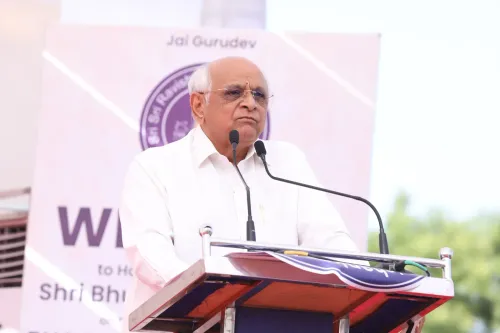
Chief Minister Bhupendra Patel framed the event within Gujarat's broader development agenda, saying the state had undertaken initiatives centred on good governance, technology, and public welfare to mark Prime Minister Narendra Modi's 25 years of public service. He quoted Modi's call for 'Jai Anusandhan' alongside the traditional 'Jai Jawan, Jai Kisan, Jai Vigyan', arguing the formulation links national security, food security, scientific progress, and research.
Patel said Gujarat is working to integrate natural farming with technology and environmental conservation, adding that agricultural research could simultaneously raise productivity, increase farmers' incomes, and ensure efficient resource use. He also underscored water conservation, calling for greater rainwater harvesting and groundwater recharge.
Agriculture Minister's Remarks and UCC Reference
Agriculture Minister Jitu Vaghani described natural farming as a major campaign in Gujarat, noting a growing interest among educated young people in the practice. He said the government is actively providing marketing and certification support to natural farmers, whom he called the government's 'Brand Ambassadors', and urged each to connect at least five more farmers to the movement.
Vaghani also noted that Gujarat had become the second state after Uttarakhand to receive the President's assent to its Uniform Civil Code (UCC) Bill, adding that the law would introduce uniform provisions while preserving the traditional systems and culture of tribal communities.
MoU, Appointments, and Publications
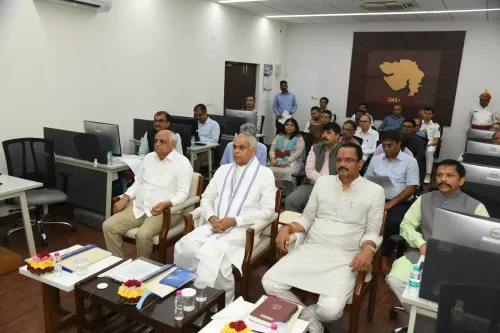
A significant institutional development at the event was the signing of a Memorandum of Understanding (MoU) between the Directorate of Agriculture and SAC-ISRO to promote the use of satellite and geospatial technology in agriculture. Appointment letters were also handed over to 14 newly appointed Assistant Directors of Agriculture (Class-II) to strengthen agricultural extension services across the state.
Officials released three key documents: the Agriculture Department's Annual Action Plan 2026-27, Assistance-Oriented Schemes of the Agriculture Department, and Assistance-Oriented Schemes of the Horticulture Department. Around 50,000 farmers from across Gujarat participated virtually, alongside ministers, members of Parliament, MLAs, and representatives of local self-government bodies.
Why This Matters
This comes amid a national push for natural farming, with the Centre encouraging states to reduce chemical input dependency and improve soil health. Gujarat's 1,200-centre sales network is among the largest state-level distribution infrastructure for naturally farmed produce in India. The SAC-ISRO partnership signals an intent to use precision agriculture tools — remote sensing and geospatial mapping — to monitor crop health and resource use at scale, a step that could set a replicable template for other states. The momentum now shifts to implementation: whether the expanded retail network can generate consistent demand and whether quality certification frameworks keep pace with the growing number of participating farmers.
Point of View
200 is a credible logistical achievement, but the harder challenge — ensuring consistent quality, consumer trust, and remunerative prices for farmers — remains unaddressed in official statements. The SAC-ISRO MoU is the most substantive structural move at the event: geospatial monitoring could finally give policymakers real-time data on natural farming adoption and soil health, rather than relying on self-reported figures. Gujarat's model will be worth watching only if the certification and quality assurance framework scales alongside the retail network. Without that, 1,200 centres risk becoming a headline number rather than a market transformation.
NationPress
3 Oct 2026
Frequently Asked Questions
What is the Best ATMA Farmers Award in Gujarat?
The Best ATMA Farmers Award recognises progressive farmers in Gujarat who have adopted innovative or sustainable agricultural practices, including natural farming. At the 3 October ceremony in Gandhinagar, 93 farmers received the award in the presence of the Governor, Chief Minister, and Agriculture Minister.
How many natural farming sales centres does Gujarat now have?
Gujarat now has a total of 1,200 natural farming sales centres following the inauguration of more than 100 new outlets on 3 October 2025. The network is designed to connect naturally farming producers directly with consumers across the state.
What is the SAC-ISRO MoU signed at the Gujarat agriculture event?
The Memorandum of Understanding signed between the Directorate of Agriculture and SAC-ISRO aims to promote the use of satellite and geospatial technology in Gujarat's agricultural sector. It is intended to help monitor crop health, resource use, and natural farming adoption at scale.
What did Gujarat's Governor say about natural farming?
Governor Acharya Devvrat called for wider adoption of natural farming to reduce excessive use of chemical fertilisers and pesticides, and to protect soil, water, the environment, and human health. He cited Denmark's model — where cow dung and urine are used for biogas and organic fertilisers — and urged each practising farmer to bring at least one more farmer into the campaign.
What is Gujarat's Uniform Civil Code status?
Agriculture Minister Jitu Vaghani stated at the event that Gujarat has become the second state after Uttarakhand to receive the President's assent to its Uniform Civil Code Bill. He said the law would introduce uniform provisions across the state while preserving the traditional systems and culture of tribal areas.