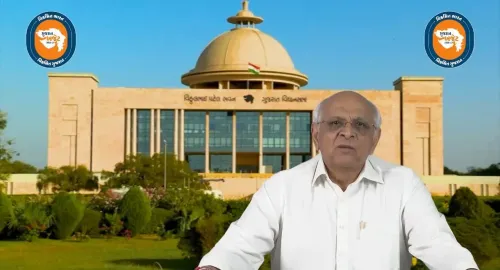
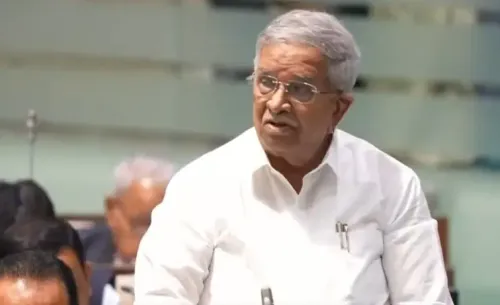
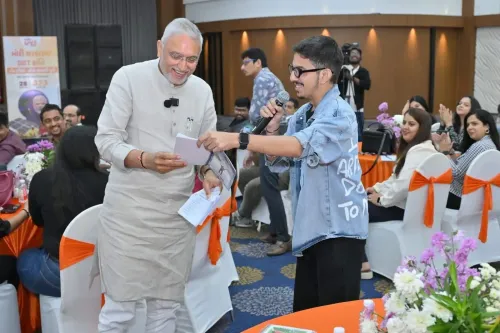
How is Gujarat BJP's Rs 4.08 lakh crore budget a 'boost to growth'?
Synopsis
Gujarat's latest budget of Rs 4.08 lakh crore marks a significant milestone, showcasing the state's economic resilience with an 8.2% contribution to India's GDP. State BJP President Jagdish Vishwakarma emphasizes the budget's focus on holistic development, welfare programs, and infrastructure enhancements, paving the way for a brighter future for Gujarat.
Key Takeaways
Gujarat's budget aims for holistic development.
Increased allocation for education and healthcare.
Focus on infrastructure to alleviate urban congestion.
Support for farmers through relief packages.
Women’s empowerment initiatives highlighted.
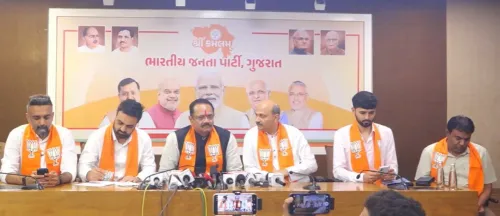
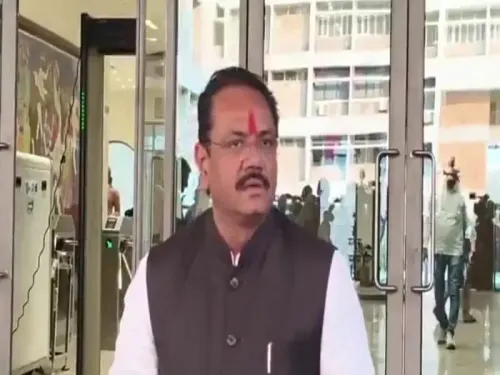
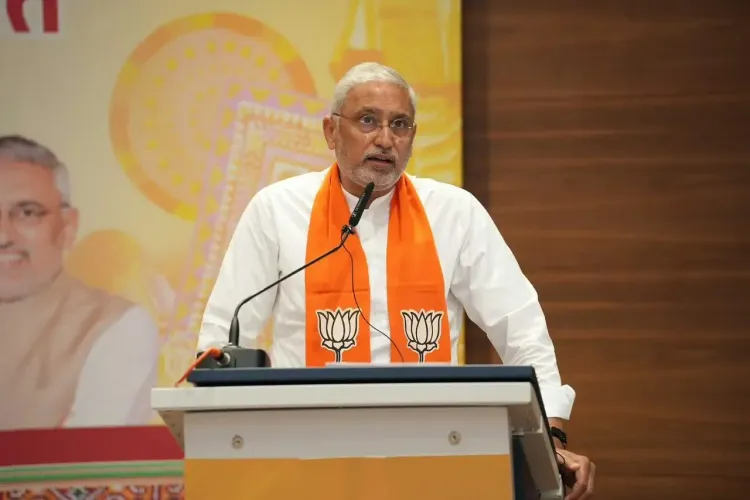
Gandhinagar, Feb 19 (NationPress) The state of Gujarat plays a significant role by contributing 8.2 percent to India’s gross domestic product (GDP), with a remarkable per capita income of Rs 3,01,000, which is nearly 60 percent above the national average, showcasing the robust economic position of the state, stated the state BJP President, Jagdish Vishwakarma, at a press event on Thursday.
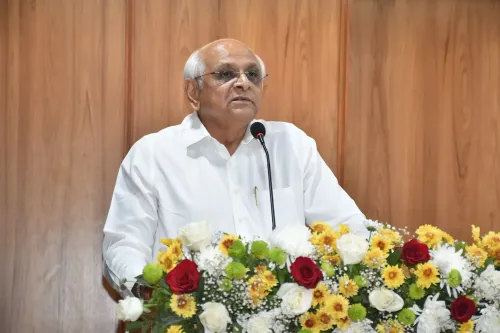
During the conference in Gandhinagar, Vishwakarma extended congratulations to Chief Minister Bhupendra Patel and Finance Minister Kanu Desai for unveiling the Rs 4,08,053 crore budget for the fiscal year 2026-27, labeling it a significant leap towards the vision of a developed Gujarat by 2047.
He emphasized that the budget embodies the aspirations of 6.5 crore citizens of Gujarat, representing a 10.2 percent rise compared to the previous year and is introduced without any new taxes.
“This budget is determined to fast-track the unbroken development journey of our state. It prioritizes the welfare of the underprivileged, youth, farmers, and women, adhering to the principle of 'Sarv Sukhay, Sarv Hitay' (for the happiness and benefit of all),” he remarked.
The budget is designed around a six-point framework: Talent, Technology, Transformation, Tourism, Trust, and Transparency.
It underscores areas such as human development, employment, education, health, infrastructure, tourism, technology, artificial intelligence, along with the preservation of heritage.
Vishwakarma pointed out that under the Pradhan Mantri Awas Yojana, 3.15 lakh new homes will be built for impoverished families and laborers, while 75 lakh families will benefit from free rations.
Additional initiatives include the introduction of 50 new Dhanvantari Health Raths and 121 centers under the Shram Annapurna Yojana to provide nutritious meals at just Rs five.
More than 2.72 crore people will gain from the PM Jan Arogya and Chief Minister Amrutam schemes, and Rs 260 crore has been earmarked for enhancing workers’ skills.
The Gujarat Kaushalya and Rozgar Mission will receive Rs 226 crore, and a research park is set to be established at L.D. Engineering College in Ahmedabad, along with regional start-up hubs in Surat, Vadodara, Mehsana, and Rajkot.
In the educational sector, 16 new government colleges and 926 PM Shri schools will be initiated, while the largest modern library in the nation will be created in Gandhinagar.
For early childhood education, Rs 360 crore is allocated for 2,000 new Anganwadis, and Rs 400 crore is designated under the Chief Minister Yuva Swavalamban Yojana for outstanding students.
Farmers and livestock owners will receive support totaling over Rs 11,000 crore through an agriculture relief package, with MSP procurement valued at more than Rs 18,000 crore.
Rs 1,539 crore has been set aside for interest subsidies under the Kisan Credit Scheme, alongside new initiatives aimed at empowering women, such as the 'Lakhpati Didi' campaign and 'Kaushalya Lakshmi Yojana'.
Tribal development initiatives will see an investment of over Rs 35,000 crore, encompassing irrigation projects, the establishment of five new GIDCs, and enhanced scholarship limits for Scheduled Caste and Scheduled Tribe students, increasing from Rs 2.5 lakh to Rs six lakh.
Infrastructure enhancements include the development of five new satellite towns—Kalol, Sanand, Savli, Bardoli, and Hirasar—to mitigate urban congestion, along with 1,155 km of the Garvi Gujarat High-Speed Corridor and the Somnath-Dwarka Expressway.
A Rs 50,000 crore 'Developed Gujarat Fund' has been established, with ecological initiatives like floating solar at Kadana Dam and waste management aimed at achieving a 'Dump-Free Gujarat'.
Plans for industrial development include upgrading 25 GIDCs to smart centers and modernizing 120 mini-GIDCs.
Vishwakarma also mentioned that Ahmedabad will host the Commonwealth Games, with Rs 1,200 crore allocated for sports infrastructure and transport.
The year 2026 has been proclaimed as 'Gujarat Tourism Year', with Somnath recognized as a 'Global Destination'.
Rs 850 crore has been set aside for initiatives in AI and digital governance, and the GRIT institution has been founded.
Point of View
This Gujarat budget reflects a strategic approach towards sustainable growth and inclusive development. It showcases how state-level fiscal policies can significantly contribute to national economic resilience. The emphasis on welfare and infrastructure is commendable, setting a precedent for other states to follow.
NationPress
19 Sept 2026
Frequently Asked Questions
What is the total amount of the Gujarat budget for 2026-27?
The total amount of the Gujarat budget for the fiscal year 2026-27 is Rs 4.08 lakh crore.
What percentage does Gujarat contribute to India's GDP?
Gujarat contributes 8.2 percent to India's gross domestic product (GDP).
What key areas does the Gujarat budget focus on?
The budget focuses on welfare programs, infrastructure development, education, health, and technology.
How many families will benefit from the free ration scheme?
Approximately 75 lakh families will receive free rations under the new budget.
What initiatives are included for women's empowerment?
The budget introduces initiatives such as the 'Lakhpati Didi' campaign and the 'Kaushalya Lakshmi Yojana' for women's empowerment.