Will Gujarat Introduce State-Specific Anti-Venom from Local Snake Venom to Save Lives?
Synopsis
Gujarat's government is poised to launch an innovative anti-venom derived from locally sourced snake venom, aiming to significantly decrease snakebite fatalities. This initiative, led by the Snake Research Institute, promises to enhance treatment efficacy and reduce mortality rates, marking a significant milestone in public health efforts.
Key Takeaways
Gujarat to launch anti-venom from local snake venom.
Initiative aims to reduce snakebite fatalities.
Snake Research Institute plays a key role in venom extraction.
High-quality venom fetches above base prices.
Plans to upgrade the institute into a world-class facility.
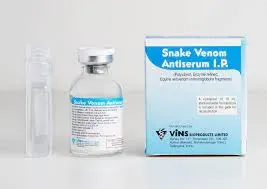
Gandhinagar, Feb 22 (NationPress) The government of Gujarat is set to introduce an anti-venom that is exclusively derived from the venom of local snake species, aiming to curb the number of human fatalities due to snakebites, as stated by officials on Sunday.
Officials indicated that this initiative is anticipated to enhance treatment efficacy and reduce mortality rates.
The effort is spearheaded by the Snake Research Institute (SRI), which was established by the state government in Dharmapur, located in the Valsad district.
The institute currently houses approximately 460 venomous snakes sourced from various regions within the state.
Venom extraction follows the guidelines set by the World Health Organisation (WHO), utilizing advanced technology to convert it into powder form.
This powdered venom is then auctioned to licensed anti-venom manufacturers, whose products will be acquired by the state government and distributed to hospitals throughout Gujarat for snakebite treatment.
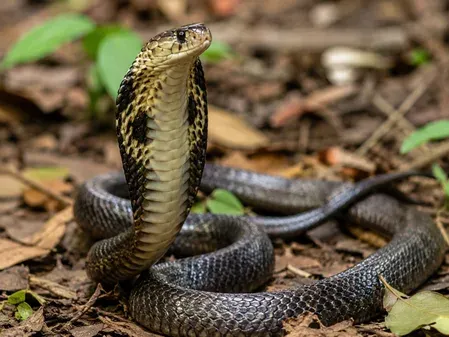
An official remarked, "The venom quality extracted from the snakes here is notably high, often selling for prices above the base rate. For instance, Indian Cobra venom, which has a base price of Rs 40,000 per gram, sold for Rs 44,000. Similarly, Saw-Scaled Viper venom, with a base price of Rs 50,000 per gram, fetched Rs 56,500. Other species also garnered strong demand and higher prices."
D.C. Patel, Vice-Chairman of the Snake Research Centre and a general surgeon, emphasized the significance of utilizing regional venom for effective treatment.
"The primary challenge in snakebite treatment is the regional variation in venom. Anti-venom sourced from distant areas often lacks effectiveness. To tackle this, Gujarat has established the SRI, which concentrates on producing anti-venom from local species. We are optimistic that the anti-venom derived from snakes captured in Gujarat will be more efficient in treating snakebite victims," he stated.
Patel, who operates a hospital in Dharmapur, has successfully treated snakebite patients with a recovery rate exceeding 98%, having documented each case over the past 35 years.
He further mentioned, "The venom sourced from local snakes is of superior quality, as the institute adheres to WHO standards. We anticipate a decrease in snakebite-related fatalities in the state with the anti-venom derived from this venom."
The SRI recently held an e-auction for lyophilized venom from four major venomous snake species found in Gujarat — Indian Cobra, Common Krait, Russell's Viper, and Saw-Scaled Viper.
Licensed anti-venom producers participated, and the excellent quality of the venom resulted in prices that surpassed expectations.
The institute functions under the Gujarat Forestry Research Foundation (GFRF), an autonomous entity under the state's Forest and Environment Department.
Plans are in motion to upgrade the SRI into a premier institution, with 2.25 hectares allocated by Valsad Collector Bhavya Verma for a permanent campus and infrastructure.
A proposal amounting to Rs 11.68 crore has been submitted to the Gujarat government for this development.
India holds the distinction of being the first nation globally to adopt a national action plan addressing snakebite envenoming.
Under the leadership of Prime Minister Narendra Modi, the Central government rolled out the 'National Action Plan for Prevention and Control of Snakebite Envenoming (NAP-SE)' in March 2024, with the goal of halving snakebite-related deaths and disabilities by 2030.
The SRI in Gujarat is a crucial component of this initiative.
Furthermore, the institute has trained over 300 local snake rescuers and more than 1,495 doctors and medical officers across 23 districts in managing snakebites.
Awareness campaigns are conducted with educators and local panchayats to encourage safe practices and dispel myths.
The institute has also published a photographic field guide titled, "Snakes of Valsad", and produced a related documentary film.
Currently, the extraction of venom for anti-venom production in India is carried out by Tamil Nadu's Irula Snake Catchers Industrial Cooperative Society Limited.
The Dharmapur-based Snake Research Centre has now become the second institution in the country to undertake this task.
Point of View
I see this initiative by Gujarat's government as a pivotal step towards addressing a pressing health crisis. By leveraging local resources and expertise, the state is not only aiming to save lives but also setting a precedent for similar efforts across the country. The collaboration between medical professionals and research institutions underscores the importance of localized solutions in public health.
NationPress
2 Oct 2026
Frequently Asked Questions
What is the aim of Gujarat's new anti-venom initiative?
The initiative aims to reduce human deaths caused by snakebites by producing anti-venom from locally sourced snake venom, enhancing treatment effectiveness.
What is the role of the Snake Research Institute?
The Snake Research Institute is responsible for extracting venom from local snake species and preparing it for anti-venom production.
How does local venom improve treatment?
Local venom is believed to be more effective in treating snakebite victims due to its regional specificity, as venom varies significantly across different areas.
What is the expected impact of this initiative?
The initiative is expected to lower mortality rates associated with snakebites and provide timely and effective treatment to affected individuals.
Who oversees the Snake Research Institute?
The institute operates under the Gujarat Forestry Research Foundation, an autonomous body within the state's Forest and Environment Department.