How Did the Human Capital Meeting in Guwahati Address Language AI and Bhashini?
Synopsis
The Human Capital Working Group Meeting in Guwahati focused on leveraging AI for enhancing language access and digital inclusion in India. This gathering highlighted the importance of local language technologies, particularly in the Northeast, and showcased the innovative BHASHINI initiative aimed at making digital services more accessible.
Key Takeaways
AI technologies can significantly improve language accessibility in India.
The National Language Translation Mission focuses on 22 recognized languages.
The Northeast has a rich linguistic diversity with nearly 200 languages.
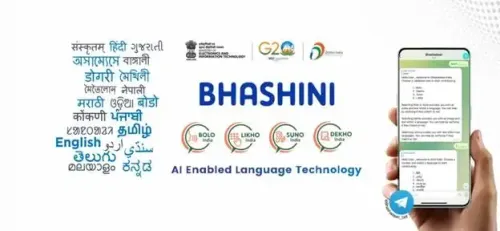
BHASHINI enables digital interaction in native languages.
Local data collection is crucial for developing effective language technologies.
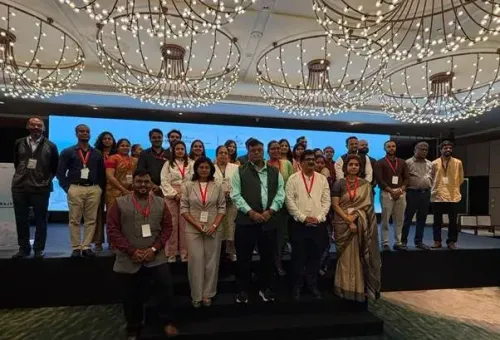
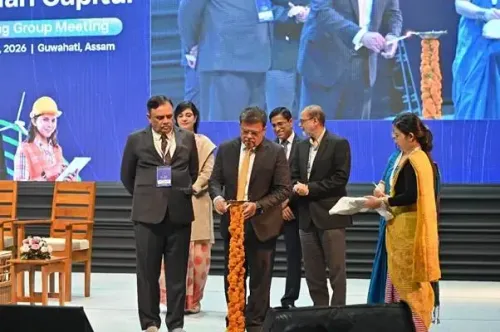
New Delhi, Jan 6 (NationPress) The second day of the Human Capital Working Group Meeting in Guwahati wrapped up on Tuesday with insightful conversations about the practical application of artificial intelligence to enhance language access, education, and digital inclusion throughout India.
This two-day conference was organized by the Ministry of Electronics and Information Technology alongside the IndiaAI Mission, in partnership with the Assam Government and IIT Guwahati.
The day commenced with a session discussing the framework of the National Language Translation Mission.
During this session, Mitesh Khapre from IIT Madras, who leads AI4Bharat, elaborated on the mission's progression over the past four years.
“This initiative aims to develop core AI and language technologies that embody India’s extensive linguistic diversity,” he stated.
Khapre emphasized that the mission concentrates on the 22 languages recognized in the constitution, which collectively represent nearly 99 percent of the nation's population.
Another significant discussion centered on language technology development in the Northeast.
Rohit Sinha from IIT Guwahati pointed out the region's unique linguistic variety, noting that the Northeast is home to approximately 200 languages despite its smaller population share.
He mentioned that the Centre for Linguistic Science and Technology at IIT Guwahati is aiding government-led language initiatives by gathering local data, involving native speakers, and creating tools such as machine translation, speech recognition, and text-to-speech systems.
By prioritizing low-resource languages like Assamese and Mizo, the Centre is facilitating better access to education, governance, and digital services.
The BHASHINI platform also played a pivotal role in the discussions. Jyotismita Devi from the Digital India BHASHINI Division outlined that the initiative seeks to enhance the accessibility of digital platforms through voice-driven and language-inclusive technologies.
She noted that BHASHINI enables citizens to engage with government services and digital platforms in their native languages, even if they lack literacy or internet proficiency.
The closing session of the day dealt with AI education and was led by Amit Awekar from IIT Guwahati.
Speaking to students, he discussed employing a reverse engineering strategy to teach AI.
Point of View
The discussions held at the Human Capital Working Group Meeting in Guwahati underline the critical role of technology in bridging language gaps and promoting inclusive governance. The emphasis on local languages, particularly in the Northeast, demonstrates a commitment to ensuring that all citizens benefit from digital advancements. This approach aligns with the broader goal of fostering a digitally inclusive society in India.
NationPress
2 Oct 2026
Frequently Asked Questions
What was the main focus of the Human Capital Meeting in Guwahati?
The meeting primarily focused on the practical implementation of artificial intelligence to enhance language access, education, and digital inclusion across India.
Who organized the Human Capital Working Group Meeting?
The event was organized by the Ministry of Electronics and Information Technology in collaboration with the IndiaAI Mission, the Assam Government, and IIT Guwahati.
What is the BHASHINI initiative?
BHASHINI is a platform aimed at making digital services more accessible through voice-driven and language-inclusive technologies, allowing citizens to interact in their native languages.
How does the Centre for Linguistic Science and Technology contribute to language missions?
The Centre supports government-led language missions by collecting local data, engaging native speakers, and developing tools like machine translation and speech recognition.
Why is it important to focus on low-resource languages?
Focusing on low-resource languages like Assamese and Mizo helps improve access to education, governance, and digital services for diverse populations.