Haryana's 2026-27 Budget: A Commitment to Fiscal Discipline and Growth
Synopsis
Haryana CM Nayab Singh Saini presents the state Budget for 2026-27, highlighting a commitment to fiscal discipline and robust capital investment. With a focus on reducing fiscal and revenue deficits, the budget sets ambitious targets for sustainable economic growth.
Key Takeaways
Fiscal Discipline: The budget prioritizes financial responsibility.
Capital Investment: Significant increase in capital expenditure proposed.
Deficit Reduction: Aiming for lower fiscal and revenue deficits.
Infrastructure Development: Focus on enhancing state infrastructure.
Budget Utilization: Nearly 98% of the budget expected to be utilized.
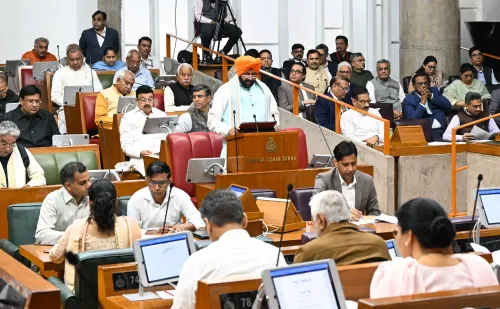
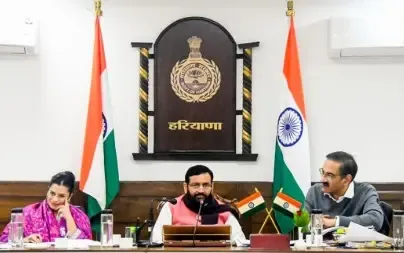
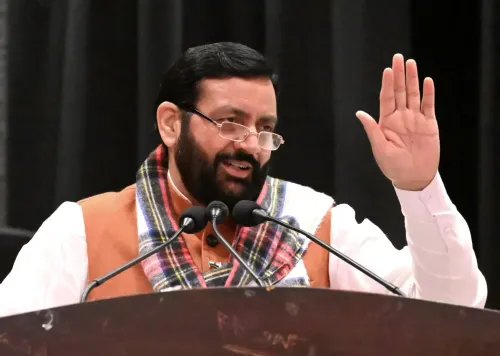
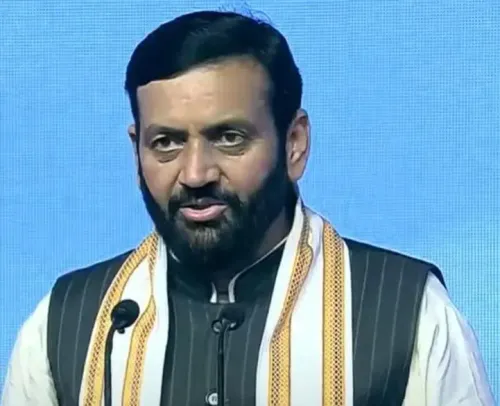
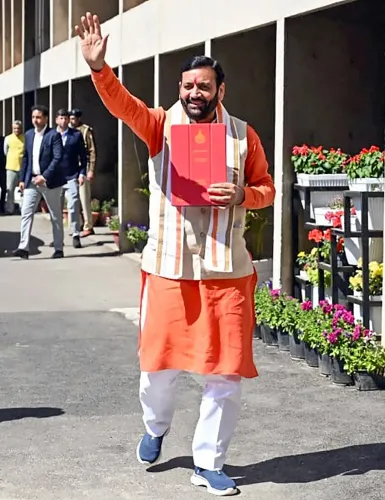
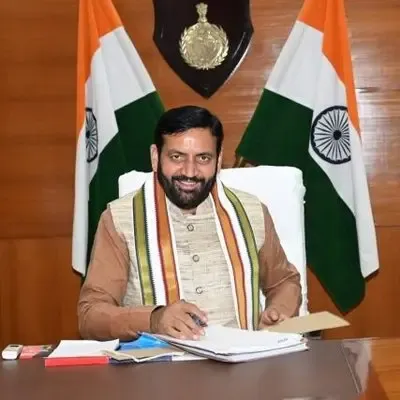
Chandigarh, March 2 (NationPress) Strengthening the state's dedication to fiscal responsibility and growth through development, Haryana Chief Minister Nayab Singh Saini unveiled the state's Budget for 2026-27 on Monday. He highlighted seven essential pillars that emphasize disciplined financial management and a significant increase in capital investment.
According to CM Saini, the most telling measure of a government's financial management is the fiscal deficit.
“From 2005 to 2014, Haryana’s fiscal deficit surged from Rs 286 crore to Rs 12,586 crore—a staggering nearly 44-fold increase. In contrast, during the decade from 2014 to 2024, the fiscal deficit grew by merely 2.75 times. The Fiscal Responsibility and Budget Management Act, 2003 stipulates that a state’s fiscal deficit should stay below three percent of its GDP for that year,” he stated.
The Chief Minister, also serving as Finance Minister, noted that in 2014-15, the fiscal deficit was recorded at 2.88 percent of GDP, which has since improved to 2.83 percent in 2024-25.
In the previous budget, the government aimed to further lower this figure to 2.67 percent.
He remarked that previous years experienced uncontrolled fiscal deficit expansion; however, since 2014, the current administration has prioritized financial discipline. The fiscal deficit was 2.88 percent of GSDP in 2014-15.
Thanks to ongoing fiscal reforms and wise management, it has been reduced to 2.66 percent for 2025-26 and is expected to be further decreased to 2.65 percent in 2026-27, comfortably within the legal limit.
Highlighting the government's commitment to asset creation, Saini pointed out the consistent and notable increase in capital expenditure. In 2004-05, capital expenditure was Rs 1,105 crore, making up 7.1 percent of the total budget.
By 2014-15, this figure had risen to Rs 4,558 crore, accounting for 7.4 percent. In 2024-25, capital outlay saw a sharp increase to Rs 15,642 crore, representing 8.9 percent of the budget. Revised estimates for 2025-26 indicate it will reach Rs 21,207 crore, making up 10.5 percent.
For 2026-27, capital expenditure is proposed at Rs 28,205 crore, constituting 12.6 percent of the total budget, marking a historic growth aimed at enhancing infrastructure and development projects. He further noted that effective capital expenditure has experienced even greater growth.
From Rs 4,636 crore in 2014-15, which represented 7.5 percent of the total budget, it has escalated to Rs 27,650 crore in 2025-26, comprising 13.6 percent—an increase of 6.1 percentage points over eleven years.
For 2026-27, effective capital expenditure is projected at Rs 35,216 crore, making up 15.7 percent of the overall budget. Labeling it a remarkable milestone, the Chief Minister noted that for the first time in the state's history, nearly 98 percent of the total budget is anticipated to be utilized.
In 2014-15, with a total budget of Rs 73,301 crore, actual spending was Rs 61,903 crore, equating to a utilization rate of 84.45 percent.
For 2025-26, the total budget was Rs 205,017 crore, and by March 31, 2026, expenditures are estimated to be around Rs 202,000 crore, leading to a utilization rate of approximately 98 percent—an achievement reflecting enhanced financial planning and implementation.
Regarding the revenue deficit, Saini indicated it was 1.66 percent of total budget expenditure in 2004-05, which ballooned to 13.4 percent by 2014-15. By 2024-25, it had decreased to 11 percent.
For 2025-26, the estimated revenue deficit is 8.98 percent, significantly down from 2014-15, and for 2026-27, the government aims to reduce it further to 5.90 percent of total budget expenditure.
He added that the effective revenue deficit, which was 1.9 percent of GSDP in 2014-15, fell to 1.16 percent in 2024-25. Revised estimates for 2025-26 suggest it will be 0.86 percent, with a target of just 0.41 percent for 2026-27, demonstrating ongoing fiscal consolidation.
Frequently Asked Questions
What are the key highlights of Haryana's 2026-27 budget?
The budget emphasizes fiscal discipline, a reduction in fiscal and revenue deficits, and a significant increase in capital expenditure aimed at infrastructure development.
How has Haryana's fiscal deficit changed over the years?
Haryana's fiscal deficit increased substantially from 2005 to 2014 but has stabilized since then, with a goal to reduce it to 2.65% of GDP by 2026-27.
What is the proposed capital expenditure for 2026-27?
The proposed capital expenditure for 2026-27 is Rs 28,205 crore, constituting 12.6% of the total budget.
How does the budget plan to address the revenue deficit?
The budget aims to reduce the revenue deficit from 8.98% in 2025-26 to 5.90% in 2026-27.
What is the significance of effective capital expenditure in the budget?
Effective capital expenditure is expected to reach Rs 35,216 crore in 2026-27, highlighting a major investment in infrastructure and development.