Coir industry transforms rural India: 80% women workforce, ₹35 lakh success stories
Synopsis
India controls over 80% of the world's coir fibre output — and women make up 80% of its workforce. Now, MSME-backed entrepreneurs like Allam Gowthamy in Andhra Pradesh (₹35 lakh turnover, 120 women trained) and P. Surendran in Kerala (500+ customers, 20 tonnes of bio-fertiliser sold) are showing how coconut husk can become a full-scale rural economy.
Key Takeaways
India accounts for more than 80 per cent of global coir fibre production, making it the world's largest producer.
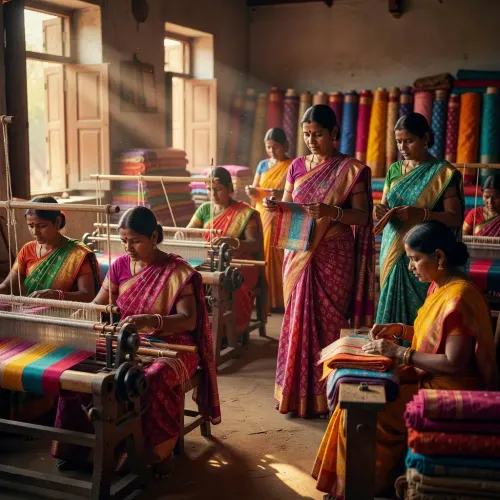
Women make up nearly 80 per cent of those engaged in coir fibre extraction and spinning, making it one of India's most women-centric rural industries.
Allam Gowthamy of Kadiyam, Andhra Pradesh built Adigo Coir Products with a ₹10 lakh project cost, achieving ₹35 lakh annual turnover and training 120 women in coir crafts.
Surendran launched SAFE in Kozhikode, Kerala in November 2024 , selling 20+ tonnes of coir pith bio-fertiliser to 500+ customers and earning ₹13 lakh in turnover in FY 2024–25.
The Central Coir Research Institute has developed coir-based rail wheel axle packaging cups as an eco-friendly alternative to HDPE plastic.
The MSME Ministry , through the Coir Board and PMEGP , is providing training, credit and technical support to scale coir entrepreneurship across India's coconut belt.
India is the world's largest producer of coir, accounting for more than 80 per cent of global coir fibre production — and the industry is quietly powering a rural livelihood revolution, with women making up nearly 80 per cent of those engaged in fibre extraction and spinning, according to a factsheet issued by the Ministry of Micro, Small and Medium Enterprises (MSMEs).
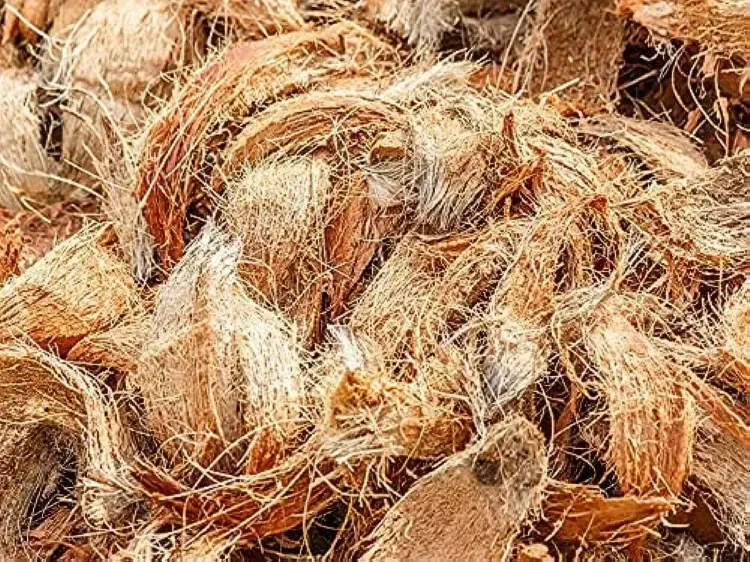
From coconut husks to doormats, ropes, handicrafts, and even bio-fertilisers, coir's value chain is drawing in coconut farmers, cooperatives, women artisans, manufacturers and exporters across India's coconut-growing regions — making it one of the most inclusive rural sectors in the country.
From Husk to High-Value Product
The potential of coir extends well beyond raw fibre. Through processing, design and innovation, coconut husk is being transformed into a wide range of higher-value goods — mats, brushes, decorative items, handicrafts, and eco-friendly packaging solutions. In a notable development, the Central Coir Research Institute has developed eco-friendly coir rail wheel axle packaging cups as a direct alternative to HDPE plastic cups, demonstrating how a traditional natural fibre can find applications in modern industries while supporting environmentally responsible production.
Government Support Driving Self-Employment
The MSME Ministry, through the Coir Board and the Prime Minister's Employment Generation Programme (PMEGP), is channelling institutional support to make coir a structured pathway to self-employment and women's empowerment. Training centres, technical assistance and subsidised credit are enabling entrepreneurs — many of them first-generation — to build viable businesses from what was once considered agricultural waste.
Allam Gowthamy: Training 120 Women in Andhra Pradesh
In Kadiyam, East Godavari district of Andhra Pradesh, Allam Gowthamy has become a model for what the coir ecosystem can produce. After receiving specialised training at the Coir Board Training Centre, Dhawaleswaram, she established Adigo Coir Products in 2024–25 with a project cost of ₹10 lakh — supported by a ₹6.50 lakh bank loan and PMEGP assistance. The unit produces eco-friendly doormats, ropes, decorative dolls and handicrafts.
The enterprise has since achieved an annual turnover of approximately ₹35 lakh and a profit of around ₹10 lakh, while generating direct employment for six women. Her ripple effect is equally significant: she has trained nearly 120 women in coir mat weaving, rope making and handicraft production, and her success has reportedly inspired around five additional coir units in nearby areas under the PMEGP.
P. Surendran: Turning Coir Pith into Bio-Fertiliser in Kerala
In Kozhikode, Kerala, P. Surendran established Sampoorna Plus Agro Fertiliser Enterprises (SAFE) in November 2024, converting coir pith — a byproduct often discarded — into eco-friendly bio-fertiliser that improves soil fertility and moisture retention. With training and technical support from the Coir Board, Kannur and the Central Coir Research Institute (CCRI), Kalavoor, his enterprise built a customer base of more than 500, sold over 20 tonnes of bio-fertiliser, and generated a turnover of ₹13 lakh with a profit of ₹4 lakh in FY 2024–25. The unit employs five workers, including two women.
Both stories reflect a broader pattern: with the right technical backing and credit access, coir is no longer just a fibre industry — it is becoming a platform for sustainable rural enterprise. As the MSME Ministry continues to scale up PMEGP coverage and Coir Board training, the question is whether this model can be replicated at speed across India's vast coconut belt.
Point of View
Women's economic agency, and green manufacturing — without requiring a high-tech leap. Yet its scale remains modest relative to India's coconut-growing footprint, which spans Kerala, Tamil Nadu, Andhra Pradesh, Karnataka and beyond. The PMEGP model works when training and credit arrive together, as Gowthamy's unit shows, but coverage is uneven. The bigger policy question is whether Coir Board outreach can be systematically expanded before cheaper synthetic alternatives entrench further in markets that coir currently holds.
NationPress
14 Sept 2026
Frequently Asked Questions
Why is India's coir industry important for rural women?
Women account for nearly 80 per cent of those engaged in coir fibre extraction and spinning in India, making the sector one of the country's most women-centric rural livelihoods. It provides income to women artisans, cooperative members and home-based workers across India's coconut-growing regions.
What is the PMEGP and how does it support coir entrepreneurs?
The Prime Minister's Employment Generation Programme (PMEGP) is a credit-linked subsidy scheme run by the MSME Ministry that helps first-generation entrepreneurs set up micro-enterprises. In the coir sector, it combines Coir Board training with subsidised bank loans — as seen in Allam Gowthamy's ₹10 lakh unit in Andhra Pradesh, which received ₹6.50 lakh in bank credit alongside PMEGP assistance.
What products can be made from coir beyond doormats?
Coir can be processed into mats, ropes, brushes, decorative items, handicrafts, eco-friendly packaging solutions, and even bio-fertiliser from coir pith. The Central Coir Research Institute has also developed coir-based rail wheel axle packaging cups as an alternative to HDPE plastic.
Who is Allam Gowthamy and what has she achieved?
Allam Gowthamy is a coir entrepreneur based in Kadiyam, East Godavari district, Andhra Pradesh, who established Adigo Coir Products in 2024–25 with a ₹10 lakh project cost. Her unit now generates approximately ₹35 lakh in annual turnover and has directly trained nearly 120 women in coir mat weaving, rope making and handicraft production.
How is coir pith being used as bio-fertiliser in Kerala?
P. Surendran's enterprise, Sampoorna Plus Agro Fertiliser Enterprises (SAFE), in Kozhikode, Kerala, converts coir pith — a byproduct of fibre extraction — into eco-friendly bio-fertiliser that improves soil fertility and moisture retention. In its first year (FY 2024–25), the unit sold over 20 tonnes to 500-plus customers, earning ₹13 lakh in turnover.