India coir exports surge 305% in a decade; 21,000+ units on Udyam portal
Synopsis
India's coir industry has quietly become a global powerhouse — exports have surged 305% over the past decade to ₹6,614 crore in FY26, with over 21,000 units now formalised on the Udyam portal. The real story is the human one: 7 lakh workers, 80% of them rural women, powering a ₹16,000 crore industry built entirely on coconut husks.
Key Takeaways
Coir exports rose 305% over the past decade, reaching ₹6,614.40 crore in FY26 .
Over 21,000 coir units are registered on the Udyam portal, employing 2.3 lakh people .
The sector provides direct and indirect employment to over 7 lakh workers , around 80% of whom are women from rural households.
India accounts for approximately two-thirds of global coir production; industry turnover stands at ₹16,000 crore .
More than 68,000 persons trained under sector skill programmes, with women comprising over 80% of trainees.
The Coir Vikas Yojana is the central scheme driving technology adoption, skilling, and market promotion in the sector.
India's coir sector has recorded a 305 per cent rise in exports over the past decade, with more than 21,000 coir units now registered on the Udyam portal and generating employment for 2.3 lakh people, according to an official statement issued by the Ministry of Micro, Small and Medium Enterprises (MSMEs) on Wednesday, 14 October 2026. The figures underscore India's dominant position as the world's largest producer and exporter of coir and coir products.
India's Global Standing in Coir
India accounts for approximately two-thirds of global coir production, cementing its leadership in a sector that has grown from a traditional cottage industry into a ₹16,000 crore turnover industry contributing close to 1 per cent of the country's GDP. Exports of coir and coir products were valued at ₹6,614.40 crore in FY26, with the United States, China, the Netherlands, Spain, and the United Kingdom among the top five export destinations.
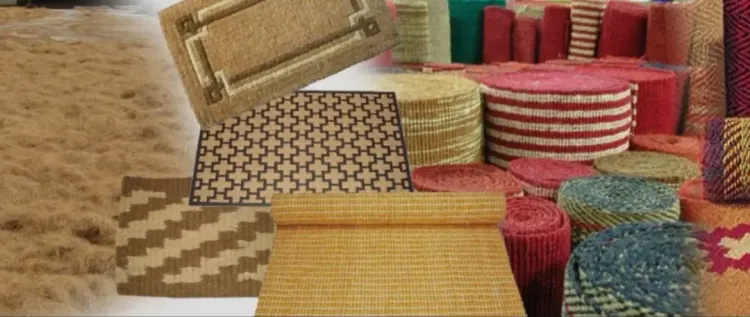
The major products driving export growth include coir pith, fibre, yarn, and tufted mats — all derived from coconut husks, making the sector inherently circular and sustainable.
Employment and Women's Participation
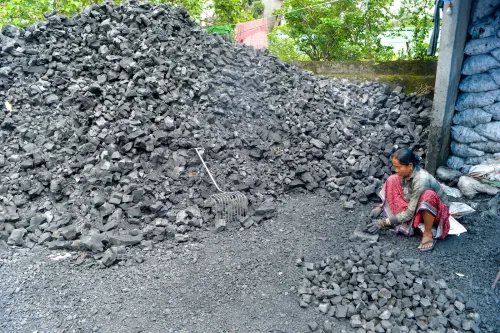
The coir sector provides direct and indirect employment to over 7 lakh workers, of whom roughly 80 per cent are women from rural households. This places coir among India's most gender-inclusive traditional industries. The sector's rural reach means its economic benefits flow disproportionately to communities that are often bypassed by mainstream industrial growth.
More than 68,000 persons have been trained under various skill development programmes linked to the sector, with women again accounting for over 80 per cent of trainees.
Coir Vikas Yojana: The Central Scheme Driving Growth
The MSME Ministry highlighted the Coir Vikas Yojana as the central scheme supporting the sector's sustainable expansion. The scheme provides assistance across new technology adoption, skill training, market promotion, participation in trade fairs, and financial support to coir artisans and enterprises. Officials noted the scheme is designed to accelerate value addition — moving production up the chain from raw fibre to finished, exportable goods.
This comes amid a broader government push to formalise traditional industries through digital platforms like Udyam, with the 21,000-plus registrations marking a significant step toward bringing coir units into the formal economy and making them eligible for institutional credit and government schemes.
Sustainability and the Viksit Bharat Vision
The MSME Ministry's statement positioned the coir sector as a model for eco-friendly, inclusive industrialisation. 'With its strong focus on sustainability, value addition and inclusive growth, the Coir sector is playing a crucial role in India's journey towards Viksit Bharat @2047,' the ministry said. Notably, the sector's core raw material — coconut husk — is an agricultural by-product, making coir processing a zero-waste enterprise aligned with India's sustainability commitments.
With export momentum building and formalisation accelerating, the sector's trajectory over the next five years will hinge on how effectively the Coir Vikas Yojana translates training and market access into sustained income gains for its predominantly rural, female workforce.
Point of View
Particularly when rupee depreciation inflates figures. The sector's 80% female workforce is a genuine social achievement, but the quality of employment — piece-rate versus salaried, seasonal versus year-round — matters as much as the headcount. The Coir Vikas Yojana's training numbers are impressive, but the ministry's statement is silent on post-training absorption rates. Formalisation via Udyam is a necessary but insufficient step; institutional credit access for rural women-led units remains the harder, unfinished task.
NationPress
14 Oct 2026
Frequently Asked Questions
How much have India's coir exports grown in the last decade?
India's coir exports have risen by 305% over the past decade, reaching ₹6,614.40 crore in FY26. The United States, China, the Netherlands, Spain, and the United Kingdom are the top export destinations.
How many coir units are registered on the Udyam portal?
Over 21,000 coir units are registered on the Udyam registration portal as of October 2026, generating employment for 2.3 lakh people. Udyam registration enables these units to access formal credit and government schemes.
What is the Coir Vikas Yojana and what does it do?
The Coir Vikas Yojana is the central government scheme for the sustainable development of India's coir sector. It provides support for new technology adoption, skill training, market promotion, trade fair participation, and financial assistance to artisans and coir enterprises.
How many people does the coir sector employ in India?
The coir sector provides direct and indirect employment to over 7 lakh workers in India, of whom approximately 80% are women from rural households. More than 68,000 persons have been trained under sector skill programmes, with women accounting for over 80% of trainees.
What is India's position in global coir production?
India is the world's largest producer and exporter of coir and coir products, accounting for about two-thirds of global production. The industry has a turnover of approximately ₹16,000 crore and contributes close to 1% of India's GDP.