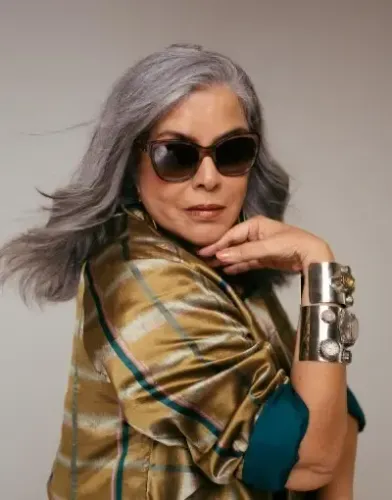
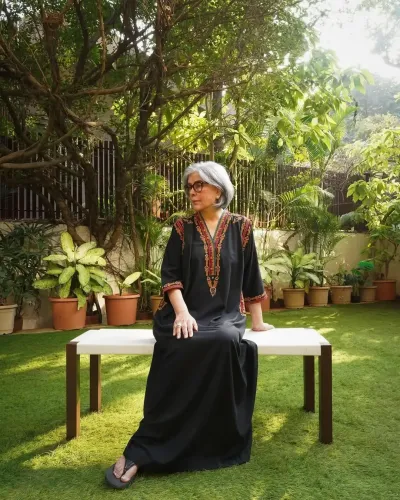
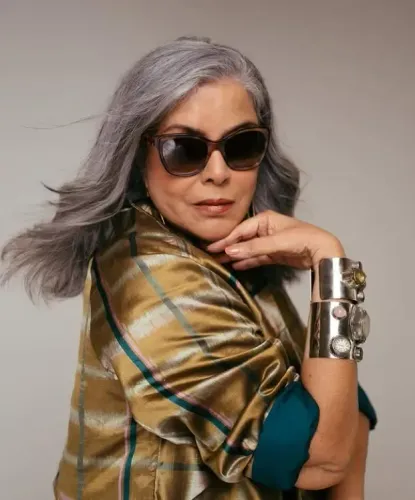
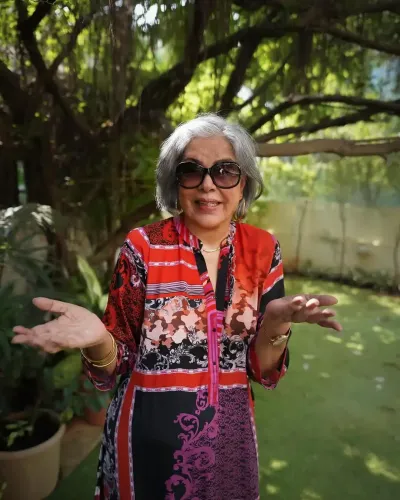
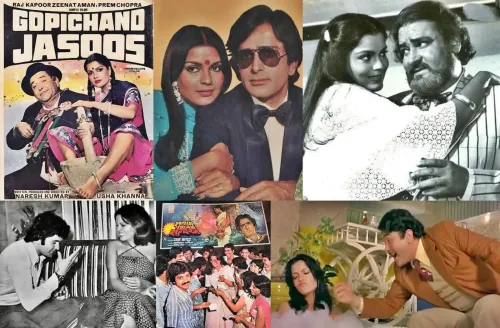
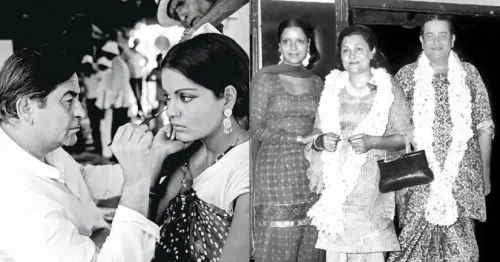
Zeenat Aman on landing Rupa in 'Satyam Shivam Sundaram' (1978)

Synopsis
Zeenat Aman didn't wait for an audition — she walked into RK Studio dressed as Raj Kapoor's imagined Rupa, and walked out with the role. The gold ginnies from Krishna Kapoor and a test reel that echoed a Nargis Dutt classic sealed one of Hindi cinema's most storied casting moments.
Key Takeaways
Zeenat Aman revealed the casting story on The Kapil Sharma Show .
She arrived at RK Studio dressed as she believed Raj Kapoor had visualised his heroine Rupa — without a formal audition.
Krishna Kapoor presented her with gold ginnies , after which Raj Kapoor declared, 'You are my Rupa.' Kapoor shot a test reel with Zeenat mirroring one previously filmed with Nargis Dutt for 'Jago Mohan Pyare' ; distributors agreed to back the film only after viewing it. 'Satyam Shivam Sundaram' ( 1978 ), directed by Raj Kapoor and written by Jainendra Jain , also starred Shashi Kapoor .
Veteran actress Zeenat Aman once revealed on The Kapil Sharma Show exactly how she secured the iconic role of Rupa in Raj Kapoor's 1978 classic 'Satyam Shivam Sundaram' — a story of bold initiative, a costume gamble, and a handful of gold coins that sealed the deal.
How the Role Came About
At the time, Zeenat was already collaborating with Raj Kapoor on another project, 'Waqeel Babu'. She recalled that Kapoor would frequently speak about his vision for Rupa, the film's central character, leaving her deeply drawn to the role. As an actor, she said, she had always wished to be directed by him.
Determined to make her case, Zeenat took a calculated step: she arrived at RK Studio dressed as she believed Kapoor had imagined his leading lady — an audacious move that would prove decisive.
Raj Kapoor's Reaction and the Gold Ginnies
Kapoor was reportedly pleasantly surprised to see Zeenat in that avatar. He immediately called his wife, Krishna Kapoor, to the studio. Krishna arrived and presented Zeenat with gold ginnies — a gesture that, in the context of the moment, carried unmistakable significance.
Raj Kapoor then told her directly: 'You are my Rupa.' The role was hers.
The Nargis Dutt Reel That Convinced Distributors
Zeenat also disclosed a lesser-known detail: Raj Kapoor shot a test reel with her, replicating one he had previously filmed with Nargis Dutt for 'Jago Mohan Pyare'. It was only after distributors watched that reel that they agreed to back the picture — underlining just how much was riding on Zeenat's casting.
About 'Satyam Shivam Sundaram'
Directed by Raj Kapoor and written by Jainendra Jain, the film also starred Shashi Kapoor as the male lead. The story follows Roopa, a woman whose face has been partially disfigured in a fire, and Rajeev, a handsome engineer overseeing a dam project in her village, who falls in love with and marries her before discovering the extent of her scar. The film remains one of the most discussed productions of its era, both for its bold narrative and its visual ambition.
Zeenat's account offers a rare behind-the-scenes window into how one of Hindi cinema's most memorable casting decisions was made — not in a formal audition room, but through instinct, preparation, and a walk into RK Studio in character.
Point of View
Casting was as much intuition and personal chemistry as it was screen tests. Zeenat Aman's self-directed walk-in at RK Studio — in costume, no less — reflects a kind of actor agency rarely discussed in accounts of that period. The detail about the Nargis Dutt reel is particularly telling: it suggests Kapoor was not just casting a face but consciously invoking a lineage, using the ghost of an earlier muse to sell a new one to the market. That distributors needed the reel to say yes also tells us something about how little star power alone could guarantee a green light, even for a filmmaker of Kapoor's stature.
NationPress
21 Oct 2026
Frequently Asked Questions
How did Zeenat Aman get the role of Rupa in 'Satyam Shivam Sundaram'?
Zeenat Aman walked into RK Studio dressed as she believed Raj Kapoor had imagined his heroine Rupa, without a formal audition. Kapoor was so impressed that he summoned his wife Krishna Kapoor, who presented Zeenat with gold ginnies, after which Kapoor told her, 'You are my Rupa.'
Where did Zeenat Aman reveal this casting story?
She shared the account during an appearance on The Kapil Sharma Show, in response to host Kapil Sharma's question about how a glamorous actress came to be cast in a role where the character's face is largely concealed.
What is the significance of the Nargis Dutt reel in this story?
Raj Kapoor shot a test reel with Zeenat Aman that replicated one he had previously filmed with Nargis Dutt for 'Jago Mohan Pyare'. Distributors agreed to buy the picture only after watching this reel, making it a pivotal moment in the film's journey to production.
What is 'Satyam Shivam Sundaram' about?
The 1978 film follows Roopa, a woman whose face is partially disfigured by fire, and Rajeev, an engineer who falls in love with and marries her before discovering her scar. Directed by Raj Kapoor and written by Jainendra Jain, the film also starred Shashi Kapoor as the male lead.
Who else was involved in making 'Satyam Shivam Sundaram'?
The film was directed by Raj Kapoor and written by Jainendra Jain. Shashi Kapoor played the male lead Rajeev, opposite Zeenat Aman's Roopa. It was produced under the RK banner.