IIT Kharagpur Director: Professional criticism fine, personal mockery is not
Synopsis
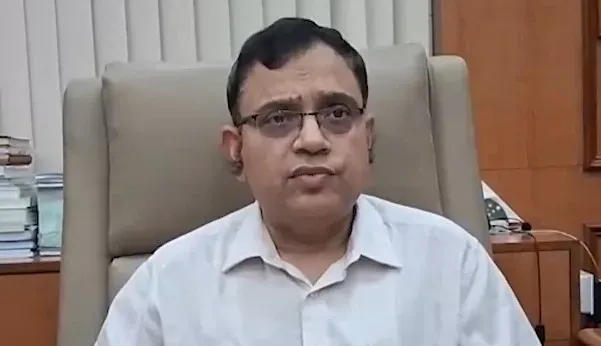
IIT Kharagpur Director Suman Chakraborty has drawn a firm line: criticise an academic's work, yes — mock the person, no. His public defence of IIT Madras chief V. Kamakoti, a day after an academic open letter to Priyanka Gandhi, signals that the 'gaumutra expert' remark has triggered a rare, unified pushback from India's top institutional leadership.
Key Takeaways
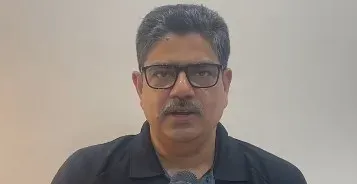
IIT Kharagpur Director Suman Chakraborty on 31 July said professional criticism of academics is healthy but personalised mockery is unacceptable.
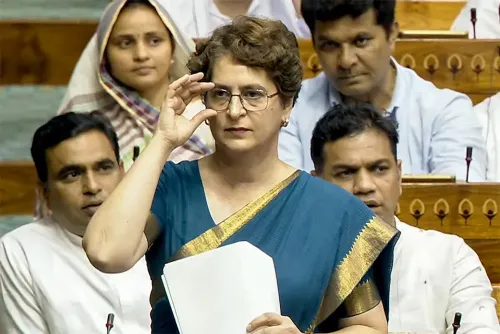
His remarks came amid controversy over Congress MP Priyanka Gandhi Vadra 's reported 'gaumutra expert' description of IIT Madras Director V.
A group of academics and education leaders had issued an open letter to Priyanka Gandhi a day earlier, urging respect for scientific discourse.
Chakraborty stressed that top academicians keep their personal political views separate from their professional conduct.
He called on politicians to express opinions without mixing them with personal, potentially derogatory commentary on individuals.
IIT Kharagpur Director Suman Chakraborty on Friday, 31 July defended the dignity of academics in public discourse, stating that while professional criticism of any scholar is entirely acceptable in a democracy, subjecting an individual to personalised mockery crosses a line. His remarks came amid a widening controversy over a remark by Congress MP Priyanka Gandhi Vadra, who reportedly described IIT Madras Director V. Kamakoti as a 'gaumutra expert' — a characterisation that has drawn sharp backlash from academic circles.
What Chakraborty Said
Speaking to reporters in Kolkata, Chakraborty drew a clear distinction between legitimate intellectual dissent and personal attack. 'If there is a criticism, which is possible in a democracy, it should be a professional approach of criticising based on the context,' he said. 'For example, they may have an academic viewpoint which may be criticised by some others who may have a different academic viewpoint. It is very important and healthy in a democracy. But let there not be such kind of personalised mockery.'
He cautioned against using 'a serious context as a platform for mockery,' adding: 'Individual attack is not desirable. The dignity of the individual — it is not just about Professor Kamakoti or any other professor — it is a question of getting out of these personalised mockery-based approaches.'
On Academic Independence from Politics
Chakraborty was equally emphatic that academics and research must remain insulated from political ideology. 'I have not come across any top academicians who have succumbed to purely political viewpoint of any association,' he said. 'Anyone can have personal support for any political party but let that not interfere with our profession. That sanctity is protected by all the top academicians, whom we have known.'
Addressing politicians directly, he acknowledged their importance in public life while urging restraint: 'People from politics are most welcome to express their opinion because they actually have the pulse of the nation and are therefore important. But when they are giving their viewpoint, it should not be mixed with their personal opinion.'
The Backdrop: Open Letter and Academic Solidarity
Chakraborty's intervention came a day after a group of academics and education leaders issued an open letter to Priyanka Gandhi, expressing concern over what they described as an objectionable characterisation of Professor Kamakoti and calling for greater respect for scientific discourse and academic freedom in public life. The letter underscored a growing unease in academic circles over the tone of political commentary directed at institutional figures.
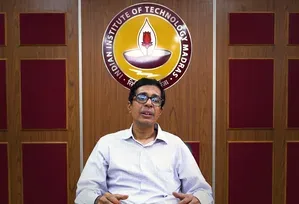
Notably, Chakraborty personally vouched for Kamakoti's standing: 'Personally, I admire his academic accolades,' he said, while framing the issue as one that extends well beyond any single individual.
What This Signals
The episode reflects a broader tension between political expression and institutional respect that has periodically surfaced in India's public discourse. Senior academics lending their voice to the debate signals that the controversy has moved beyond a partisan exchange and into questions about the norms governing how public figures engage with scientific institutions. Chakraborty's appeal — that 'personalised comments, which can be derogatory or humiliating, should not be made on a respected academician, whoever that is' — is likely to keep the debate alive in the days ahead.
Point of View
And when it does, the trigger is typically a perceived threat to institutional autonomy or personal dignity. What is missing from mainstream coverage is the asymmetry: Chakraborty carefully avoided naming Priyanka Gandhi while defending Kamakoti by name, which reflects the political tightrope senior government-linked institutions must walk. The deeper question — whether IIT directors' public positions on policy issues invite political scrutiny — remains unaddressed and is likely to resurface.
NationPress
15 Sept 2026
Frequently Asked Questions
What did IIT Kharagpur Director Suman Chakraborty say about the controversy?
Chakraborty said that while professional, context-based criticism of any academic is legitimate and healthy in a democracy, subjecting an individual to personalised mockery is undesirable and should be avoided by public figures, including politicians.
What is the 'gaumutra expert' remark controversy?
Congress MP Priyanka Gandhi Vadra reportedly referred to IIT Madras Director V. Kamakoti as a 'gaumutra expert,' a remark widely seen as derogatory. The comment triggered an open letter from academics and public statements from peers including IIT Kharagpur Director Suman Chakraborty.
Who signed the open letter to Priyanka Gandhi?
A group of academics and education leaders signed the open letter, expressing concern over Priyanka Gandhi's alleged characterisation of Professor Kamakoti and urging greater respect for scientific discourse and academic freedom in public life. Specific signatories were not detailed in available reports.
What did Chakraborty say about academics and political ideology?
Chakraborty stated he has not encountered top academicians who have allowed political associations to override their professional conduct. He said individuals may hold personal political views but must not let those interfere with their academic work — a standard he said is upheld by leading scholars.
Why does this controversy matter for academic freedom in India?
The episode highlights an ongoing tension between political commentary and institutional respect. When senior academics publicly defend a peer's dignity, it signals concern that the boundary between legitimate policy critique and personal attack on scholars is being eroded in public discourse.