Academics defend IIT Madras Director Kamakoti after Priyanka Gandhi's 'gaumutra expert' remark
Synopsis
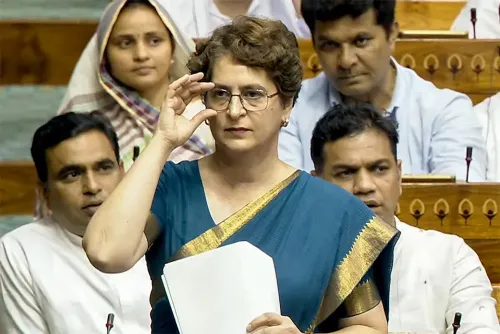
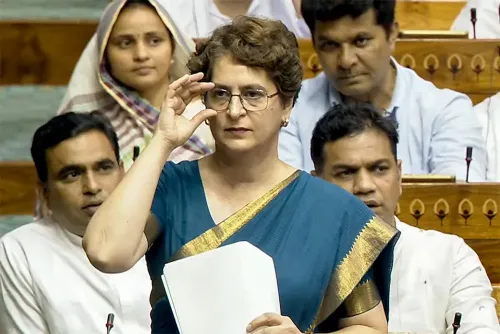
Academics and education leaders have pushed back against Congress MP Priyanka Gandhi Vadra's reported 'gaumutra expert' jibe at IIT Madras Director V. Kamakoti — a computer scientist with over 150 research papers and a key role in India's first industry-grade microprocessor. The open letter, coordinated by two senior academic administrators, draws a sharp line: Parliament must debate ideas with evidence, not personal labels.
Key Takeaways
An open letter dated 30 July was addressed to Congress MP Priyanka Gandhi Vadra by a group of academics and education leaders.
The letter objects to her reported description of IIT Madras Director V.
Kamakoti as a 'gaumutra expert' .
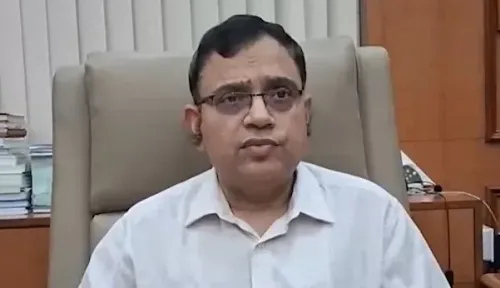
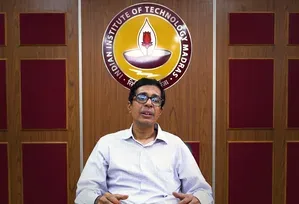
Kamakoti holds a Ph.D. in Computer Science and Engineering from IIT Madras, has authored more than 150 research papers , and contributed to India's first industry-grade microprocessor .
Signatories warn personal attacks on scholars could discourage researchers from participating in public discourse.
The letter was coordinated by former ICT Mumbai Vice-Chancellor G.D.
Yadav and Association of Indian Universities Secretary General Pankaj Mittal .
The academics urged Parliament to uphold dignity, evidence-based discussion, and mutual respect in scientific debates.
A group of academics and education leaders issued an open letter on 30 July to Congress MP Priyanka Gandhi Vadra, expressing concern over her reported description of IIT Madras Director V. Kamakoti as a 'gaumutra expert' — urging greater respect for scientific discourse and academic freedom in public life. The letter calls on Parliament to remain a forum where ideas are debated through evidence and reason rather than personal ridicule.
What the Open Letter Says
The signatories argued that reducing a scholar to a caricature, instead of engaging with the substance of his views, undermines the principles of scientific inquiry and weakens the quality of democratic debate. They stressed that disagreements over evidence and methodology are a normal part of scientific progress, but criticism should target arguments rather than individuals.
The letter also warned that remarks targeting scholars personally could discourage researchers and educators from participating in public discussions — a chilling effect on academic engagement with policy and governance.
Kamakoti's Academic Credentials
The letter highlights Professor V. Kamakoti's extensive academic and professional record. He holds M.S. and Ph.D. degrees in Computer Science and Engineering from IIT Madras, has authored more than 150 research papers, and participated in more than 50 research and development projects. He has received several honours, including the DRDO Academic Excellence Award and the Indian Electronics and Semiconductor Association's Techno Visionary Award.
The letter also credits him with playing a key role in the development of India's first industry-grade microprocessor — a landmark in the country's semiconductor journey.
Scientific Temper and Constitutional Values
The academics invoked the constitutional principle of scientific temper, arguing it requires not only scepticism but also a willingness to examine claims objectively before accepting or rejecting them. They noted that history has repeatedly shown ideas once considered implausible have later gained scientific acceptance, while some widely accepted theories have eventually been discarded.
The signatories said that, like any academic, Professor Kamakoti has the right to present hypotheses, discuss traditional knowledge systems, and participate in scientific conversations without facing personal attacks.
Who Coordinated the Letter
The open letter was coordinated by G.D. Yadav, former Vice-Chancellor of the Institute of Chemical Technology (ICT) Mumbai, and Pankaj Mittal, Secretary General of the Association of Indian Universities. The letter expressed hope that future debates — particularly in Parliament — would uphold the values of dignity, evidence-based discussion, and mutual respect.
This comes amid a broader national conversation about the boundaries of political speech when it intersects with science, academia, and institutional leadership.
Point of View
It sets a precedent for how political speech can delegitimise scientific leadership — regardless of whether the underlying disagreement on traditional knowledge systems has merit. India's academic community has long been caught between government pressure and opposition ridicule; neither is a substitute for rigorous public scrutiny. The real debate — whether claims around traditional knowledge meet scientific standards — has been drowned out by the label itself. That is precisely the problem the letter identifies, and it is one mainstream coverage has largely sidestepped.
NationPress
13 Sept 2026
Frequently Asked Questions
What did Priyanka Gandhi Vadra reportedly say about IIT Madras Director V. Kamakoti?
Priyanka Gandhi Vadra reportedly referred to IIT Madras Director V. Kamakoti as a 'gaumutra expert' — a remark that a group of academics described as a personal attack that undermines scientific discourse. The Congress MP has not publicly clarified the context of the remark as of the letter's date.
Who signed the open letter defending V. Kamakoti?
The open letter was coordinated by G.D. Yadav, former Vice-Chancellor of the Institute of Chemical Technology (ICT) Mumbai, and Pankaj Mittal, Secretary General of the Association of Indian Universities. It was signed by a group of academics and education leaders.
What are V. Kamakoti's qualifications and achievements?
V. Kamakoti holds M.S. and Ph.D. degrees in Computer Science and Engineering from IIT Madras. He has authored more than 150 research papers, participated in over 50 R&D projects, received the DRDO Academic Excellence Award and the Indian Electronics and Semiconductor Association's Techno Visionary Award, and played a key role in developing India's first industry-grade microprocessor.
What does the open letter ask for?
The letter urges elected representatives — particularly in Parliament — to engage with scientific and academic figures through evidence-based debate rather than personal labels. It calls for dignity, mutual respect, and objective examination of claims, in line with the constitutional principle of scientific temper.
Why does this controversy matter for academic freedom in India?
The academics warn that personal attacks on scholars in public forums could discourage researchers and educators from participating in policy discussions. They argue that political ridicule replacing reasoned engagement on complex scientific issues weakens both democratic debate and the quality of scientific discourse in the country.