IMC 2026: Industry leaders spotlight India's telecom rise at 10th edition
Synopsis
At its 10th edition, the India Mobile Congress 2026 has drawn international delegations — including a trade body from Iraq's Kurdistan Region — alongside Nokia, GSMA, and BSNL, reflecting India's rise from a telecom consumer to a global standard-setter. With 5G rollout maturing and 6G standardisation on the horizon, IMC is fast becoming Asia's answer to MWC Barcelona.
Key Takeaways
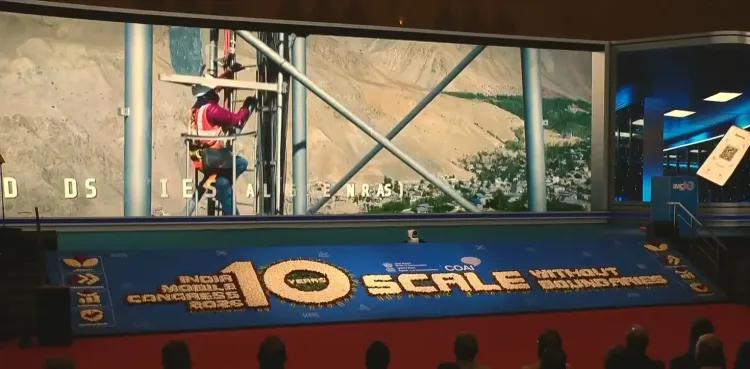
The 10th India Mobile Congress (IMC) 2026 is being held in New Delhi from 7–10 October 2026 , organised by the Department of Telecommunications and COAI .
Khalil Hayas Rashid of the Halabja Chamber of Commerce and Industry represented the Kurdistan Region of Iraq , signalling growing international interest in India's telecom ecosystem.
BSNL's Moirangthem Manitombi Devi highlighted IMC as a key platform for tracking 5G and 6G developments for operators and entrepreneurs.
GSMA's Michaela Angonius called connectivity a core pillar of the digital economy and praised India's approach to nurturing young innovators in satellite communications.
Nokia India Country Manager Vibha Mehra described IMC as a flagship telecom showcase that has evolved significantly over its 10-year history.
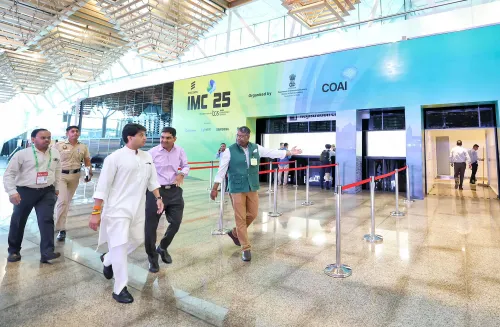
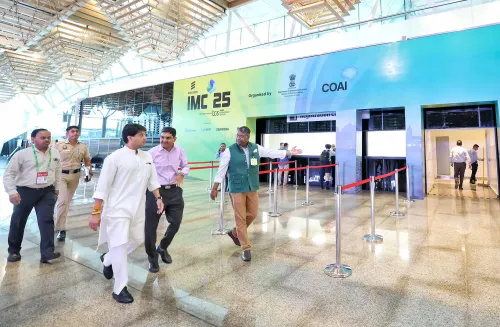
Telecom industry leaders from across the globe on Thursday, 8 October 2026 underscored India's expanding influence in the global digital and telecommunications ecosystem at the 10th edition of the India Mobile Congress (IMC) 2026 in New Delhi. The four-day event, running from 7–10 October and organised by the Department of Telecommunications and the Cellular Operators Association of India (COAI), brought together companies, startups, and policymakers under one roof.
International Delegations Take Note
Khalil Hayas Rashid of the Halabja Chamber of Commerce and Industry, representing the Kurdistan Region of Iraq at the event, said the delegation had been impressed by what it witnessed at the exhibition. 'We are here representing the Kurdistan Region of Iraq. We have come to India, and we are very happy to be here. This is a very good exhibition and we have had a very good experience so far,' Rashid said.
The presence of international trade bodies at IMC 2026 reflects a broader shift — India's telecom story is increasingly attracting attention well beyond its traditional Asia-Pacific sphere, with delegations arriving from the Middle East and Central Asia for the first time in recent editions.
5G, 6G and the Next Wave of Connectivity
Moirangthem Manitombi Devi of state-owned telecom giant BSNL highlighted the congress as a critical platform for tracking generational shifts in mobile technology. 'It is an opportunity to see what new developments are coming up in the technology sector, mobile technology and in every generation. Whether it is 5G or 6G, we can have compatible modes for organisations and entrepreneurs. This is a chance to see what opportunities are available,' she said.
India's 5G rollout — which reached over 700 districts by mid-2026 — has accelerated demand for next-generation compatible infrastructure and devices, making IMC a key checkpoint for operators and vendors alike. Discussions around 6G standardisation, in which India is seeking an active role at global bodies, also featured prominently at this year's edition.
Satellite Communications and the GSMA Perspective
Michaela Angonius, Head of Policy and Regulation at GSMA, said connectivity is now a core component of the digital economy, and flagged satellite communications as an emerging dimension of the broader ecosystem. 'I think India has been really great in allowing this young generation to think outside of the box and provide those services,' she said.
Her remarks come as India navigates a regulatory framework for satellite broadband, with multiple global operators seeking spectrum access. The GSMA's endorsement of India's approach to nurturing young innovators carries weight — the organisation represents mobile operators across more than 220 countries and territories.
Nokia's Decade-Long Presence at IMC
Vibha Mehra, India Country Manager for Nokia, described IMC's evolution from a government initiative into one of the telecom sector's most consequential annual showcases. 'IMC as a format is something which the government started 10 years back. And this has become one of the flagship events for the telecom industry. Nokia has been participating since the beginning. We bring our latest technology here, which becomes a showcase that customers want to see, that our partners want to see, as well as some of the startups want to see,' Mehra said.
Nokia's decade-long association with the event mirrors India's own trajectory in telecom — from a market dominated by imported hardware to one increasingly setting standards and manufacturing domestically.
IMC 2026 in Context
Now in its tenth year, the India Mobile Congress has grown from a domestic industry forum into a global platform, drawing parallel comparisons with MWC Barcelona in terms of scope and participation. This edition's focus on satellite connectivity, AI-integrated networks, and green telecom infrastructure signals the industry's next strategic priorities. The event concludes on 10 October 2026.
Point of View
Not just a market. The presence of a Kurdistan Region trade delegation is a small but telling data point — India's telecom credibility is now pulling in geographies with no prior engagement. What mainstream coverage tends to underplay is the satellite connectivity angle: with spectrum allocation still contested, GSMA's vocal support for India's regulatory openness adds external pressure on the government to settle the framework swiftly. The 6G standardisation race, meanwhile, is the real long game — and India's window to shape global norms, rather than inherit them, is narrowing.
NationPress
8 Oct 2026
Frequently Asked Questions
What is the India Mobile Congress 2026?
The India Mobile Congress (IMC) 2026 is the 10th edition of India's flagship annual telecom and digital technology event, held in New Delhi from 7–10 October 2026. It is organised by the Department of Telecommunications and the Cellular Operators Association of India (COAI), bringing together global companies, startups, and policymakers.
Who are the key participants at IMC 2026?
IMC 2026 has drawn participation from Nokia, BSNL, GSMA, and international trade bodies including a delegation from the Kurdistan Region of Iraq. Policymakers, telecom operators, and technology startups are also in attendance across the four-day event.
What technologies are in focus at IMC 2026?
The event is focusing on 5G deployment, 6G standardisation, satellite communications, AI-integrated networks, and green telecom infrastructure. BSNL officials highlighted the congress as a platform to explore compatible solutions for both current and next-generation mobile technology.
Why is GSMA's participation at IMC 2026 significant?
GSMA, which represents mobile operators across more than 220 countries, has endorsed India's regulatory approach to satellite connectivity and youth-led innovation. Its Head of Policy and Regulation, Michaela Angonius, called connectivity a core component of the digital economy, lending international credibility to India's telecom policy direction.
How has the India Mobile Congress evolved over the years?
Nokia India Country Manager Vibha Mehra noted that IMC began as a government-initiated format a decade ago and has since grown into one of the telecom industry's flagship global events. Nokia has participated since the first edition, using the platform to showcase new technologies to customers, partners, and startups.