IMD warns of below-normal monsoon in 2026, blames El Niño effect

Synopsis
India's weather authority has put the 2026 monsoon on watch — IMD Director Neetha K Gopal says El Niño will push rainfall below normal across major parts of India, including Kerala, with even June expected to fall short. The warning lands at a critical moment for kharif sowing and water security nationwide.
Key Takeaways
IMD Director Neetha K Gopal forecast below-normal monsoon rainfall across major parts of India, including Kerala , for 2026 .
El Niño is the cited cause, described as a 'peculiar feature' affecting both spatial and temporal rainfall distribution.
Rainfall in Kerala in June is also expected to be below normal; some improvement possible around June 10 post-onset, but not enough to lift monthly totals.
Delhi-NCR received thunderstorms and strong winds on 30 May ; pleasant weather expected until 4 June .
Sandstorms hit multiple districts in Rajasthan , including Churu , Bikaner , and Jaipur , with hailstones reported in rural areas.
The India Meteorological Department (IMD) has forecast below-normal rainfall across major parts of India, including Kerala, for the 2026 monsoon season, with El Niño cited as the primary driver. IMD Director Neetha K Gopal described the phenomenon as a 'peculiar feature' of El Niño years, warning that both spatial and temporal distribution of rainfall will be adversely affected.
What the IMD Forecast Says
Speaking on Saturday, 30 May, Gopal said the outlook 'is not a good picture in the sense that monsoon would be below normal for Kerala and major parts of India.' She noted that June rainfall in Kerala is also expected to be below normal.
'After the onset of the monsoon, around June 10, we might receive some good rainfall. However, after that, we may experience below-normal rainfall, so the total rainfall for the month is likely to be below normal,' she said.
El Niño's Role in the Deficit
Gopal attributed the forecast directly to El Niño conditions prevailing this year. 'This being an El Niño year, we have to experience this kind of below-normal rainfall, including spatial and temporal distribution of rainfall,' she said. She did, however, note that states could still receive adequate rainfall during specific periods within a week or month, interspersed with drier spells — a pattern she described as characteristic of El Niño years.
Weather Disruptions in Delhi-NCR and Rajasthan
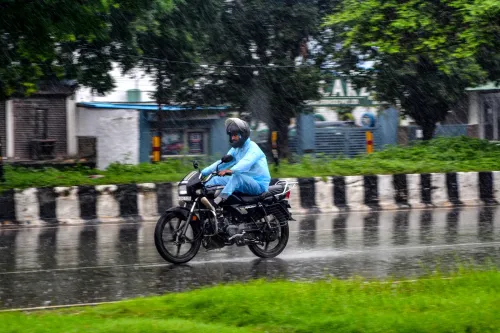
Even as the monsoon outlook remains grim, parts of northern India witnessed dramatic weather shifts on Saturday evening. Thunderstorms, strong winds, and rain swept across several areas of Delhi and the National Capital Region (NCR), providing relief from intense heat and humidity that had built up over recent days.
According to the IMD's latest forecast, weather across the NCR is expected to remain relatively pleasant until 4 June, with maximum temperatures likely to ease further.
In Rajasthan, sandstorms swept through Churu, Hanumangarh, Sri Ganganagar, Bikaner, Nagaur, Didwana-Kuchaman, Alwar, and Sikar, while Jaipur recorded rain accompanied by strong winds. Hailstones were also reported from some rural areas of the state.
What This Means for Agriculture and Water Security
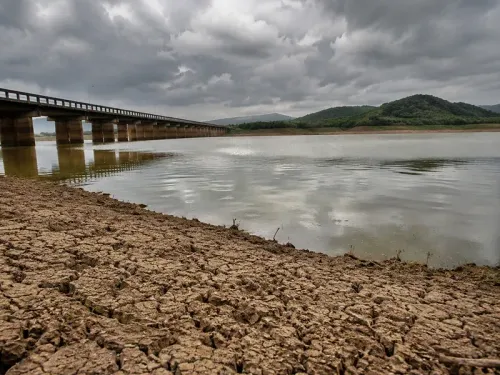
A below-normal monsoon carries significant consequences for India's rain-fed agriculture, which supports the livelihoods of millions of farmers. Kerala, a state heavily dependent on monsoon rains for its paddy and plantation crops, faces particular risk. Reservoir levels, groundwater recharge, and kharif crop sowing decisions across the country will all hinge on how the season actually unfolds against the IMD's current projections.
With El Niño conditions expected to persist through the season, weather agencies and state governments will need to monitor evolving forecasts closely as the monsoon advances northward.
Point of View
Which accounts for roughly half of annual food grain output, depends critically on June-September rainfall. El Niño-linked deficits in past years have coincided with reservoir stress and food inflation spikes, yet policy preparation tends to lag the science. The IMD's candour here is notable; the harder question is whether state governments and the Centre will translate this early warning into pre-emptive action on water conservation, crop insurance, and drought contingency planning — or wait for the deficit to materialise before responding.
NationPress
14 Oct 2026
Frequently Asked Questions
What did IMD forecast for the 2026 monsoon?
The IMD has forecast below-normal rainfall across major parts of India, including Kerala, for the 2026 monsoon season. IMD Director Neetha K Gopal attributed the deficit to El Niño conditions, warning that both the amount and distribution of rainfall will be adversely affected.
Why is the 2026 monsoon expected to be below normal?
El Niño conditions are the primary reason cited by the IMD for the below-normal forecast. El Niño typically suppresses monsoon rainfall over South Asia by warming the central and eastern Pacific Ocean, disrupting atmospheric circulation patterns that drive the Indian monsoon.
Will Kerala receive any good rainfall at all in June 2026?
The IMD says some good rainfall is possible around June 10 following monsoon onset, but overall June totals for Kerala are still expected to be below normal. Gopal noted that El Niño years can produce brief periods of adequate rainfall interspersed with prolonged drier spells.
What weather events occurred in northern India on 30 May?
Thunderstorms, strong winds, and rain swept across Delhi and the NCR on the evening of 30 May, providing relief from intense heat. Sandstorms hit multiple Rajasthan districts including Churu, Bikaner, and Jaipur, with hailstones reported in some rural areas.
Who is affected by a below-normal monsoon in India?
A below-normal monsoon primarily affects rain-fed farmers, particularly those growing kharif crops such as paddy, pulses, and oilseeds. It also impacts reservoir levels, groundwater recharge, hydropower generation, and can contribute to food price inflation affecting consumers nationwide.