India at 56th OAS General Assembly in Panama City
Synopsis
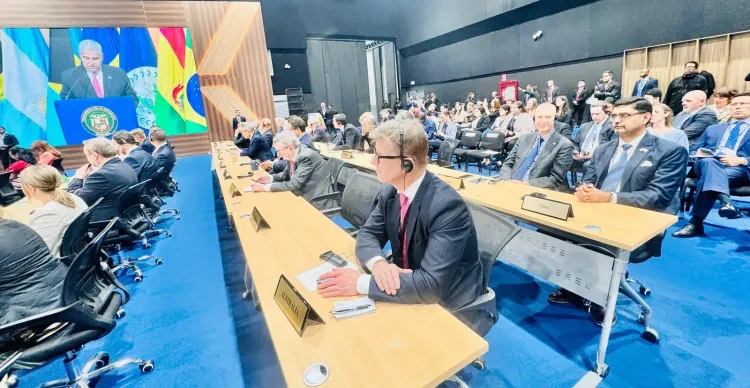
India showed up at the Western Hemisphere's premier multilateral forum — the 56th OAS General Assembly in Panama City — as a Permanent Observer, with Ambassador Sumit Seth representing New Delhi at the opening session. The assembly's focus on defending democracy and hemispheric security carries weight beyond the Americas, and India's continued presence signals a deliberate push to stay visible in Latin American diplomatic spaces.
Key Takeaways
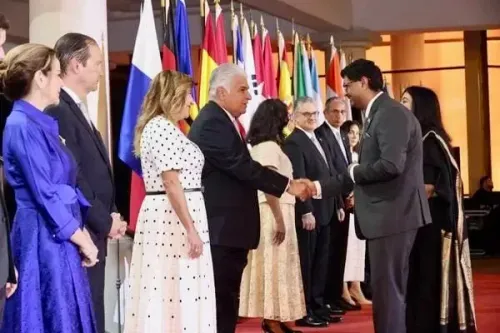
Ambassador Sumit Seth represented India at the opening of the 56th OAS General Assembly in Panama City on 23 June .
The assembly runs from 22 to 24 June — Panama's third time hosting, after 1996 and 2007 .
India participates as a Permanent Observer to the Organization of American States, without voting rights.
The assembly's theme centres on the bicentennial of the Amphictyonic Congress of Panama and multilateral defence of democracy.
The OAS General Assembly is responsible for electing members of bodies including the Inter-American Court of Human Rights and the Inter-American Commission on Human Rights .
India's Ambassador to Panama, Sumit Seth, represented the country at the opening of the 56th Organization of American States (OAS) General Assembly in Panama City on 23 June, reaffirming India's engagement with the Western Hemisphere as a Permanent Observer to the organisation. The three-day assembly, running from 22 to 24 June, marks Panama's third time hosting the event, having previously done so in 1996 and 2007.
India's Presence at the Assembly
Ambassador Seth attended the inaugural session and congratulated Panama President Jose Raul Mulino for his leadership, conveying best wishes for a successful outcome. India's Embassy in Panama confirmed the participation, noting that India holds Permanent Observer status at the OAS — a designation that allows non-member states to engage with the body's deliberations without voting rights.
Theme and Focus of the 56th Assembly
The assembly's overarching theme is 'The Americas United on the Bicentennial of the Amphictyonic Congress of Panama', with the specific topic being 'Firm Multilateralism in Defence of Democracy, Hemispheric Security, and Stability in the Member States.' The framing reflects growing regional anxieties over democratic backsliding and cross-border instability in parts of Latin America and the Caribbean.
What the OAS General Assembly Does
The General Assembly is the principal organ of the OAS and is typically attended by delegations headed by Ministers of Foreign Affairs. Each member state holds one vote, with most decisions taken by a simple majority, though certain matters require a two-thirds majority. The OAS tradition, however, is to adopt resolutions by consensus where possible.
The Assembly is responsible for setting the policies and mandates of the OAS and electing members of its autonomous bodies, including the Inter-American Court of Human Rights, the Inter-American Commission on Human Rights, the Inter-American Juridical Committee, the Justice Studies Center of the Americas, and the Administrative Tribunal.
India's Broader Diplomatic Footprint
India's participation as a Permanent Observer underscores its expanding multilateral diplomacy beyond its immediate neighbourhood. This comes amid New Delhi's broader push to deepen ties with Latin American and Caribbean nations, a region that has gained strategic salience in India's foreign policy calculus in recent years. India's presence at a hemispheric forum focused on democracy and security also aligns with its stated commitment to rules-based multilateralism on global platforms.
Point of View
But it is part of a consistent pattern of New Delhi inserting itself into multilateral forums well outside its traditional sphere. The OAS is a Western Hemisphere body; India has no vote and no binding stake in its resolutions. Yet showing up matters — it signals to Latin American capitals that India is a credible, engaged partner, not merely a transactional one. With the assembly's theme foregrounding democracy and hemispheric security, India's presence also carries a soft-power dimension: aligning New Delhi, at least symbolically, with the region's democratic consensus at a time when that consensus is under strain in several member states.
NationPress
22 Sept 2026
Frequently Asked Questions
What is the OAS General Assembly and why does it matter?
The OAS General Assembly is the principal decision-making organ of the Organization of American States, attended by delegations — typically led by Foreign Ministers — from all member states. It sets OAS policy, approves mandates, and elects members of key bodies such as the Inter-American Court of Human Rights.
Why did India attend the 56th OAS General Assembly?
India holds Permanent Observer status at the OAS, which allows it to participate in the assembly's proceedings without voting rights. Ambassador Sumit Seth attended the opening session in Panama City on 23 June to represent India and congratulate Panama President Jose Raul Mulino on his leadership of the event.
What is the theme of the 56th OAS General Assembly?
The theme is 'The Americas United on the Bicentennial of the Amphictyonic Congress of Panama,' with the specific topic being 'Firm Multilateralism in Defence of Democracy, Hemispheric Security, and Stability in the Member States.' The framing reflects regional concerns over democratic governance and cross-border instability.
How many times has Panama hosted the OAS General Assembly?
Panama is hosting the OAS General Assembly for the third time. It previously hosted the event in 1996 and 2007.
What is India's status within the OAS?
India is a Permanent Observer to the Organization of American States. This status allows India to engage with OAS deliberations and attend assemblies, but does not grant voting rights, which are reserved for the organisation's member states.