India-Canada CEPA Round 5 begins in Ottawa, deal targeted by end of 2026
Synopsis
India and Canada have launched the fifth round of CEPA negotiations in Ottawa, racing toward a year-end deadline set personally by Prime Ministers Modi and Carney. With a CAD 70 billion bilateral trade target for 2030, a Modi visit to Canada reportedly planned for December, and a 300-member Canadian business delegation heading to New Delhi this month, this is the most energised stretch of India-Canada economic diplomacy in years — built on the ruins of the Trudeau-era freeze.
Key Takeaways
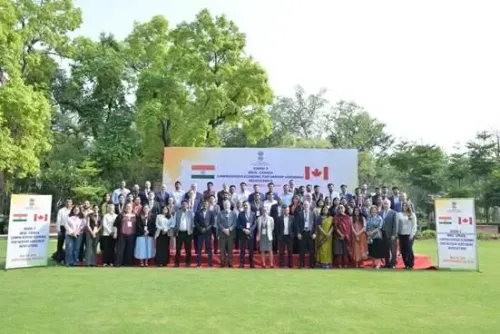
The fifth round of India-Canada CEPA talks opened in Ottawa on 6 October 2026 and runs until 9 October .
Prime Ministers Modi and Carney set a year-end 2026 deadline for concluding the pact at their New Delhi summit in March 2026 .
Bilateral goods trade stood at $8.66 billion in 2024-25 ; the shared target is CAD 70 billion (₹4.65 lakh crore) by 2030 .
Canada's Trade Minister Maninder Sidhu will visit New Delhi later in October with a 300-member business delegation .
PM Modi is reportedly expected to visit Canada around December 2026 for a potential concluding summit.
The negotiations follow a dramatic diplomatic reset after the deep freeze during former PM Justin Trudeau's tenure.
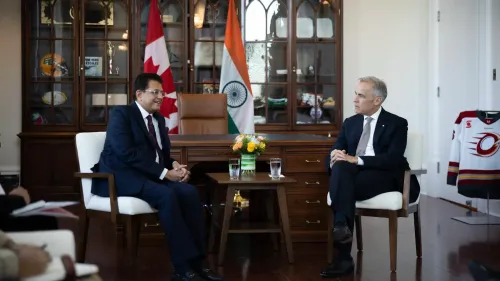
India and Canada on Monday, 6 October 2026, launched the fifth round of negotiations for their proposed Comprehensive Economic Partnership Agreement (CEPA) in Ottawa, with both sides aiming to finalise the landmark trade pact before the close of 2026. The five-day session, led by the chief negotiators of the two countries, is scheduled to run until 9 October.
Where the Talks Stand
The previous — fourth — round concluded in New Delhi on 18 September, with officials signalling a push for faster progress toward a final agreement. The Ottawa round marks a notable acceleration in the negotiating calendar, with both delegations under political pressure to deliver a concluded deal by year-end.
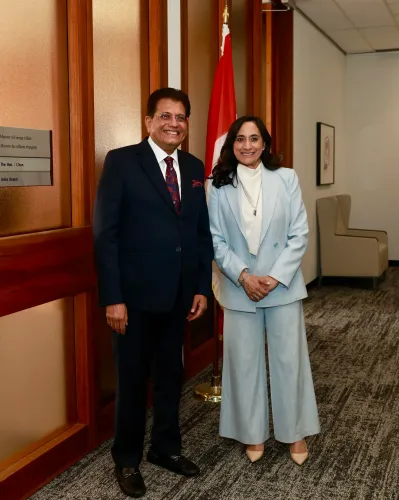
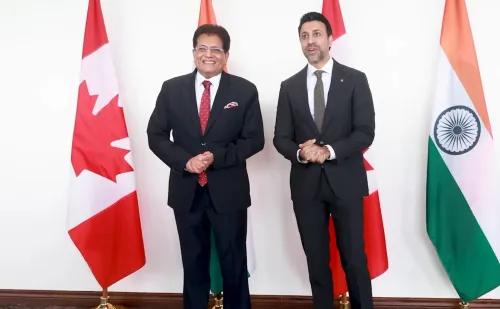
Notably, Canada's Trade Minister Maninder Sidhu is scheduled to visit New Delhi later this month accompanied by a 300-member business delegation — a concrete signal of Ottawa's commercial intent ahead of a potential summit-level signing.
Modi-Carney Summit Set the Deadline
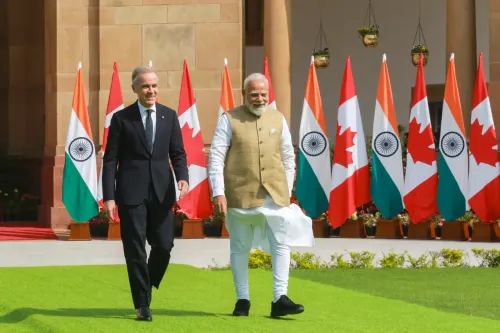
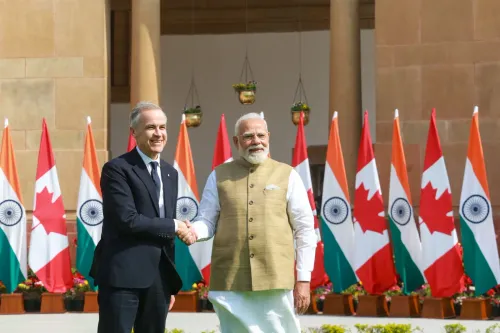
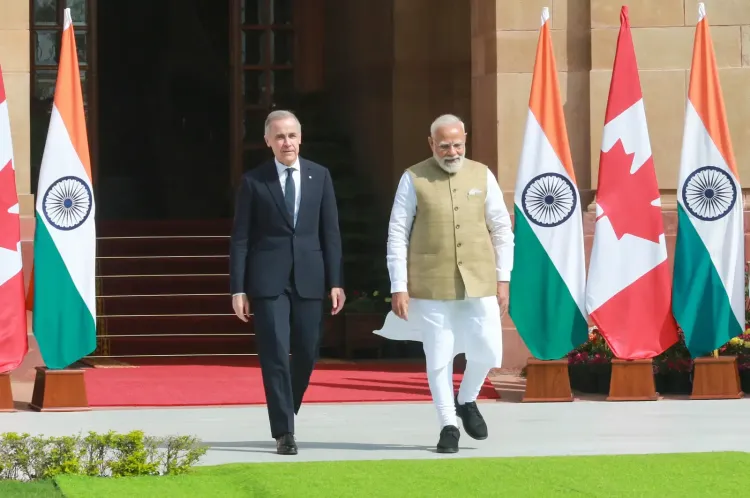
The year-end target was jointly set by Prime Minister Narendra Modi and his Canadian counterpart Prime Minister Mark Carney during their bilateral summit in New Delhi in March 2026. The two leaders agreed to deepen collaboration in the energy and critical minerals sectors alongside the broader trade framework.
According to the joint statement issued after that summit, the leaders expressed confidence that a comprehensive trade framework would serve as 'a durable economic anchor' for the partnership, with a shared aspiration of expanding bilateral trade to CAD 70 billion (approximately ₹4.65 lakh crore) by 2030. Prime Minister Modi is reportedly expected to visit Canada around December 2026, when the two countries plan to conclude and potentially sign the final deal.
Trade on the Table: Key Sectors and Numbers
India-Canada bilateral trade in goods stood at $8.66 billion in 2024-25, with India's exports to Canada touching $4.22 billion. India's principal exports include pharmaceutical products, machinery parts, iron and steel articles, electronic goods, organic chemicals, jewellery, gems and precious stones, garments, seafood, engineering goods, and auto parts.
Canada's major exports to India span pulses, fertilisers, mineral fuels, wood pulp, gems and precious stones, aircraft parts, machinery components, and iron and aluminium scrap. India's IT sector remains the primary contributor to services exports to Canada — a segment expected to gain considerably from a formal CEPA framework that eases market access and professional mobility.
The Diplomatic Reset That Made This Possible
The current negotiating momentum is itself a product of a significant diplomatic reset. Prime Minister Carney's visit to India earlier in 2026 signalled a sharp departure from the trajectory of his predecessor Justin Trudeau, whose tenure saw India-Canada ties deteriorate to their lowest point in decades. The Trudeau government faced sustained criticism from New Delhi for what Indian officials described as tolerance — and at times tacit encouragement — of Sikh separatist activity on Canadian soil as part of domestic electoral calculations.
The restoration of high-level engagement under Carney has since opened space for substantive economic negotiations that had stalled during the diplomatic freeze. This round of CEPA talks is both a trade exercise and a geopolitical signal that the bilateral relationship has moved beyond that impasse.
What Comes Next
With the 9 October Ottawa round set to address outstanding chapters, and the Trade Minister's high-profile delegation visit to New Delhi to follow, the pace of engagement suggests both governments are serious about meeting the 2026 deadline. Industry observers will watch for progress on pharmaceutical market access, critical minerals investment frameworks, and IT services liberalisation — the three areas widely regarded as the most commercially sensitive in the negotiations.
Point of View
Pharmaceutical market entry, and IT worker mobility are structurally difficult chapters that cannot be wished away by a summit deadline. The real question is whether the year-end target produces a comprehensive agreement or a 'framework' that papers over contested chapters — a pattern India has followed in prior trade negotiations. The diplomatic backdrop matters too: the reset from the Trudeau-era freeze is real, but fragile. Any domestic political turbulence in Canada that revives the Khalistani question could quickly chill the commercial momentum that Carney has worked to rebuild.
NationPress
4 Oct 2026
Frequently Asked Questions
What is the India-Canada CEPA and what does it cover?
The Comprehensive Economic Partnership Agreement (CEPA) is a proposed broad-based trade deal between India and Canada covering goods, services, and investment. Key sectors under negotiation include pharmaceuticals, IT services, critical minerals, energy, and agricultural commodities such as pulses.
When do India and Canada aim to finalise the CEPA?
Both governments have set a year-end 2026 deadline, agreed upon by Prime Ministers Modi and Carney at their bilateral summit in New Delhi in March 2026. PM Modi is reportedly expected to visit Canada around December 2026, when the deal could be signed.
What is the bilateral trade target between India and Canada?
India and Canada have jointly targeted expanding bilateral trade to CAD 70 billion (approximately ₹4.65 lakh crore) by 2030. Goods trade between the two countries stood at $8.66 billion in 2024-25, with India's exports amounting to $4.22 billion.
Why did India-Canada ties deteriorate under Justin Trudeau?
Relations hit rock bottom during former Prime Minister Justin Trudeau's tenure, with New Delhi accusing his government of tolerating and encouraging Sikh separatist elements in Canada for domestic electoral reasons. The diplomatic freeze has since thawed significantly under Prime Minister Mark Carney.
What are India's main exports and imports with Canada?
India's principal exports to Canada include pharmaceuticals, machinery, iron and steel articles, electronics, jewellery, gems, garments, seafood, and auto parts. India's major imports from Canada are pulses, fertilisers, mineral fuels, wood pulp, gems, aircraft parts, and metal scrap. India's IT sector is the primary driver of services exports to Canada.