How is India Advocating for the Global South Agenda at the Largest Commonwealth Speakers Conference?
Synopsis
Prime Minister Narendra Modi has emphasized the significance of the Global South during the inauguration of the 28th Commonwealth Speakers Conference. With discussions centered on contemporary issues such as AI in parliamentary operations, this three-day event showcases India's commitment to democratic values and shared growth.
Key Takeaways
PM Modi emphasized India's commitment to the Global South.
The conference is the largest gathering in the history of the Commonwealth.
Discussions will address AI, social media's role, and citizen engagement.
India's significant contributions during the COVID-19 pandemic were highlighted.
India's democratic values and diversity were celebrated.
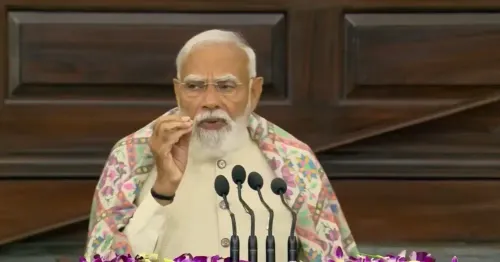
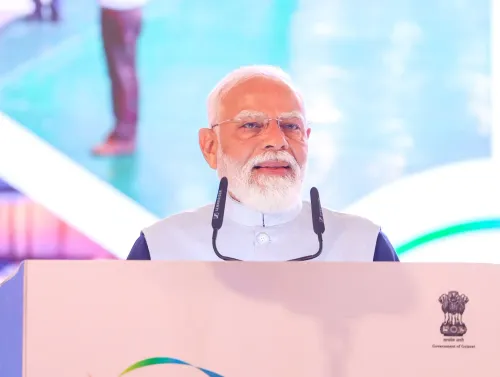
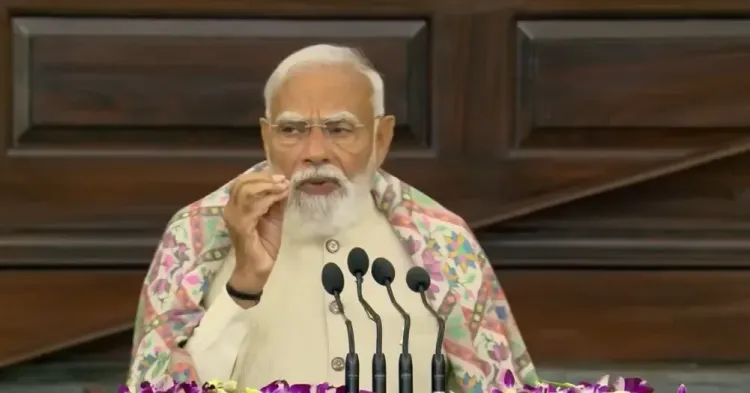
New Delhi, Jan 15 (NationPress) Amidst a time of unparalleled global change, Prime Minister Narendra Modi highlighted the necessity for the Global South to forge new directions. Opening the 28th Conference of Speakers and Presiding Officers of the Commonwealth (CSPOC) at the Samvidhan Sadan on Thursday, he stressed India's pivotal role in representing the Global South's concerns on all international platforms.
Reminiscing about India's G20 Presidency, he pointed out that the nation prioritized the Global South's issues at the forefront of the global agenda.
PM Modi showcased India's unwavering commitment to ensuring that innovations serve not just its own populace but also partner nations within the Commonwealth, emphasizing the establishment of open-source technology platforms that assist other countries in developing similar systems to those created domestically.
This vision embodies India's dedication to shared prosperity, inclusivity, and the enhancement of democratic institutions globally.
During the inaugural ceremony of the 28th CSPOC at the Central Hall of Samvidhan Sadan, which runs from January 14-16 and is chaired by Lok Sabha Speaker Om Birla, a record 61 speakers and presiding officers from 42 Commonwealth nations and four semi-autonomous parliaments are participating, marking it as the largest assembly in the forum's history. The discussions will highlight pressing contemporary issues such as AI in parliamentary functions, the influence of social media on lawmakers, citizen engagement beyond elections, and the safety and well-being of MPs and their staff.
In his address, PM Modi emphasized India's initiatives aimed at enhancing parliamentary collaboration, stating, "We have initiated a regional effort to develop a user-friendly system utilizing Parliament-related resources, thus providing our Parliament with improved opportunities to engage with its members.
"I have had the privilege of addressing this institution in numerous member nations, and each visit has been enlightening. I have consistently shared valuable practices with the Speaker of the Lok Sabha and the Chairman and Deputy Chairman of the Rajya Sabha. I am confident this conference will deepen our collective insights.
Highlighting the critical role of presiding officers, PM Modi remarked, "The responsibilities of Presiding Officers and Speakers are crucial; they serve to connect individuals with significant roles in the democratic process of the nation. Their contributions are commendable."
Addressing global dilemmas, he referred to India's achievements during the G20 presidency, stating, "Throughout our G20 presidency, we honored our commitments in climate and growth sectors. We continually sought to engage all our colleagues, striving to ensure that India's experiences benefit the Commonwealth and the region, which are experiencing extraordinary changes. It is time to build for the Global South. India is actively advocating for the Global South's interests on all global platforms, ensuring that our innovations serve the entire Global South. We are also developing an open-source platform for our partner nations in the Global South to create such infrastructures."
PM Modi drew attention to India's cultural values, stating, "The entire world is our family; this is our tradition, a legacy bestowed upon us by our democracy." He mentioned India's humanitarian contributions during the COVID-19 crisis, recalling, "When the world battled the COVID-19 pandemic, the challenge was immense. India provided medicines and vaccines to over 150 nations."
Celebrating the essence of India's democracy, he noted, "India, as the globe's largest democracy, exemplifies the magnitude and consideration of democratic systems. The upcoming general elections in 2024 will represent the largest democratic undertaking in history, with nearly 980 million citizens registered to vote, surpassing the population of certain continents. Over 8,000 candidates and more than 700 political parties will partake in these elections, with unprecedented participation from female voters. Today, Indian women not only participate but also lead; the President of India is a woman, and women occupy 50 percent of leadership roles in local governance. India's democratic landscape is also rich in diversity; numerous languages are spoken, with over 900 television channels existing. India has a longstanding tradition of debate, dialogue, and collective decision-making. It is known as the mother of democracy and democratic values.
Moreover, the Prime Minister pointed out that India ranks as the fourth-largest economy in the world and is a leader across various domains, citing achievements such as being the fastest-growing major economy, possessing the largest digital payment system (UPI), the second-largest steel producer, the third-largest startup ecosystem and aviation market, and the fourth-largest rail network.
He emphasized that India's hosting of the CSPOC for the fourth time, under the theme of "Effective Delivery of Parliamentary Democracy," highlights the nation's journey. He recalled initial skepticism regarding India's capacity to maintain democracy amidst its diversity and affirmed that diversity has emerged as its strength. He reiterated India's accomplishments as the fastest-growing major economy, the largest digital payment system via UPI, and a global leader in vaccine production, steel, startups, aviation, railways, and agriculture.
PM Modi stressed that democracy in India means ensuring last-mile delivery, citing welfare initiatives that have elevated 25 crore individuals out of poverty.
In his remarks, Lok Sabha Speaker Om Birla praised PM Modi's leadership, stating, "Under your visionary guidance, India is becoming the fastest-growing economy globally due to the new policies being implemented. Your leadership is providing decisive solutions to the challenges we face, and the world is looking to you for guidance."
Speaker Birla also addressed the conference's theme of "effective delivery of parliamentary democracy," emphasizing the ethical use of AI, combating misinformation, and enhancing transparency through technology. "I hope this conference leads to profound discussions on crucial issues and results in actionable policy decisions to outline a roadmap for the ideal application of AI and social media in democratic institutions," he stated.
The event, following India's previous hosting in 1970-71, 1986, and 2010, reaffirms the Commonwealth's commitment to impartiality and innovation. Established in 1969, CSPOC serves as a platform for over 2.6 billion individuals, with India hosting half of this population. As discussions progress, the conference aims to develop solutions for resilient, inclusive parliaments in a rapidly changing world.
The event was attended by Lok Sabha Speaker Om Birla, Rajya Sabha Deputy Chairman Harivansh, Inter-Parliamentary Union President Dr. Tulia Ackson, and Commonwealth Parliamentary Association Chairperson Dr. Christopher Kalila, among other dignitaries.
Point of View
It's evident that India's proactive stance on the Global South at the Commonwealth Speakers Conference reflects its commitment to fostering collaborative growth and addressing contemporary challenges. This engagement not only strengthens India's diplomatic ties but also serves as a critical platform for amplifying the voices of emerging nations.
NationPress
25 Sept 2026
Frequently Asked Questions
What is the purpose of the Commonwealth Speakers Conference?
The Commonwealth Speakers Conference aims to facilitate discussions among presiding officers on key issues impacting parliamentary operations, such as technology, citizen engagement, and the role of democracy.
How many countries are participating in the conference?
A total of 42 Commonwealth nations, along with representatives from four semi-autonomous parliaments, are participating in this year's conference.
What topics are being discussed at the conference?
Discussions will focus on contemporary issues like AI in parliamentary functions, social media's influence on legislators, and the well-being of MPs.
Who inaugurated the conference?
The conference was inaugurated by Prime Minister Narendra Modi at the Samvidhan Sadan in New Delhi.
What is India's role in the Global South?
India plays a crucial role in advocating for the interests of the Global South, ensuring that its innovations and policies benefit partner nations across the Commonwealth.