India Rejects UN Rapporteur's Claims on Waqf Law as Hostile and Incorrect
Synopsis
India has firmly rejected a UN rapporteur's report on the Waqf Amendment Act 2025, calling it factually incorrect and hostile. Gaurav Kumar Thakur emphasized the act's progressive intent to empower minority Muslim sects and enhance transparency.
Key Takeaways
India rejects UN rapporteur's claims as factually incorrect.
Waqf Amendment Act 2025 aims to empower minority Muslim sects.
Emphasis on gender equality and transparency in administration.
Representation of women and various sects in Waqf boards is mandated.
India's commitment to pluralism and minority rights is affirmed.
United Nations, March 20 (NationPress) India has categorically rejected a report from the minority issues expert, labeling it as “factually incorrect” and indicative of “hostility” towards the nation.
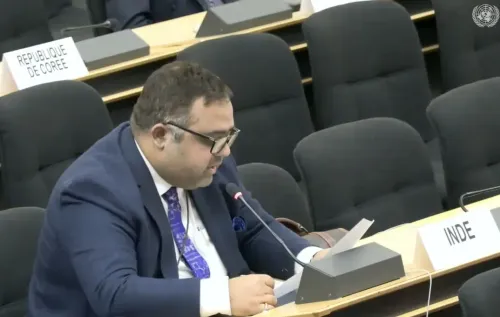
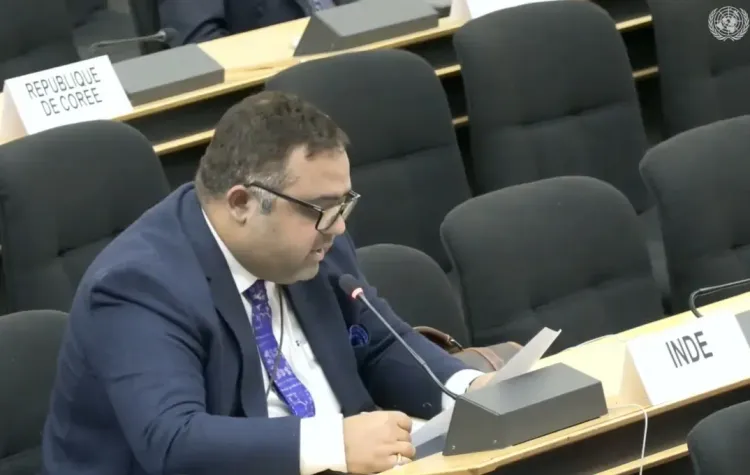
Gaurav Kumar Thakur, a counselor at India's UN Mission in Geneva, stated that India dismisses the claims made by Nicolas Levrat, the special rapporteur on minority issues, regarding the Waqf Amendment Act 2025.
Thakur remarked that these claims are “factually incorrect and rooted in a shallow understanding of the historical context”, made during a session of the Human Rights Council in Geneva.
“The tone and substance of his remarks reveal a clear perceived hostility towards India,” Thakur added.
The Council’s special rapporteurs are independent experts who report on issues assigned to them personally, even though their statements may seem to carry the Council's endorsement and do not necessarily represent its views.
Levrat, who is a professor of European and International Law at the University of Geneva, asserted that the Waqf Amendment Act “limits the ability of Muslim communities to own and manage places of worship”.
In response, Thakur emphasized that the law's intention is “progressive”, aimed at “promoting transparency, gender equality, and more effective administrative work”.
He explained that it empowers minority Muslim groups such as Bohras and Agakhanis by enshrining their “right to safeguard their community interests through the establishment of their own places of worship”.
Thakur alleged that Levrat's comments seem to be influenced by certain organizations that aim to propagate misleading narratives and undermine India's pluralistic ethos for their own political agendas.
In his report, Levrat mentioned that he had consulted the Indian American Muslim Council based in New York.
Thakur asserted, “India is steadfast in its commitment to empowering ethnic, religious, and linguistic minorities, and in fostering our nation's pluralistic character”.
He further stated, “Our democratic framework and Constitution guarantee fundamental rights for all citizens”, noting that “the Constitution provides specific protections to various minorities, ensuring their identities are safeguarded”.
Moreover, he pointed out that “all minorities, whether identified by religion or language, have the right to establish administrative authorities to manage educational institutions of their choice and select the medium of instruction”.
Significant aspects of the act include women's rights and ensuring representation from all Muslim sects in the Waqf bodies that oversee Muslim charitable endowments.
The law mandates that at least two Muslim women serve on the Central Waqf Council and State Waqf Boards, ensuring their inheritance rights are upheld.
Additionally, the amendment requires representation from various Muslim sects on State Waqf Boards.
Point of View
India's rejection of the UN rapporteur's claims highlights the ongoing complexities surrounding minority rights and religious laws in the country. The government's commitment to pluralism and minority empowerment contrasts with external perceptions presented in international reports, leading to a multifaceted discourse on governance and representation.
NationPress
17 Sept 2026
Frequently Asked Questions
What does the Waqf Amendment Act 2025 entail?
The Waqf Amendment Act 2025 aims to enhance transparency, gender equality, and effective administration within Muslim charitable endowments, while empowering minority sects to establish their own places of worship.
Who is Nicolas Levrat?
Nicolas Levrat is the special rapporteur on minority issues at the UN and a professor of European and International Law at the University of Geneva.
What were India's main objections to the UN report?
India objected to the report's factual inaccuracies and perceived hostility, asserting that it misrepresents the intent of the Waqf Amendment Act.
How does the act promote women's rights?
The act mandates that at least two Muslim women serve on Waqf Councils, ensuring their representation and safeguarding inheritance rights.
What is the government's stance on minority rights?
The Indian government maintains a strong commitment to empowering ethnic, religious, and linguistic minorities, ensuring their rights are protected under the Constitution.