MP Waqf Board Hindu member rejects Arif Masood's Supreme Court challenge

Synopsis
Madhya Pradesh became the first state to reconstitute its Waqf Board under the amended Waqf Act, 2025 — and the political backlash has been swift. Hindu member Animesh Bhargava's pointed counter to Congress MLA Arif Masood's Supreme Court threat frames the standoff as a fight over accountability versus religious autonomy, with the apex court likely to have the final word.
Key Takeaways
Animesh Bhargava , Hindu member of the Madhya Pradesh Waqf Board , rejected Congress MLA Arif Masood's proposed Supreme Court challenge on 7 July .
Madhya Pradesh is the first state to reconstitute its Waqf Board under the Waqf (Amendment) Act, 2025 .
The 10-member Board includes two Hindu members — Manoj Malpani and Animesh Bhargava — alongside eight Muslim and ex-officio members.
The Board manages more than 16,000 Waqf properties across the state, including mosques, dargahs, and commercial properties.
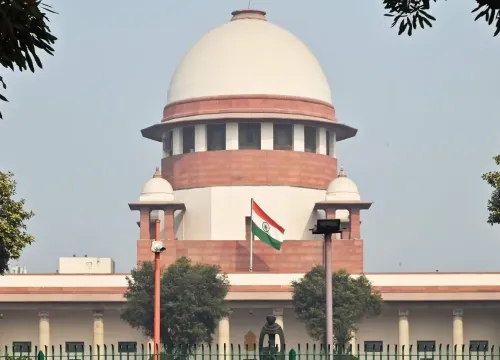
The Waqf (Amendment) Act, 2025 is already under challenge before the Supreme Court , making the MP reconstitution a potential test case.
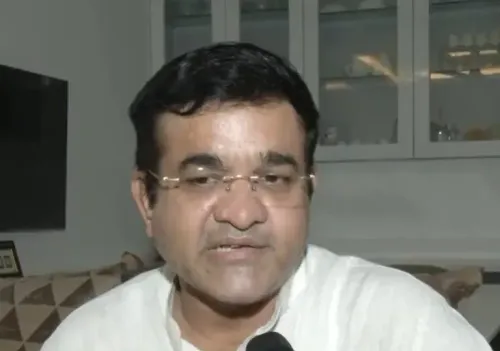
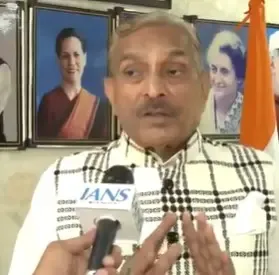
Animesh Bhargava, a Hindu member of the newly reconstituted Madhya Pradesh Waqf Board, on Tuesday, 7 July firmly rejected Congress MLA Arif Masood's threat to challenge the inclusion of non-Muslim members in the Board before the Supreme Court, asserting that the appointments were fully compliant with the amended Waqf Act, 2025. Madhya Pradesh became the first state in the country to constitute a Waqf Board under the amended law.
Bhargava's Defence of the Appointments
Bhargava stated that the reconstitution was grounded in constitutional and legal authority. 'This has been done in accordance with the Constitution of India. The amended Waqf law was brought to end irregularities in the Waqf Board and plug financial leakages. We have been appointed under the provisions of that law,' he said.
He went further, taking a pointed jab at those threatening legal action. 'Those talking about going to the Supreme Court are the people who have been misusing Waqf Board properties for years,' Bhargava said, framing the opposition as self-interested rather than principled.
What Masood Said — and Why It Triggered the Row
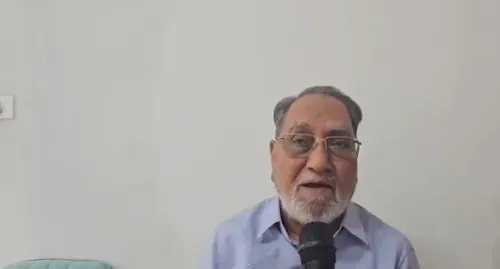
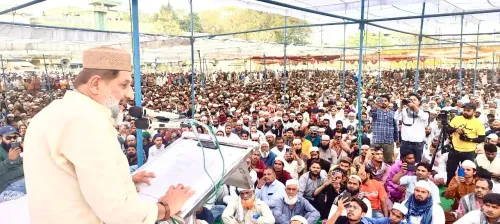
The remarks came a day after Bhopal Central MLA Arif Masood publicly opposed the inclusion of Hindu members and announced a Supreme Court challenge. Masood argued that the move amounted to interference in the religious affairs of Muslims, and questioned the government's timing given that the Waqf (Amendment) Act, 2025 is already under consideration before the apex court.
Notably, this is not the first time the amended Waqf law has sparked political friction — the legislation has faced sustained opposition from the Congress and several Muslim organisations since its passage, with critics questioning both its legality and intent.
Composition of the Reconstituted Board
The 10-member Board is headed by Sanwar Patel and includes two Hindu members — Manoj Malpani and Animesh Bhargava — alongside Najma Heptulla, Atif Aqueel, Faizan Khan, Fatema Choudhary, Shaista Sultan, Shabana Khan, and one ex-officio member. The Board oversees more than 16,000 Waqf properties across Madhya Pradesh, covering mosques, dargahs, graveyards, educational institutions, and commercial properties.
The Broader Political and Legal Context
The controversy sits at the intersection of religion, governance, and law. The Centre's decision to amend the Waqf Act drew nationwide protests when it was passed, with opposition parties arguing it dilutes Muslim community control over religious endowments. Madhya Pradesh's swift reconstitution under the new law has effectively made it a test case — any Supreme Court ruling on the amendment's validity could directly affect the Board's composition and decisions.
With the matter already pending before the apex court, the legal and political battle over the Board's reconstitution is far from over.
Point of View
2025 could render the MP Board's composition moot regardless of who makes the stronger argument. Madhya Pradesh has moved fast, but in doing so it has also handed the opposition a ready-made test case. The real stakes are not just one state board — they are the amendment's national enforceability.
NationPress
6 Oct 2026
Frequently Asked Questions
Why is there a controversy over the Madhya Pradesh Waqf Board reconstitution?
The Madhya Pradesh government reconstituted the Waqf Board under the amended Waqf Act, 2025, including two Hindu members for the first time. Congress MLA Arif Masood and several Muslim organisations have opposed this, arguing it amounts to interference in Muslim religious affairs and plan to challenge it in the Supreme Court.
Who is Animesh Bhargava and what did he say?
Animesh Bhargava is one of two Hindu members appointed to the reconstituted Madhya Pradesh Waqf Board. He rejected Masood's Supreme Court challenge, stating the appointments were made in full compliance with the Constitution and the amended Waqf law, and alleged that those opposing the move had previously misused Board properties.
What is the composition of the reconstituted MP Waqf Board?
The 10-member Board is headed by Sanwar Patel and includes Hindu members Manoj Malpani and Animesh Bhargava, alongside Najma Heptulla, Atif Aqueel, Faizan Khan, Fatema Choudhary, Shaista Sultan, Shabana Khan, and one ex-officio member.
Is the Waqf (Amendment) Act, 2025 under legal challenge?
Yes, the Waqf (Amendment) Act, 2025 is currently under consideration before the Supreme Court. Congress MLA Arif Masood cited this pending review to question the timing of the MP government's reconstitution of the Board under the same law.
How significant is the Madhya Pradesh Waqf Board?
The Madhya Pradesh Waqf Board manages more than 16,000 Waqf properties across the state, including mosques, dargahs, graveyards, educational institutions, and commercial properties, making it one of the larger state Waqf bodies in India.