MP Waqf Board reconstitution: Congress slams non-Muslim inclusion under 2025 Act

Synopsis
Madhya Pradesh has become the first state to reconstitute its Waqf Board under the Waqf (Amendment) Act, 2025 — appointing two non-Muslim members for the first time. Congress leader Hussain Dalwai's pointed counter — 'Will Muslims be included in the Ram Temple Trust?' — frames this as a symmetry test that the BJP has not answered.
Key Takeaways
Madhya Pradesh is the first state to reconstitute its Waqf Board under the Waqf (Amendment) Act, 2025 .
Non-Muslim members Manoj Malpani (Indore) and Animesh Bhargava (Guna) have been appointed to the 10-member board.
Sanwar Patel has been reappointed as board chairman.
Congress leader Hussain Dalwai called the move 'completely wrong,' questioning whether Muslims would similarly be included in Hindu religious trusts such as the Ram Temple Trust.
Dalwai expressed conditional support for the Uniform Civil Code , calling for wider public debate before implementation.
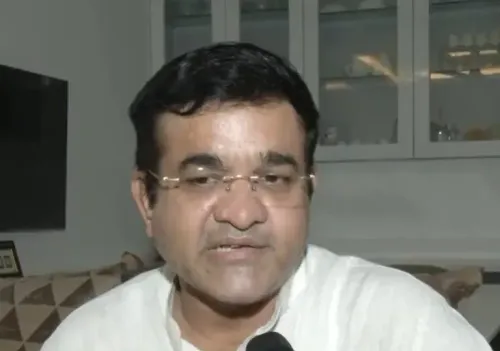
Congress leader Hussain Dalwai on Wednesday sharply criticised the Madhya Pradesh government's decision to include non-Muslim members in the newly reconstituted Madhya Pradesh Waqf Board, calling the move 'completely wrong' and demanding to know whether Muslims would receive reciprocal representation in Hindu religious trusts. The remarks add fresh political heat to the rollout of the Waqf (Amendment) Act, 2025.
The New Board Composition
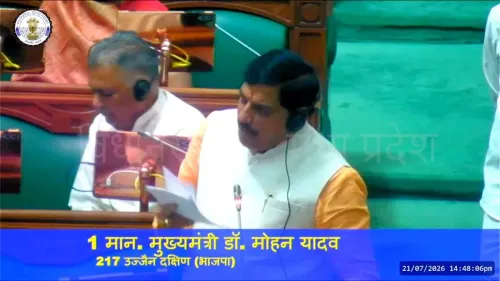
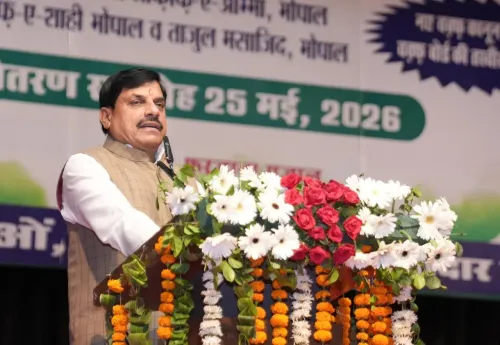
The Mohan Yadav-led Madhya Pradesh government appointed Manoj Malpani from Indore and Animesh Bhargava from Raghogarh in Guna as the two non-Muslim members of the reconstituted board. Sanwar Patel has been reappointed as chairman of the 10-member body. Other members include Najma Heptulla, Atif Aqeel, Faizan Khan, Fatema Chaudhary, Shaista Sultan, and Shabana Khan.
The state government has claimed that Madhya Pradesh is the first state in the country to reconstitute its Waqf Board under the amended law — a distinction the ruling Bharatiya Janata Party (BJP) is expected to highlight as a political milestone.
What the Amended Law Mandates
The Waqf (Amendment) Act, 2025 marks a significant departure from the earlier Waqf Act, 1995, under which board members were drawn exclusively from the Muslim community. The amended legislation mandates the inclusion of at least two non-Muslim members in every State Waqf Board. Madhya Pradesh's reconstitution is the first formal implementation of this provision anywhere in India.
Congress Pushes Back
Speaking to reporters, Dalwai questioned the symmetry of the policy. 'Are Muslims going to be included in Hindu religious trusts in the same way? Will Muslims be included in the Ram Temple Trust? This is completely wrong. Somewhere, there is an attempt to marginalise Muslims in every sphere. This will not benefit the country in any way,' he said.
Dalwai's framing — invoking the Ram Temple Trust as a comparative benchmark — is likely to sharpen the political debate, given the trust's high-profile status. Critics of the amendment have consistently argued that the non-Muslim inclusion clause undermines the autonomy of a minority religious institution, while supporters contend it introduces accountability and transparency.
Dalwai on the Uniform Civil Code
Separately, Dalwai addressed the Uniform Civil Code (UCC), clarifying that he was not opposed to the concept but stressed the need for broader public awareness and structured debate before implementation. 'As far as the UCC is concerned, I am not opposing it. However, people should be informed about what the UCC actually is, and there should be a proper debate on it,' he said.
He also challenged the assumption that polygamy is exclusively a Muslim practice. 'Having more than one marriage is wrong, but is it only Muslims who do it? There are many such cases among Hindus as well. Women should be given equal status, and if the UCC is being introduced to ensure that, then I would welcome it,' Dalwai added.
What Comes Next
With Madhya Pradesh setting the template, other BJP-governed states are likely to face pressure — or political incentive — to reconstitute their own Waqf Boards under the 2025 Act. Legal challenges to the amendment are already pending before the courts, and the MP board's composition may become a test case for how those proceedings unfold. The Congress, meanwhile, is expected to use the issue to consolidate minority-community support heading into upcoming state electoral cycles.
Point of View
Since Waqf Boards are statutory bodies and religious trusts are not — a distinction the BJP will exploit. The more consequential question is whether other states now rush to replicate MP's template before any judicial stay, locking in a new normal regardless of what the courts eventually decide. Congress's response, meanwhile, risks being seen as defensive rather than substantive if it cannot articulate a clear counter-position on Waqf reform beyond parity arguments.
NationPress
7 Oct 2026
Frequently Asked Questions
Why has Madhya Pradesh included non-Muslim members in its Waqf Board?
The Waqf (Amendment) Act, 2025 mandates the inclusion of at least two non-Muslim members in every State Waqf Board, marking a departure from the earlier Waqf Act, 1995, which restricted membership to the Muslim community. Madhya Pradesh is the first state to implement this provision.
Who are the non-Muslim members appointed to the MP Waqf Board?
Manoj Malpani from Indore and Animesh Bhargava from Raghogarh in Guna have been appointed as the two non-Muslim members of the reconstituted Madhya Pradesh Waqf Board.
What is Congress leader Hussain Dalwai's objection to the reconstitution?
Dalwai called the inclusion of non-Muslim members 'completely wrong,' arguing it represents an attempt to marginalise Muslims. He questioned whether the government would apply the same logic to Hindu religious trusts, specifically asking if Muslims would be included in the Ram Temple Trust.
What did Hussain Dalwai say about the Uniform Civil Code?
Dalwai said he is not opposed to the Uniform Civil Code in principle but stressed the need for wider public awareness and structured debate before it is implemented. He also challenged the assumption that polygamy is exclusively a Muslim issue, citing cases among other communities.
What happens next after MP's Waqf Board reconstitution?
With Madhya Pradesh setting the first precedent under the 2025 Act, other states are likely to face pressure to follow suit. Legal challenges to the Waqf (Amendment) Act are already before the courts, and the MP board's composition could become a key reference point in those proceedings.