Is the India–EU Trade Pact a Game-Changer for Textiles and Chemicals?
Synopsis
The India-EU trade pact presents a unique opportunity for Indian textiles and chemicals, emphasizing the role of Prime Minister Modi in fostering sustainable growth. Industry leaders are optimistic about the potential of this agreement to enhance global competitiveness.
Key Takeaways
Transformative opportunity for Indian textiles and chemicals.
Access to a lucrative European market .
Potential for increased export momentum .
Alignment with Make in India and Atmanirbhar Bharat .
Importance of MSME modernization .
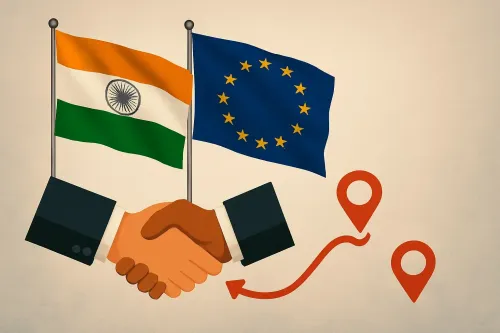
New Delhi, Jan 28 (NationPress) An industry expert expressed strong approval for the India–European Union trade agreement on Wednesday, describing it as a transformational opportunity for sectors such as textiles, chemicals, and pharmaceuticals. This landmark deal is perceived as a crucial step in enhancing long-term growth and competitiveness on the global stage under the guidance of Prime Minister Narendra Modi.
In a conversation with IANS, Bhadresh Dodhia, Director of Dodhia Synthetics Limited, emphasized that this agreement represents a pivotal moment for the Indian textile industry, providing access to a vast, established, and lucrative European market through a formal free trade framework.
“Such opportunities are rare for Indian textiles, and this FTA could serve as a game-changer, offering scale, stability, and visibility to Indian exporters,” he stated.
Dodhia highlighted that companies involved in plastic recycling and textile raw material production are expected to explore new avenues in Europe and boost export momentum due to this agreement.
He pointed out that Europe currently constitutes approximately 20 percent of the company’s export potential, and this trade pact will enable Indian firms to better compete against countries like Turkey and China, which benefit from lower costs or duty-free access.
“With diminished trade barriers, Indian manufacturers can diversify their product offerings and fortify long-term partnerships with European clients,” Dodhia noted.
He also underscored Europe’s leadership in circularity and recycling, asserting that the region sets the standard for sustainable manufacturing.
Furthermore, Dodhia remarked that the trade agreement aligns closely with Prime Minister Modi’s vision of Make in India and Atmanirbhar Bharat.
He emphasized the importance of ongoing modernization efforts, particularly for MSMEs, to fully leverage this agreement.
“Government support through Atmanirbhar initiatives can empower smaller enterprises to modernize and qualify as EU exporters, laying a robust foundation for sustainable growth,” he added.
Regarding foreign investment and technological advancements, Dodhia stated that India is currently one of the most appealing destinations for global manufacturing.
Point of View
It is imperative to recognize the significance of the India-EU trade agreement in shaping the future of Indian industries. This pact is more than just a deal; it reflects a strategic move towards enhancing our global competitiveness while aligning with sustainable practices. The government's role in supporting MSMEs is critical in ensuring that this opportunity is not only seized but also maximized for long-term benefits.
NationPress
7 Oct 2026
Frequently Asked Questions
What is the significance of the India-EU trade pact?
The India-EU trade pact is significant as it provides Indian industries, particularly textiles and chemicals, access to a large and mature European market, enhancing global competitiveness.
How will this agreement affect Indian exporters?
The agreement is expected to provide Indian exporters with stability, visibility, and new opportunities in Europe, allowing them to compete more effectively in the global market.
What role does Prime Minister Modi play in this agreement?
Prime Minister Modi's leadership is seen as crucial in unlocking long-term growth and fostering a conducive environment for international trade through this agreement.
How does this pact align with India's Make in India initiative?
The trade pact aligns with the Make in India initiative by promoting local manufacturing and supporting the growth of MSMEs in international markets.
What is the outlook for foreign investment in India post-agreement?
Post-agreement, India is expected to become a more attractive destination for foreign investment and technology inflows, particularly in manufacturing sectors.