Transformative Impact of India's FTAs on SMEs: Expert Insights
Synopsis
India's SMEs are rapidly becoming global players, thanks to FTAs and digital transformation efforts. Industry leaders discuss how these changes are pivotal for future growth and competitiveness.
Key Takeaways
FTAs are crucial for enhancing the global competitiveness of Indian SMEs.
Digital transformation is essential for accessing international markets.
MSMEs account for 45-48% of India's total exports.
Government platforms are key enablers for market access.
Transformative technologies could unlock a significant market opportunity for SMEs.
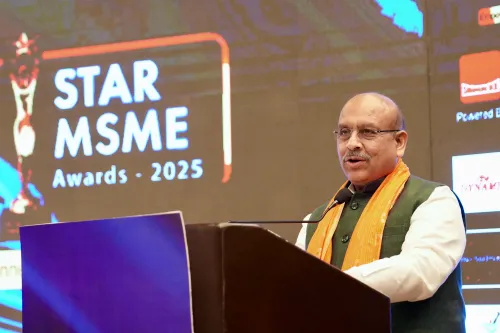
New Delhi, March 19 (NationPress) India's small and medium enterprises (SMEs) are swiftly evolving into global players, largely due to the nation’s free trade agreements (FTAs) and a strong emphasis on digital transformation, stated Khagen Murmu, a member of the Parliamentary Standing Committee on MSMEs, during a recent event on Thursday.
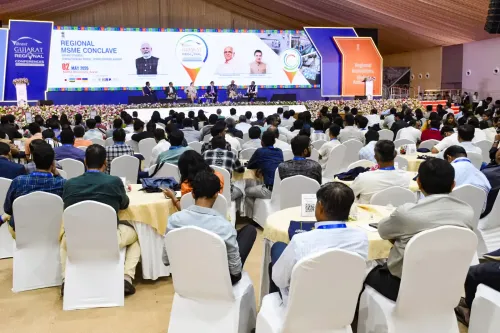
Speaking at the 'Global SME Conclave' hosted by ASSOCHAM, Murmu underscored the significant changes brought about by FTAs with the UAE and Australia, along with ongoing negotiations with the European Union (EU).
“These agreements are revolutionizing the landscape for Indian MSMEs. By facilitating zero or minimal tariff access, they are greatly boosting the competitiveness of Indian products, especially in industries such as textiles, handicrafts, and engineering on the global stage,” Murmu remarked.
With MSMEs accounting for about 45–48 percent of India's total exports, Murmu stressed that the sector is increasingly embedding itself into global value chains. “Our goal is straightforward; we want every Indian small business to transition from catering to domestic markets to becoming a global supplier,” he continued.
Industry experts emphasized that digital transformation and an improved regulatory environment will be crucial for unlocking the next phase of SME development.
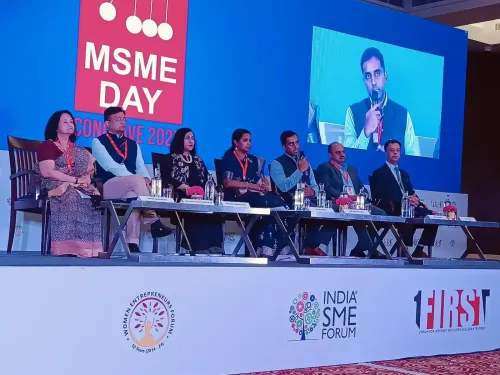
The conclave gathered policymakers, industry leaders, financial institutions, and technology specialists to discuss future lending ecosystems, digitalization, and export competitiveness.
Experts highlighted government-supported digital platforms such as the UDYAM portal and the Government e-Marketplace (GeM) as vital tools in democratizing market access and removing middlemen. However, they pointed out the urgent need for greater awareness and capacity building to foster wider engagement among small enterprises.
“Innovative technologies like artificial intelligence, digital platforms, and online services could unlock an additional $500 billion market potential for Indian SMEs,” stated Padma Jaiswal, Secretary of the Government of NCT of Delhi.
She further noted that digital services contribute nearly 25 percent to India’s exports and GDP. By integrating into digital platforms, SMEs can directly connect with international clients, streamline operations, and boost their competitiveness, Jaiswal explained.
“Digital integration is now essential. SMEs must embrace it to access global markets, enhance efficiency, and scale their operations,” she concluded.
aar/pk
Point of View
Driven by free trade agreements and a commitment to digital transformation. Experts highlight the necessity of adopting new technologies and enhancing market access to ensure the competitiveness of Indian enterprises on the international stage.
NationPress
23 Sept 2026
Frequently Asked Questions
What impact do FTAs have on Indian SMEs?
FTAs provide Indian SMEs with zero or minimal tariff access, significantly enhancing their competitiveness in global markets.
How important is digital transformation for SMEs?
Digital transformation is crucial for SMEs to access global markets, improve efficiency, and scale operations.
What is the contribution of SMEs to India's exports?
SMEs contribute nearly 45-48% of India's total exports.
What role do government platforms play for SMEs?
Government platforms like UDYAM and GeM help in democratizing market access and eliminating intermediaries for SMEs.
How much market opportunity can digital technologies unlock for SMEs?
Digital technologies have the potential to unlock an additional $500 billion market opportunity for Indian SMEs.