India-Finland eye doubling trade by 2030 via EU-India FTA
Synopsis
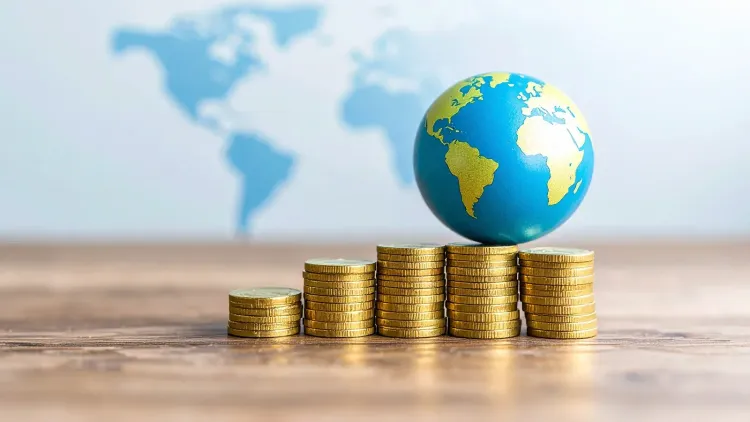
India and Finland have set a bold target: double bilateral trade by 2030, riding on the proposed EU-India FTA. With talks spanning AI, 6G, quantum tech, space, and defence, Commerce Minister Piyush Goyal's Helsinki visit signals that India is working individual EU relationships to build momentum for a deal that could reshape its trade architecture with Europe.
Key Takeaways
India and Finland agreed to target doubling bilateral trade by 2030 , contingent on the proposed EU-India Free Trade Agreement .
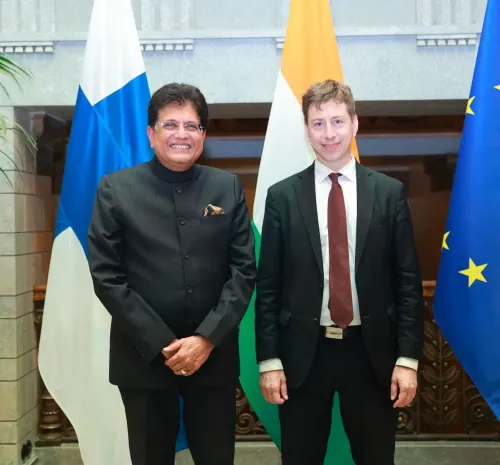
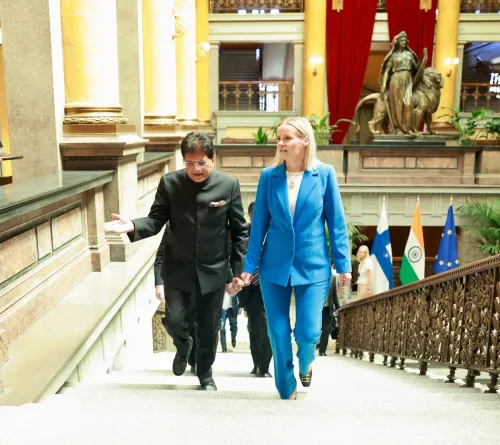
Commerce Minister Piyush Goyal met Finnish Deputy PM Riikka Purra and Minister of Economic Affairs Sakari Puisto in Helsinki on 18 July .
Priority sectors identified include AI, 6G, quantum technologies, semiconductors, space, defence, and sustainability .
Goyal also met leading Finnish technology and industrial companies, urging deeper investment, manufacturing, and R&D in India.
The EU-India FTA negotiations were formally relaunched in 2022 after nearly a decade-long pause.
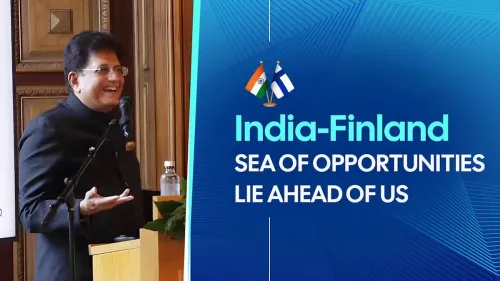
India and Finland have agreed to significantly deepen economic ties, with both sides exploring how a proposed EU-India Free Trade Agreement (FTA) could help double bilateral trade by 2030. The push came during high-level meetings held in Helsinki on 18 July, bringing together senior ministers from both nations.
Key Meetings in Helsinki
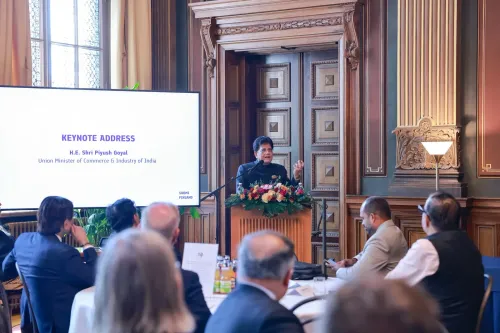
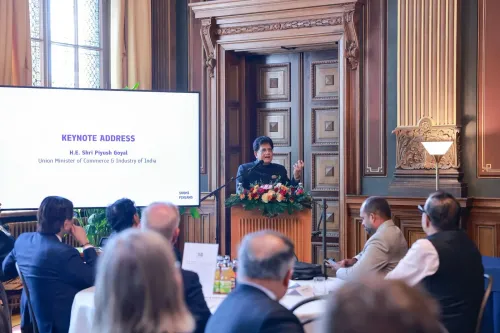
Finland's Deputy Prime Minister and Finance Minister Riikka Purra met with India's Commerce and Industry Minister Piyush Goyal to explore ways to diversify and expand the economic relationship between the two countries. Finland's Minister of Economic Affairs Sakari Puisto also held a separate round of talks with Goyal, underscoring the breadth of engagement.
Goyal additionally held a series of high-level meetings with leading Finnish technology and industrial companies in Helsinki, urging them to deepen their investments in India by expanding manufacturing, research and development (R&D) capabilities, and increasing exports from the country.
What the Finnish Side Said
'The strategic partnership between the two countries on digitalisation and sustainability, together with the Free Trade Agreement between the EU and India, will make it possible to double our trade by 2030,' Purra said after the meeting. She also pointed to Finnish strengths in digital and sustainable technology solutions as directly aligned with India's growth agenda and its Sustainable Development Goals (SDGs).
'I hope that, as reliable partners, we can further deepen our cooperation in fields such as space, defence and other critical technologies,' Purra added.
Puisto noted that Goyal's visit to Finland underlined strong interest in sectors essential for India's growth targets and for the implementation of the EU-India FTA. He highlighted the 'huge size of the Indian market,' which he said 'offers plenty of potential for Finnish operators in both traditional and newer sectors and opportunities for cooperation with Indian companies.'
India's Priorities on the Table
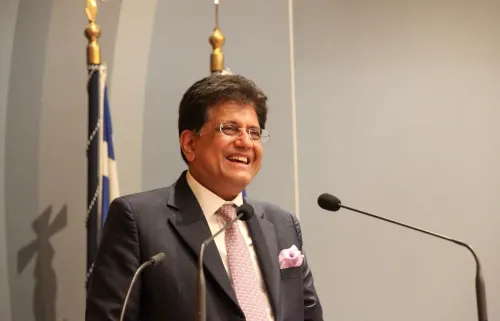
Goyal, in a post on X, said the discussions covered 'strengthening economic and financial cooperation, enhancing trade and investment ties, and expanding collaboration in digitalisation and emerging sectors.' His meeting with Puisto, he said, explored collaboration across artificial intelligence (AI), 6G, quantum technologies, semiconductors, space, and sustainability — sectors where India has articulated strategic ambitions under its broader technology and industrial policy framework.
Why the EU-India FTA Is Central
The proposed EU-India FTA has been a long-running negotiation, with talks formally relaunched in 2022 after nearly a decade-long pause. A concluded deal would give Indian exporters preferential access to the EU's single market — one of the world's largest — while opening India's market to European goods and services. For Finland, a smaller EU economy with deep expertise in telecommunications, clean technology, and digital infrastructure, the FTA represents a structural opportunity to scale up commercial engagement with India beyond current levels.
This comes amid a broader Indian diplomatic push to accelerate FTA negotiations with key trading partners, including the United Kingdom and the Gulf Cooperation Council (GCC). The Helsinki meetings signal that India is actively working bilateral relationships within the EU to build momentum for the larger multilateral deal.
What Comes Next
No specific timelines for FTA conclusion or sectoral agreements were announced following the Helsinki meetings. However, the ministerial-level engagement on both sides suggests that space, defence, critical technologies, AI, and 6G are likely to feature prominently in any structured bilateral roadmap. Industry bodies and Finnish technology companies that met Goyal are expected to follow up with concrete investment proposals.
Point of View
No sectoral targets, no investment commitments. India has a pattern of announcing bilateral 'doubling' trade ambitions that depend on FTA conclusions that then slip by years. The EU-India FTA has been in motion since 2007, paused for nearly a decade, and relaunched in 2022 with no conclusion in sight. Finland's enthusiasm is genuine — its tech and clean-energy firms have real India exposure potential — but bilateral goodwill cannot substitute for the hard tariff and regulatory negotiations that remain unresolved at the EU level. The real signal to watch is whether these ministerial visits translate into Finland actively pushing within EU councils for a faster FTA timeline.
NationPress
17 Oct 2026
Frequently Asked Questions
What did India and Finland agree to in Helsinki?
India and Finland agreed to deepen economic ties and work toward doubling bilateral trade by 2030, with the proposed EU-India Free Trade Agreement identified as the key enabler. The meetings covered cooperation in AI, 6G, quantum technologies, semiconductors, space, defence, and sustainability.
Who represented India and Finland at the Helsinki meetings?
India was represented by Commerce and Industry Minister Piyush Goyal. Finland's side included Deputy Prime Minister and Finance Minister Riikka Purra and Minister of Economic Affairs Sakari Puisto. Goyal also met senior executives from leading Finnish technology and industrial companies.
What is the EU-India Free Trade Agreement and why does it matter here?
The EU-India FTA is a proposed comprehensive trade deal between the European Union and India that would grant preferential market access on both sides. Negotiations were formally relaunched in 2022 after a near-decade pause. Both Finland and India see it as the structural framework needed to achieve the bilateral trade doubling target by 2030.
Which sectors are India and Finland focusing on for cooperation?
The two sides identified artificial intelligence, 6G, quantum technologies, semiconductors, space, defence, digitalisation, and sustainability as priority areas. Finland's strengths in digital and clean technology were specifically cited as aligned with India's growth and Sustainable Development Goals.
What are the next steps after the Helsinki meetings?
No specific timelines or binding agreements were announced. Finnish technology and industrial companies that met Goyal are expected to follow up with investment proposals. Progress on the broader EU-India FTA will determine how quickly the bilateral trade target can be pursued.