How Are Indian and Japanese Leaders Collaborating?
Synopsis
In a recent meeting, India's Ambassador to Japan, Nagma M Mallick, and Japan's Environment Minister, Ishihara Hirotaka, explored collaboration opportunities between the two nations. This dialogue reflects a commitment to enhancing bilateral relations in science, technology, and environmental sectors.
Key Takeaways
Collaboration in science and technology is a priority for India and Japan.
Environment-focused discussions may lead to innovative solutions.
The ISAJ Symposium serves as a platform for scientific exchange.
Strengthening ties in defense and talent mobility is crucial for bilateral relations.
High-level meetings reflect the commitment to a strong partnership .
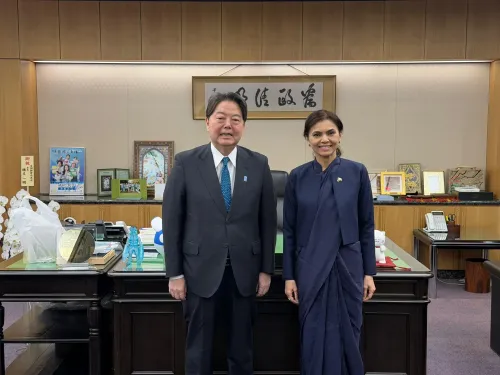
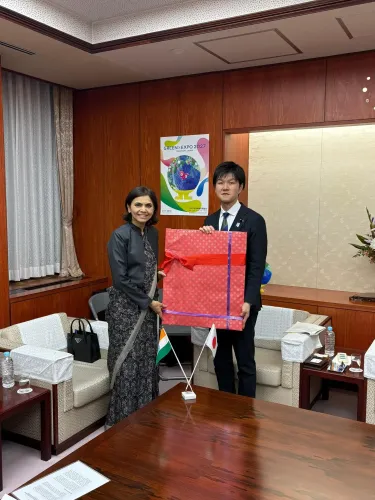
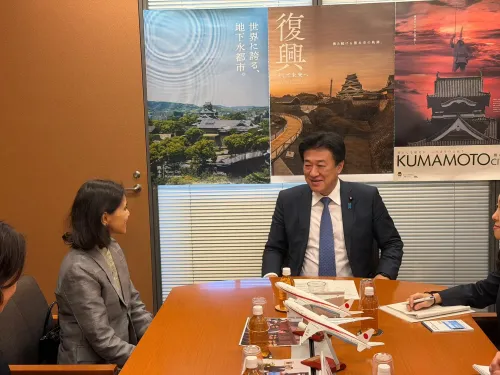
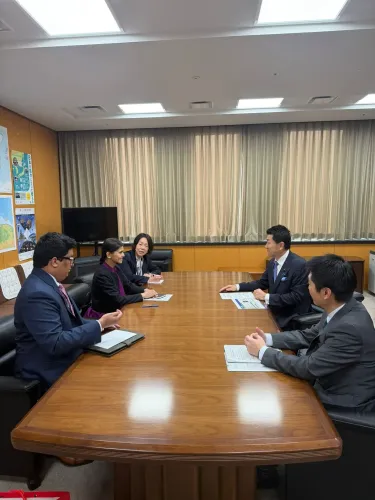
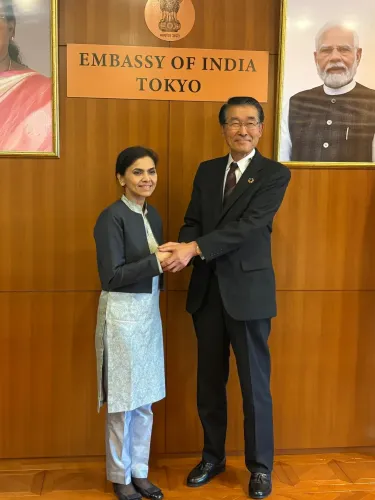
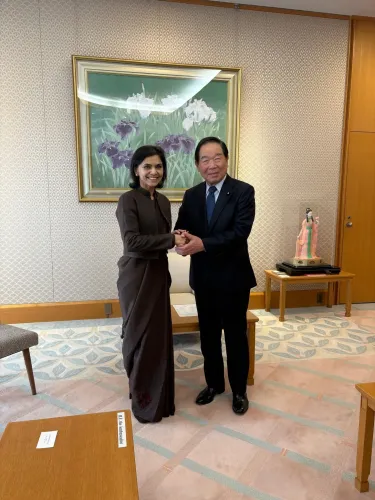
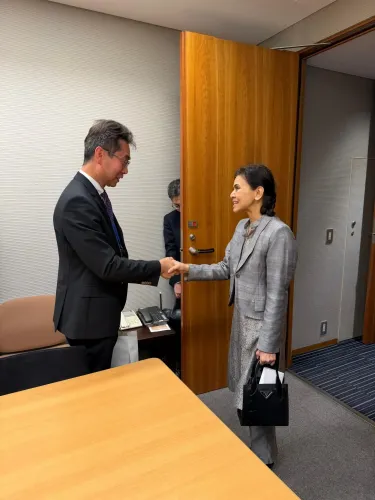
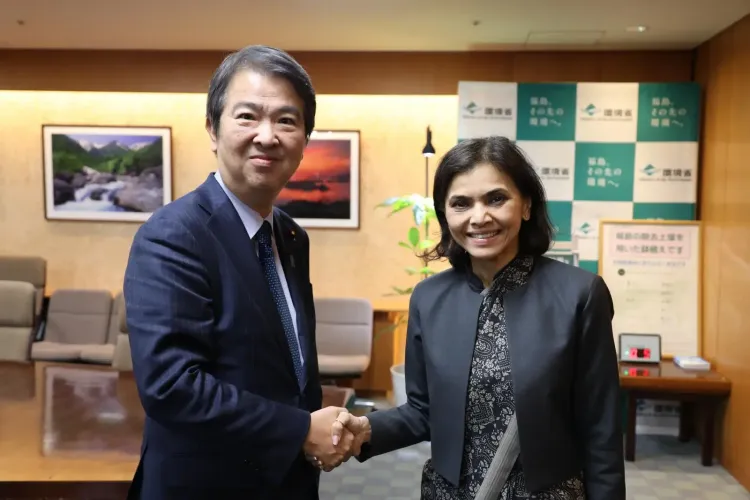
Tokyo, Dec 5 (NationPress) The newly appointed Indian Ambassador to Japan, Nagma M Mallick, engaged in discussions with Japan's Minister of Environment, Ishihara Hirotaka, on Friday, exploring avenues for collaboration between their nations.
The Indian Embassy in Japan shared on X, "H.E. Ms. Nagma M. Mallick, Ambassador-designate of India to Japan, met Mr. Ishihara Hirotaka, Minister of Environment of Japan, and discussed opportunities for India-Japan collaboration."
On December 1, Ms. Mallick delivered a video address during the 16th Indian Scientists Association Japan (ISAJ) Symposium at the Shizuoka Institute of Science and Technology (SIST), highlighting the potential for cooperation in science and technology between India and Japan.
The Indian Embassy noted, "Ms. Nagma M. Mallick, Ambassador-designate of India to Japan, delivered a video message at the 16th Indian Scientists Association Japan (ISAJ) Symposium held at the Shizuoka Institute of Science & Technology (SIST). Ambassador-designate spoke about the potential for cooperation between India and Japan in the realm of science and technology."
During the inaugural session, Dr. Sunil Kaul, President of ISAJ, and Dr. Masakazu Kimura, President of SIST, also shared their insights. The two-day event featured presentations and discussions centered on the theme, "Circular Innovation for Urban Transformation and Beyond," it added.
On the same day, India's Deputy Chief of Mission in Japan, R Madhu Sudan, attended the 25th anniversary of the Center for South Asian Studies (CSAS) at Gifu Women's University, emphasizing the rich ties between the two countries.
The Indian Embassy in Japan remarked on X, "Deputy Chief of Mission Shri. R Madhu Sudan joined H.E. Mr. Yasutoshi Nishimura to deliver remarks at the 25th anniversary of the Center for South Asian Studies (CSAS) in Gifu Women's University. DCM spoke on the multi-faceted India-Japan relationship, the achievements so far, and the potential it holds for the future."
On November 23, Prime Minister Narendra Modi had a bilateral meeting with his Japanese counterpart, Sanae Takaichi, during the G20 Summit in Johannesburg, discussing ways to enhance bilateral cooperation in areas such as innovation, defense, and talent mobility.
Describing his meeting with Takaichi as "productive", PM Modi highlighted that a "strong India-Japan" partnership is crucial for a better planet. This was their first meeting after Takaichi took office as Japan's Prime Minister.
PM Modi tweeted, "Had a productive meeting with Prime Minister Sanae Takaichi of Japan. We discussed methods to accelerate bilateral collaboration in sectors like innovation, defense, talent mobility, and more. We are also looking to strengthen trade relations between our countries. A strong India-Japan partnership is essential for a better planet."
Point of View
It’s clear that the ongoing dialogues between India and Japan represent not only bilateral interests but also the potential for global progress. The focus on science, technology, and environmental collaboration is vital in today’s interconnected world. Such initiatives are essential for fostering innovation and sustainability, benefiting both nations and the international community.
NationPress
23 Sept 2026
Frequently Asked Questions
What was discussed during the meeting between Indian and Japanese leaders?
The meeting focused on collaboration in areas such as innovation, defense, talent mobility, and environmental efforts.
Who is Nagma M Mallick?
Nagma M Mallick is the Ambassador-designate of India to Japan.
What is the significance of the ISAJ Symposium?
The ISAJ Symposium highlights the potential for India-Japan cooperation in science and technology.
What is the role of the Center for South Asian Studies?
The Center for South Asian Studies promotes understanding and research on South Asian issues.
How does this collaboration benefit both countries?
This collaboration fosters innovation, enhances trade ties, and supports environmental initiatives beneficial for both nations.