Digital public infrastructure key to Global South growth: India at BRICS ICT
Synopsis
At the BRICS ICT Track, India's MoS Communications made a pointed case: the country's open-source digital stack — covering identity, payments, and welfare delivery — is a ready-to-export model for the Global South. With UPI processing 49% of global real-time payment volumes and DigiLocker crossing 700 million users, India isn't just pitching an idea; it's presenting a working blueprint.
Key Takeaways
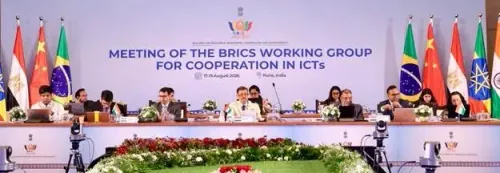
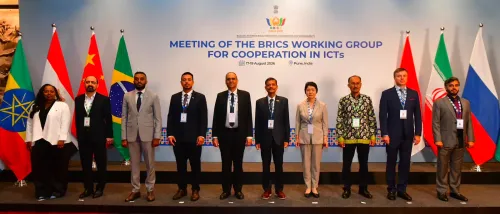
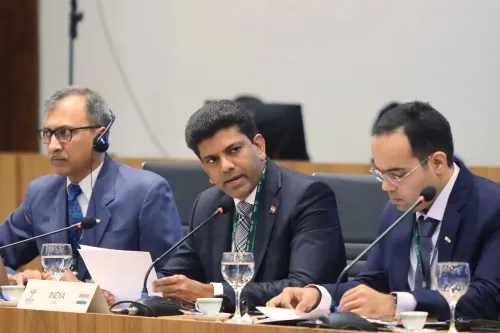
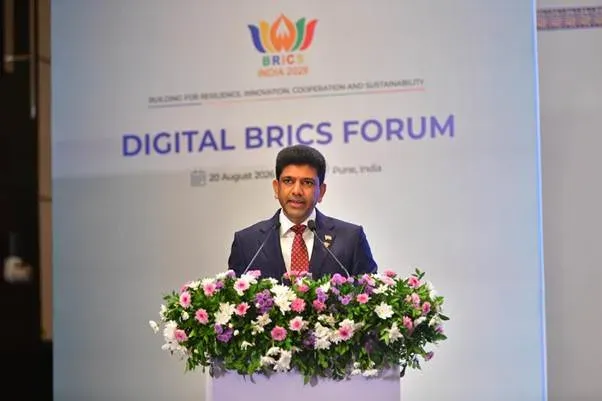
Dr Chandra Sekhar Pemmasani , Union MoS Communications, addressed the BRICS ICT Track in New Delhi on 20 August .
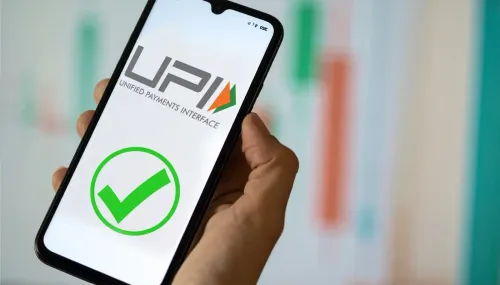
UPI now links 720 banks , handles 85% of India's digital transactions, and accounts for nearly 49% of global real-time payment volumes, operating in 9 partner nations .
DigiLocker has surpassed 700 million users and issued over 9 billion verifiable credentials.
The DBT portal integrates 318 schemes across 56 ministries to eliminate welfare intermediaries.
India called for BRICS-wide adoption of modular, open-source DPI frameworks and greater Global South representation in international ICT standard-setting bodies.
Union Minister of State for Communications Dr Chandra Sekhar Pemmasani on Thursday, 20 August told the BRICS ICT Track in New Delhi that digital public infrastructure (DPI) is not a luxury but a necessity for sustainable development across the Global South. Addressing ministers, policymakers, academics, and industry leaders from BRICS nations, he positioned India's population-scale digital stack as a replicable model for emerging economies.
India's Digital Stack: The Core Argument
Dr Pemmasani outlined India's strategic vision for open, inclusive, and resilient digital architectures designed to empower citizens and accelerate economic progress. He described the country's digital journey as a modern paradigm built on interlocking layers — identity, banking, payments, verifiable documents, and consented data — that together form a foundational public layer on which banks, fintech firms, and government departments can develop diverse consumer services.
The minister stressed that the true innovation is not in any single application but in establishing an open, interoperable infrastructure that eliminates the need for each service provider to build from scratch.
Key Pillars: UPI, DigiLocker, and DBT
Elaborating on the specifics, Dr Pemmasani highlighted that India's foundational identity layer has enabled low-cost remote verification across billions of authentications, SIM issuances, and banking access points.
In payments, the Unified Payments Interface (UPI) has linked 720 banks, now processes 85 per cent of India's digital transactions, and accounts for nearly 49 per cent of global real-time payment volumes. UPI has also expanded to nine partner nations.
The Direct Benefit Transfer (DBT) portal integrates 318 schemes across 56 ministries, cutting out intermediaries in welfare delivery. DigiLocker has scaled to over 700 million users with 9 billion issued verifiable credentials.
Newer Platforms Deepening the Ecosystem
Beyond the foundational layer, newer initiatives are extending India's DPI reach. The Open Network for Digital Commerce (ONDC) and the Government e-Marketplace (GeM) are democratising market access for small businesses, while the Account Aggregator framework is advancing individual data sovereignty by enabling consented financial data sharing.
Notably, these platforms are built on open-source architecture, which Dr Pemmasani cited as critical to making them exportable and affordable for other Global South nations facing prohibitive licensing costs from proprietary alternatives.
India's Pitch for BRICS Digital Partnership
Dr Pemmasani urged BRICS members to forge a stronger digital partnership centred on sharing modular, open-source technology frameworks and launching joint capacity-building initiatives. He specifically called for fair representation of developing nations in international ICT standard-setting bodies — an area where the Global South has historically been underrepresented.
This comes amid growing momentum within BRICS to build alternative digital and financial infrastructure independent of Western-dominated platforms. India's DPI pitch at the ICT Track positions New Delhi as a potential technology partner of choice for member states seeking sovereign, scalable digital solutions.
What Comes Next
Whether BRICS nations move toward formal DPI cooperation agreements will depend on follow-up negotiations at the ministerial and technical levels. India has already signed digital partnership frameworks with several countries and is actively expanding UPI's international footprint, suggesting the BRICS ICT Track could accelerate bilateral and multilateral technology-sharing arrangements.
Point of View
Or whether infrastructure gaps, regulatory differences, and political hesitancy within BRICS will blunt the momentum. India has the blueprint; whether it becomes the standard-setter for the Global South depends on execution of partnerships beyond the conference room.
NationPress
5 Oct 2026
Frequently Asked Questions
What is digital public infrastructure (DPI) and why is India promoting it at BRICS?
Digital public infrastructure refers to foundational, open, interoperable technology layers — covering identity, payments, and data — on which governments and private players can build services. India is promoting its DPI model at BRICS as a cost-effective, open-source alternative for Global South nations seeking sovereign digital development without prohibitive licensing costs.
What is UPI's global standing according to the BRICS ICT address?
The Unified Payments Interface (UPI) accounts for nearly 49% of global real-time payment volumes, links 720 banks, and processes 85% of India's digital transactions. It has also expanded to nine partner nations, making it one of the most widely used real-time payment systems in the world.
What is DigiLocker and how large has it grown?
DigiLocker is India's digital document wallet platform that allows citizens to store and share government-issued credentials electronically. It has scaled to over 700 million users and has issued more than 9 billion verifiable credentials.
What did India urge BRICS nations to do on digital cooperation?
India urged BRICS members to build a stronger digital partnership by sharing modular, open-source technology frameworks to eliminate prohibitive licensing costs and launching joint capacity-building programmes. It also called for fair representation of developing nations in international ICT standard-setting bodies.
What are ONDC and the Account Aggregator framework?
The Open Network for Digital Commerce (ONDC) is a government-backed open network designed to democratise e-commerce access for small businesses. The Account Aggregator framework enables individuals to share consented financial data across institutions, advancing data sovereignty. Both are part of India's expanding DPI ecosystem highlighted at the BRICS ICT Track.