India-Syria disaster management talks: Envoy Renu Yadav meets minister in Damascus
Synopsis
India's Charge d'Affaires in Syria met Damascus's disaster management minister on 15 September, the latest in a series of sector-by-sector diplomatic contacts with Syria's new government. The outreach — spanning emergency management, customs, and health — signals New Delhi's quiet but deliberate effort to build institutional ties with post-transition Syria.
Key Takeaways
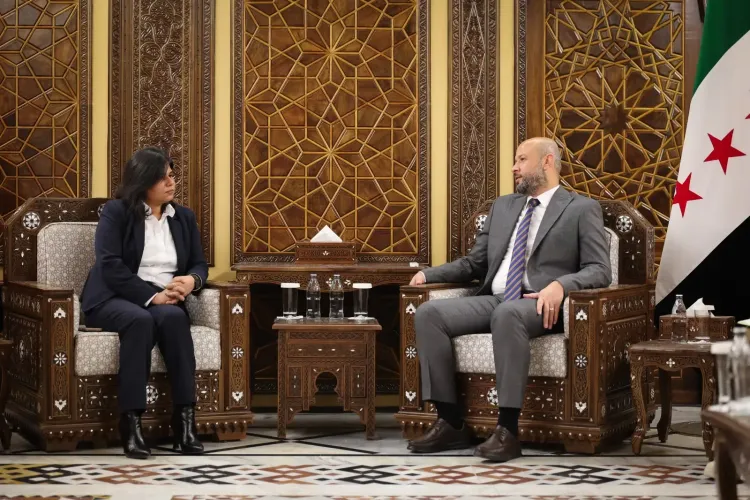
Renu Yadav , India's Charge d'Affaires in Syria, met Raed Al-Saleh , Minister of Emergency and Disaster Management, in Damascus on 15 September 2026 .
Talks focused on bilateral cooperation in disaster management and capacity building .
Last month, Yadav also met Qutaiba Badawi , President of Syria's General Authority for Borders and Customs .
An Indian delegation visited Damascus in July last year , meeting Syrian Foreign Minister Asaad Hassan Al-Shaibani and Health Minister Musab Al-Ali .
The MEA describes India-Syria ties as grounded in historic and civilisational links; India is now engaging the current Damascus government after maintaining ties with the former Assad regime.
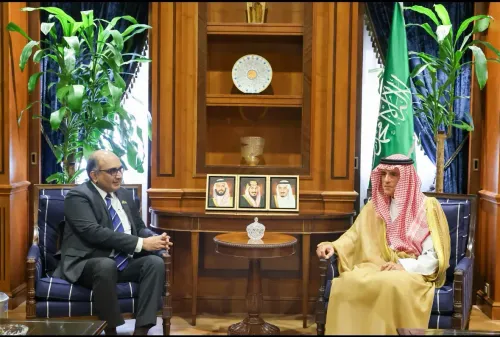
Renu Yadav, Charge d'Affaires at the Embassy of India in Syria, on Tuesday, 15 September 2026, held talks with Raed Al-Saleh, Syria's Minister of Emergency and Disaster Management, in Damascus, exploring avenues for bilateral cooperation in disaster management and capacity building. The meeting signals a steady deepening of New Delhi's diplomatic engagement with Syria's current government.
What Was Discussed
According to the Indian Embassy in Syria, Yadav and Al-Saleh examined 'various avenues of bilateral cooperation in the areas of disaster management and capacity building.' No specific agreements or memoranda of understanding were announced, but the discussion is understood to be part of an ongoing effort to formalise India-Syria technical collaboration in emergency response frameworks.
Pattern of Engagement
The meeting with Al-Saleh was not an isolated contact. Last month, Yadav also met Qutaiba Badawi, President of the General Authority for Borders and Customs, to discuss 'issues of mutual interest,' as the Embassy noted. Together, these interactions suggest a structured, sector-by-sector diplomatic outreach by New Delhi to Damascus's new administration.
India's Broader Syria Diplomacy
This embassy-level engagement builds on a higher-profile visit in July last year, when an Indian delegation travelled to Damascus and met Syrian Foreign Minister Asaad Hassan Al-Shaibani. That delegation was headed by Suresh Kumar, Director of the West Asia and North Africa Department at India's Ministry of External Affairs (MEA). The delegation also held separate talks with Syrian Health Minister Musab Al-Ali.
According to the MEA, India and Syria enjoy friendly relations rooted in historic and civilisational ties. India had long maintained cordial ties with the former Assad regime, and its engagement with the current government in Damascus is widely seen as part of a broader effort to preserve continuity in bilateral relations through the political transition Syria has undergone.
Why It Matters
Syria remains one of the world's most disaster-affected countries, with years of conflict having severely eroded civil infrastructure, including emergency response capacity. India's interest in cooperation on disaster management and capacity building aligns with its wider development diplomacy in the West Asia region — and may also lay groundwork for eventual Indian participation in Syria's reconstruction efforts. Notably, this engagement comes at a time when several global powers are recalibrating their Syria strategies. How far this India-Syria cooperation framework progresses will be closely watched as Damascus stabilises.
Point of View
Customs, health, and foreign affairs within the span of roughly a year — reflects a pragmatic continuity doctrine: preserve bilateral ties regardless of who governs Syria. This is consistent with India's broader West Asia approach, which prioritises economic and developmental linkages over political alignment. What remains unclear is whether this diplomatic groundwork will translate into tangible capacity-building programmes, or whether it will stay at the meeting-and-communiqué stage. Given Syria's acute need for reconstruction assistance and India's growing development diplomacy toolkit, there is a real opportunity here — but also a gap between stated intent and deliverable outcomes that New Delhi has not yet bridged.
NationPress
16 Sept 2026
Frequently Asked Questions
What did India and Syria discuss in the 15 September 2026 meeting?
India's Charge d'Affaires Renu Yadav and Syria's Minister of Emergency and Disaster Management Raed Al-Saleh discussed bilateral cooperation in disaster management and capacity building in Damascus on 15 September 2026. No specific agreements were announced, but the meeting is part of an ongoing diplomatic outreach by New Delhi to Syria's current administration.
What is India's current relationship with Syria?
According to the Ministry of External Affairs, India and Syria enjoy friendly relations rooted in historic and civilisational ties. India maintained cordial relations with the former Assad regime and has since been engaging with Syria's current government to maintain continuity in bilateral cooperation.
Has India conducted other high-level meetings with Syria recently?
Yes. In July last year, an Indian delegation headed by Suresh Kumar, Director of the West Asia and North Africa Department at the MEA, visited Damascus and met Syrian Foreign Minister Asaad Hassan Al-Shaibani and Health Minister Musab Al-Ali. India's Charge d'Affaires also met Syria's customs chief last month.
Why is India focusing on disaster management cooperation with Syria?
Syria's civil infrastructure, including emergency response systems, was severely damaged by years of conflict, making disaster management a key area of need. India's engagement aligns with its broader development diplomacy in West Asia and may also help lay the groundwork for participation in Syria's longer-term reconstruction.