Will India Really Add $26 Trillion to Its Economy by 2047?
Synopsis
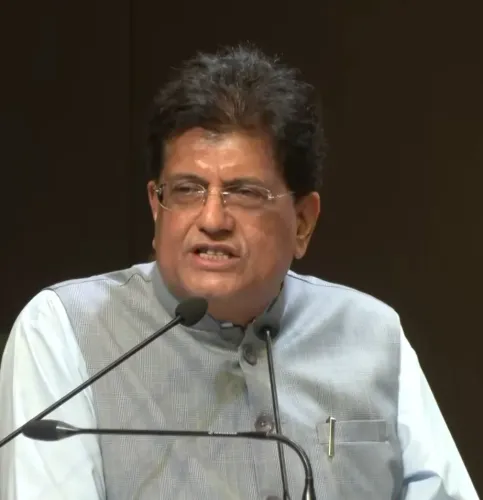
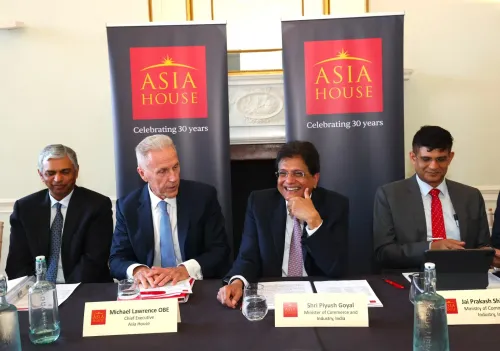
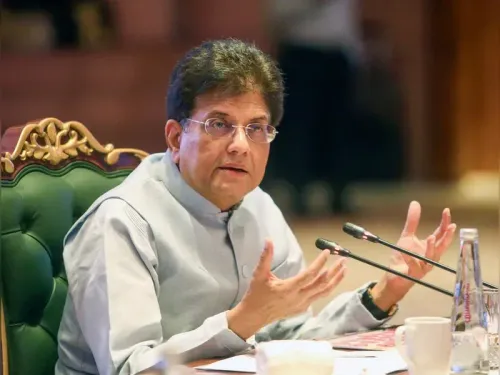
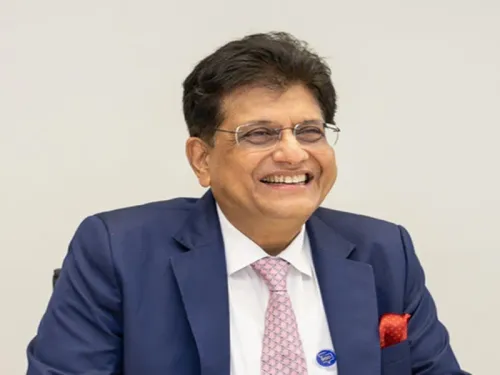
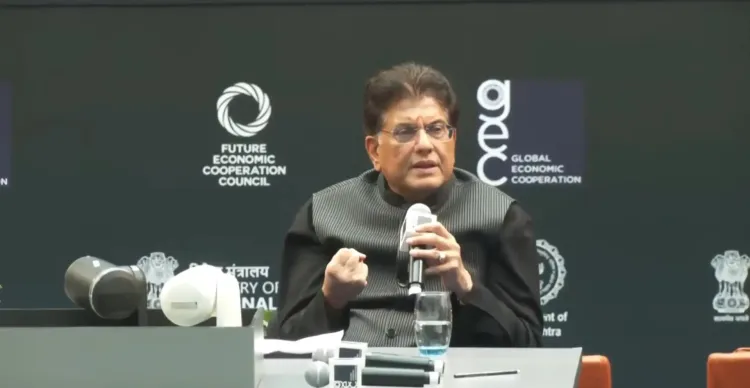
Union Commerce Minister Piyush Goyal has announced that India is on track to add an astonishing $26 trillion to its economy by 2047, marking an unprecedented growth trajectory. This statement was made at the Global Economic Cooperation 2026 forum, where Goyal emphasized India's commitment to fostering global partnerships and economic diplomacy.
Key Takeaways
Projected Growth: India aims for $26 trillion economic expansion by 2047.
Strengthened Alliances: The country is focusing on building global partnerships through trade agreements.
Support for Vulnerable Sectors: India's negotiations prioritize farmers, MSMEs, and job preservation.
Global Engagement: India has established agreements with 38 developed nations.
Future Vision: The goal is a Viksit Bharat, contributing to global stability and growth.
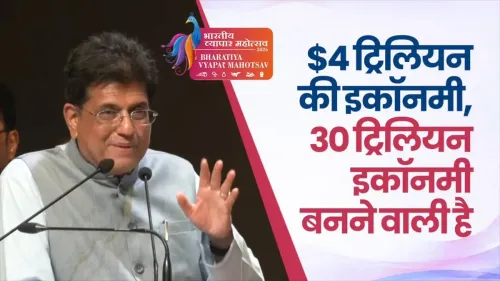
Mumbai, Feb 18 (NationPress) Union Commerce and Industry Minister Piyush Goyal stated on Wednesday that India is projected to contribute around $26 trillion to its economy by 2047 — a level of expansion that is historic and unlikely to be seen elsewhere globally.
While addressing the Global Economic Cooperation (GEC) 2026 forum, the minister remarked, "The era of economic isolation has concluded - this is why we are forging alliances, enhancing friendships, and finalizing trade agreements from a position of strength — with nine agreements secured in the last four years and more on the horizon."
"India's national interests steer every discussion – ensuring opportunities for farmers, MSMEs, women, and industries – while protecting sensitive sectors," he added.
In his keynote address, Goyal emphasized India's stance on economic diplomacy and the country’s rise as a trustworthy and essential partner in global trade and investment.
"A free trade agreement is an invitation to collaborate in India’s future, to join in a journey that will elevate India from the world’s fourth-largest economy today to the third largest by 2027-28, and ultimately to a developed nation with a $30–35 trillion economy by 2047. The world is eager to be part of this narrative. India, being open, trusted, and growing, welcomes every sincere partner at the table," he stated.
The forum convenes senior ministerial and business representatives from leading global economies, including France, the United Kingdom, the United Arab Emirates (UAE), the United States, Australia, Seychelles, Sri Lanka, and Singapore.
Highlighting that India has established agreements with 38 developed nations across 16 FTAs and 6 PTAs, Goyal credited this achievement to a clear and disciplined national agenda.
"India has successfully concluded nine agreements between 2022 and now, in about four years. These agreements were crafted from a position of strength. Trust allows us to protect our defensive interests while advancing our offensive goals. Partner nations have embraced India's stance because we have been forthright and transparent about our aims," he noted.
“Our negotiations allow us to protect farmers, ensure the growth of MSMEs, support fishermen, and maintain jobs in India, while simultaneously securing market access in textiles, footwear, and leather, boosting pharmaceutical exports, and attracting technology and investment," he further observed.
The GEC 2026 forum takes place at a critical juncture for the global economy. In light of changing trade architectures and an increasingly multipolar world, the forum aims to develop practical frameworks for resilient, inclusive, and future-ready economic cooperation.
On this occasion, Minister of External Affairs S. Jaishankar remarked: "The world has entered a volatile and uncertain phase where long-standing beliefs are being scrutinized, and fundamental aspects are transforming simultaneously… As we strive towards our goal of Viksit Bharat by 2047, we aim not only to contribute to global growth but also to foster global stability, predictability, and trust."
Maharashtra Chief Minister Devendra Fadnavis added: "We gather at a time when global trade is experiencing significant disruption, supply chains are being reorganized, and strategic sectors — semiconductors, energy, food, rare earths, AI — are now integrated into national security strategies. Let’s work together to shape an economic order that is resilient, inclusive, and strategically stable."
Point of View
It is evident that India's ambitious target of adding $26 trillion to its economy by 2047 represents not just an economic aspiration but a commitment to forging strategic partnerships globally. This growth trajectory aligns with India's vision of becoming a significant player in the international arena, reflecting a proactive approach to economic diplomacy and resilience amidst global uncertainties.
NationPress
14 Oct 2026
Frequently Asked Questions
What is India’s projected economic growth by 2047?
India is expected to add approximately $26 trillion to its economy by 2047, marking a historic growth trajectory.
What role does Piyush Goyal play in this economic vision?
Piyush Goyal is the Union Commerce and Industry Minister who announced this economic projection and emphasizes India's commitment to global partnerships.
What is the Global Economic Cooperation 2026 forum?
The GEC 2026 forum brings together senior officials and business representatives from major economies to discuss economic collaboration and resilient trade frameworks.
How many trade agreements has India established recently?
India has concluded nine agreements in the past four years with various countries, showcasing its proactive trade policy.
What is the significance of these agreements for India?
These agreements enhance India's market access, protect domestic interests, and promote sectors such as textiles, pharmaceuticals, and technology.