India tops global economic resilience rankings 2026-30, outpaces China and US
Synopsis
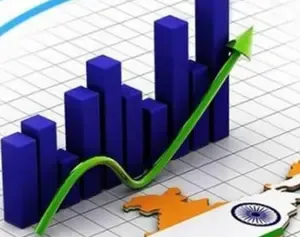
India has ranked first in global macroeconomic resilience for 2026-30 with a score of 71 out of 100, leaving China at 66 and the United States at a distant 36 — the lowest among major economies assessed. With the IMF separately upgrading India's growth forecast by 60 basis points to 7%, the data paints a picture of an economy that has turned global turbulence into a relative advantage.
Key Takeaways
India ranked 1st in global macroeconomic resilience for 2026-30 with a score of 71 out of 100 , according to data citing ASSOCHAM and the IMF .
China ranked 2nd at 66 ; the United States ranked last among ten major economies at 36 .
India topped sub-rankings in real GDP growth , real GDP per capita growth , and gross savings .
The RBI in October 2026 cited strong macroeconomic fundamentals, rising FDI, and double-digit merchandise export growth in the first half of 2026-27.
The IMF raised India's growth forecast for 2026-27 by 60 basis points to 7 per cent from its July projection.
India has claimed the top spot in global macroeconomic resilience rankings for the 2026-30 period, scoring 71 out of 100 and surpassing major economies including China, Japan, Germany, and the United States, according to data shared by analytics platform Infoindata on social media platform X on Wednesday, 18 November 2026. The rankings cite sourcing from ASSOCHAM and the International Monetary Fund (IMF).
How the Rankings Stack Up
China finished second with a score of 66, followed by Japan and Russia tied at 60 each. Germany ranked fifth at 59, while Italy and Brazil each scored 53. The United Kingdom came in at 52, France at 40, and the United States at 36 — placing it last among the ten major economies assessed.
'Contrary to some beliefs, global economic disasters have only underscored India's growing resilience,' Infoindata wrote in its post on X, adding that the country continues to strengthen its capacity to absorb external economic shocks amid heightened global uncertainty.
India's Strongest Indicators
India secured the first rank in three key sub-indicators: real GDP growth, real GDP per capita growth, and gross savings. The country ranked second in gross capital formation and export growth, and third in debt-to-GDP ratio among the top economies assessed. This breadth of outperformance across both growth and stability metrics underpins the composite score.
RBI's Own Assessment
The findings align with the Reserve Bank of India's (RBI) assessment from October 2026, in which the central bank said the domestic economy remains anchored by strong macroeconomic fundamentals and policy interventions that have helped cushion downside risks. The RBI Bulletin noted double-digit growth in merchandise exports during the first half of 2026-27, which helped narrow the country's trade deficit. Meanwhile, foreign direct investment (FDI), external commercial borrowings (ECB), and remittance inflows all reportedly strengthened in August 2026.
High-frequency indicators across industry and services pointed to continued economic strength, with sustained domestic demand and a resilient services sector supporting growth — this despite India's status as a net energy importer, which typically amplifies vulnerability during global commodity shocks.
IMF Raises India's Growth Forecast
Separately, the IMF has revised India's growth forecast for 2026-27 upward by 60 basis points to 7 per cent, compared with its July 2026 projection. This upgrade reinforces the resilience narrative and places India among the fastest-growing large economies globally at a time when peers face headwinds from tighter monetary conditions, geopolitical disruption, and sluggish trade volumes.
This comes amid a period of broad global economic stress, with the US Federal Reserve's prolonged rate cycle weighing on Western growth and China navigating a structural slowdown in its property and manufacturing sectors — a backdrop that has amplified India's relative standing.
What This Means Going Forward
Analysts and policymakers will watch whether India can sustain this resilience through the remainder of the 2026-30 cycle, particularly as global trade fragmentation and energy price volatility continue to test emerging economies. The IMF upgrade and strong export data suggest near-term momentum, but structural factors — including job creation quality and fiscal consolidation — will determine whether the top ranking translates into durable long-term gains.
Point of View
But the source chain matters: the data originates from Infoindata's X post citing ASSOCHAM and the IMF — a secondary aggregation, not a primary IMF publication. Mainstream coverage should seek the underlying IMF dataset before treating the composite score as definitive. That said, the sub-indicator picture is consistent with other credible data points: IMF's independent 60-basis-point upgrade to 7% growth, RBI's own bullish October assessment, and double-digit export growth all point in the same direction. The more uncomfortable question is what India's resilience score of 71 actually measures against the United States' 36 — the US economy, whatever its structural wobbles, remains the world's largest and most liquid. Rankings that collapse complex macro dynamics into a single composite need methodological transparency to be policy-relevant rather than merely headline-ready.
NationPress
18 Nov 2026
Frequently Asked Questions
What is India's economic resilience score and what does it mean?
India scored 71 out of 100 in macroeconomic resilience rankings for the 2026-30 period, placing it first among ten major economies assessed. The score, citing ASSOCHAM and IMF data, reflects performance across indicators including real GDP growth, gross savings, capital formation, export growth, and debt-to-GDP ratio.
How does India compare to China and the United States in this ranking?
India leads with a score of 71, while China ranks second at 66. The United States scored 36, the lowest among all ten major economies assessed, which also include Japan, Russia, Germany, Italy, Brazil, the United Kingdom, and France.
What has the IMF said about India's economic growth?
The IMF has raised India's growth forecast for 2026-27 by 60 basis points to 7 per cent, upgrading it from its July 2026 projection. This makes India one of the fastest-growing large economies globally.
What did the RBI say about India's economic resilience?
In October 2026, the RBI said India's economy is anchored by strong macroeconomic fundamentals and effective policy interventions. The central bank highlighted double-digit merchandise export growth in the first half of 2026-27, strengthening FDI, and a resilient services sector as key pillars.
Which specific economic indicators did India rank first in?
India ranked first in real GDP growth, real GDP per capita growth, and gross savings. It also ranked second in gross capital formation and export growth, and third in debt-to-GDP ratio among the major economies assessed.