Is the India-US Trade Deal a Threat to Indian Farmers?
Synopsis
The Shiv Sena Uddhav Balasaheb Thackeray (UBT) has fiercely criticized the India-US trade agreement, labeling it a threat to farmers' livelihoods. They question the government's motives while urging unity among workers and farmers. Could this deal signify a loss of sovereignty and financial stability for India?
Key Takeaways
Shiv Sena UBT criticizes India-US trade deal.
Agreement seen as a threat to farmers' livelihoods.
Concerns raised about national sovereignty.
Economic vulnerability highlighted with falling rupee.
Call for farmer and worker unity.
Mumbai, Feb 5 (NationPress) The Shiv Sena Uddhav Balasaheb Thackeray (UBT) has launched a robust critique against the central government regarding the India-US trade agreement, declaring it a “declaration of war” on India’s farmers and laborers. In a pointed editorial published in its official publication, Saamana, the Thackeray faction warned that this agreement jeopardizes the livelihoods of the nation’s food producers and questioned if Prime Minister Narendra Modi is truly acting in the interests of India or merely serving as a “sales agent” for the United States.
The party called for a unified response from farmers and workers nationwide to seek accountability from the government.
Highlighting the timing of the deal amidst economic instability, the editorial noted that the Indian rupee had plummeted to a historic low of 92 against the US dollar in late January. Despite this troubling economic backdrop, the government appeared “intoxicated” by the agreement, elevating former US President Donald Trump to the status of a “new deity” while compromising the nation’s sovereignty.
It emphasized that Prime Minister Modi should “not remain in office for even a moment after sacrificing the interests of Indian farmers and national sovereignty.”
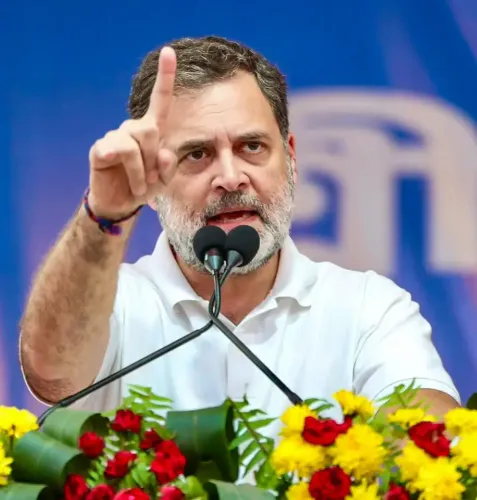
Referencing Leader of Opposition Rahul Gandhi, the editorial suggested that the Prime Minister signed the agreement under “fear” and “immense pressure” from Trump.
According to Gandhi, the deal had been stalled for nearly four months and was signed suddenly for “mysterious reasons.”
While the BJP presents the agreement as a “magnificent announcement” benefiting 1.4 billion Indians, Saamana contends that the details reveal a darker narrative for the domestic economy.
It claims that India is set to cease oil imports from Russia and switch entirely to US oil imports valued at $500 billion. Additionally, it alleges that India would remove tariffs on US agricultural products, coal, and technology.
The editorial pointed out that even though US tariffs on Indian goods may drop from 50% to 18%, India's effective tariff burden is expected to surge from 3.31% to 18%.
Warning about severe repercussions for agriculture, the Thackeray faction stated that the proposed “zero tariff” regime would allow subsidized and cheaper American products to inundate Indian markets. Essential items like cotton, milk, dairy products, pulses, soybean, maize, almonds, walnuts, fruits, and vegetables would be sold duty-free, undercutting local produce and leaving Indian farmers and agricultural workers at a disadvantage.
In a nation where farmer suicides due to overwhelming debt continue to rise, the editorial criticized the government for “rolling out the red carpet for foreign products,” asserting that the Modi administration has jeopardized the interests of Indian farmers and compromised national sovereignty for the benefit of the United States.
Point of View
It's crucial to emphasize that while trade agreements can be beneficial, the terms must prioritize the welfare of local farmers and laborers. The concerns raised by the Shiv Sena UBT highlight a significant debate about national sovereignty and economic vulnerability. As a nation, we must ensure that our agreements do not compromise the livelihoods of our citizens.
NationPress
20 Sept 2026
Frequently Asked Questions
What is the main criticism of the India-US trade deal?
The main criticism is that the deal threatens the livelihoods of Indian farmers and laborers, with concerns that it undermines national sovereignty.
Why did the Shiv Sena UBT label the trade deal a 'declaration of war'?
They believe the agreement harms the interests of farmers and laborers, portraying it as an attack on India's agricultural sector.
What economic impacts does the deal forecast?
The deal could lead to a flood of cheaper American agricultural products in India, making it difficult for local farmers to compete.