Is the Indian Army Inducting 4.25 Lakh CQB Carbines in 2026?
Synopsis
In a landmark contract, the Indian Army plans to induct 4.25 lakh CQB carbines by 2026, marking a significant step in modernizing its infantry capabilities. This Rs 27,770 crore deal emphasizes self-reliance in defense production, showcasing a strategic partnership between indigenous firms and global leaders. Discover how this initiative is set to transform the Army's operational efficacy.
Key Takeaways
Induction of 4.25 lakh CQB carbines by 2026.
Deal valued at Rs 27,770 crore .
Bharat Forge to supply 60% of the order.
PLR Systems to provide the remaining 40%.
Focus on Atmanirbharta in defense production.
New Delhi, Oct 22 (NationPress) The Indian Army is set to commence the induction of Close Quarter Battle (CQB) carbines into its forces starting in 2026, following a significant procurement agreement.
This deal, valued at Rs 27,770 crore, entails the acquisition of 4.25 lakh CQB carbines aimed at replacing and upgrading small arms within infantry units.
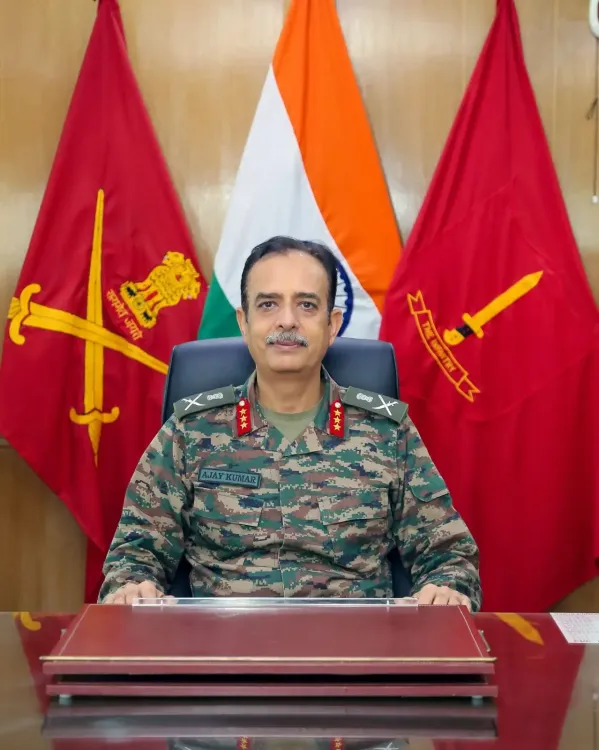
As per Lieutenant General Ajay Kumar, Director General of Infantry, defence manufacturers have been provided with a stringent timeline for fulfilling the deliveries.
“Companies are required to deliver the complete order within two years,” he stated on Wednesday, highlighting the urgency behind the expedited modernisation initiative.
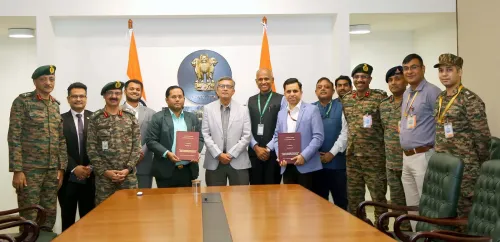
The contract, finalised last month, was executed between the Defence Ministry and two manufacturing entities: Bharat Forge — a division of Kalyani Strategic Systems — and PLR Systems, a joint venture created by the Adani Group and Israel Weapon Industries (IWI).
The order stipulates that 5.56×45mm CQB carbines will be the standard issue for this new procurement.
According to the agreement, Bharat Forge is tasked with supplying 60 percent of the total order, which amounts to 255,000 rifles, while PLR Systems will deliver the remaining 40 percent, or 170,000 units.
This procurement is being framed as part of a broader initiative towards Atmanirbharta in defence production, integrating indigenous manufacturing with strategic collaborations.
Importantly, during an informal media interaction on Wednesday, the DG Infantry remarked that “wars are not fought with borrowed weapons.”
Reiterating that the Infantry is the forefront of the Indian Army, Lt Gen Kumar said the army is undergoing a significant transformation under the Decade of Transformation initiative, which emphasizes modernisation, self-reliance, and excellence in human resources.
“The Infantry of tomorrow will be technologically advanced, modular, and versatile — equipped to fight and win in multi-domain environments,” the DG stated.
In light of lessons from Operation Sindoor, Lt Gen Kumar emphasized the importance of precision, jointness, and technology-driven warfare.
He also discussed the integration with enhanced Intelligence, Surveillance and Reconnaissance (ISR) assets in reference to Operation Sindoor.
Point of View
I believe that the Indian Army's commitment to self-reliance through this procurement signifies a crucial step towards enhancing our defense capabilities. The emphasis on indigenous production, coupled with international partnerships, reflects a strategic approach to modern warfare. This initiative not only strengthens our military preparedness but also fosters innovation within the domestic defense industry.
NationPress
21 Sept 2026
Frequently Asked Questions
What is the value of the CQB carbine deal?
The deal is worth Rs 27,770 crore.
How many CQB carbines will be inducted?
The Indian Army will induct 4.25 lakh CQB carbines.
When will the induction of carbines begin?
The induction is set to begin in 2026.
Who are the manufacturers involved in this deal?
The manufacturers are Bharat Forge and PLR Systems.
What is the significance of this procurement?
It represents a significant step towards self-reliance in defense production and modernization of infantry units.