Indian Ambassador visits BFSU, witnesses students excel in Tamil, Hindi and Sanskrit
Synopsis
At Beijing Foreign Studies University, Chinese students delivered cultural performances in Tamil, Hindi, Bengali, and Sanskrit before India's Ambassador — a quiet but telling signal that people-to-people and academic diplomacy between the world's two most populous nations is very much alive, even as the broader bilateral relationship remains complex.
Key Takeaways
Ambassador Vikram K.
Doraiswami visited Beijing Foreign Studies University (BFSU) on 6 June .
Chinese students demonstrated proficiency in Tamil , Hindi , Bengali , and Sanskrit ; the university also offers instruction in Pali , Punjabi , and Urdu .
BFSU offers programmes in more than 100 foreign languages , according to President Jia Wenjian .
The Ambassador's lecture, titled 'Bridging Civilisations through Language and Learning' , traced India-China exchanges from the Mauryan period to the present.
The visit underscores efforts to strengthen academic and people-to-people ties between the two countries.
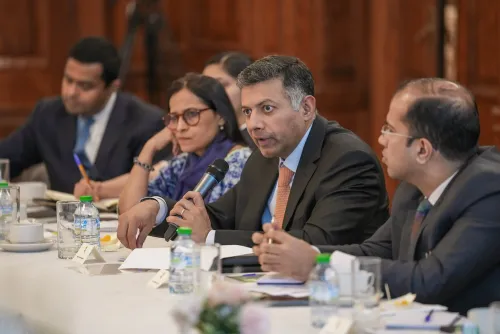
India's Ambassador to China, Vikram K. Doraiswami, on Saturday, 6 June visited Beijing Foreign Studies University (BFSU) and witnessed Chinese students demonstrate remarkable proficiency in Indian languages, including Tamil, Hindi, Bengali, and Sanskrit. The visit marked a notable moment in India-China educational and cultural engagement.
What the Ambassador Observed
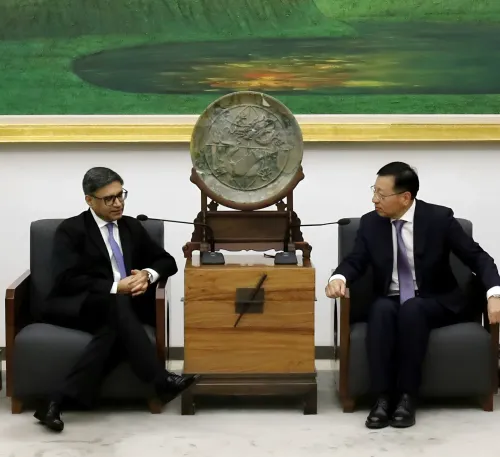
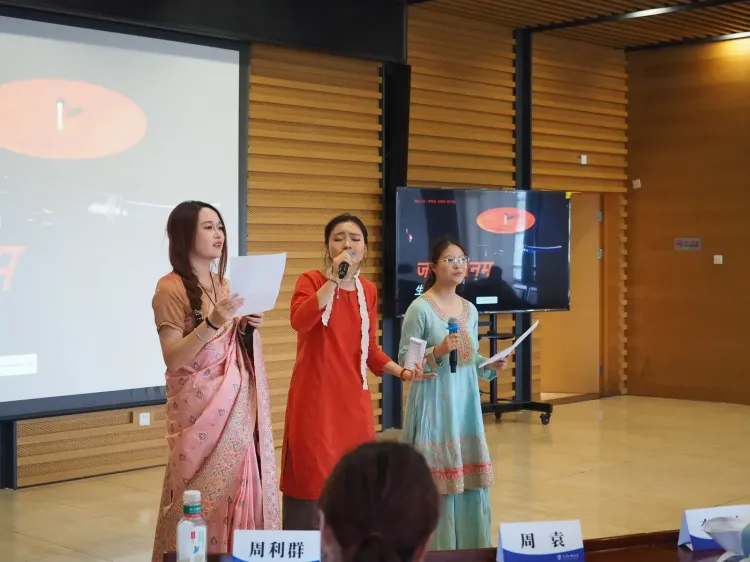
During the visit, students showcased their language skills through a series of vibrant cultural presentations. Ambassador Doraiswami also held a meeting with BFSU President Jia Wenjian, during which he was briefed on the university's instruction in Pali, Punjabi, and Urdu. President Jia highlighted that BFSU currently offers programmes in more than 100 foreign languages, placing it among the world's most linguistically diverse academic institutions.
The Ambassador's Lecture: Bridging Civilisations
Delivering a lecture titled 'Bridging Civilisations through Language and Learning', Ambassador Doraiswami drew on examples spanning from the Mauryan period to the modern era. He argued that the study of languages, societies, and the exchange of ideas has been a defining feature of India-China engagement for over two millennia.
He noted that interactions between the world's two oldest continuous civilisations had enriched both societies through the sharing of knowledge, philosophy, artistic traditions, technologies, and innovation. He emphasised that such exchanges remain more important than ever as both nations undergo profound economic, technological, and social transformation.
Contemporary India and People-to-People Ties
The lecture also explored the sweeping changes taking place in India today, underscoring the need for deeper academic engagement and people-to-people exchanges to better understand each other's contemporary realities, according to the Indian Embassy in Beijing. The formal address was followed by an interactive question-and-answer session, during which students engaged the Ambassador on a wide range of topics.
Cultural Performances and Diplomatic Significance
The Indian Embassy shared glimpses of the students' cultural performances on X (formerly Twitter), noting the depth and enthusiasm of their linguistic accomplishments. This comes amid a broader effort by both India and China to rebuild and deepen bilateral ties through academic and cultural diplomacy. Notably, language education at institutions like BFSU has long served as a foundational pillar for training future diplomats, translators, and scholars who shape the India-China relationship.
As both countries continue to navigate a complex geopolitical landscape, initiatives like this visit signal a sustained commitment to fostering mutual understanding at the people-to-people level.
Point of View
But it quietly builds the human infrastructure that sustains bilateral relationships through political turbulence. Ambassador Doraiswami's BFSU visit is a reminder that India-China engagement has never been purely transactional — it rests on a centuries-old civilisational exchange that outlasts any given border dispute. What is striking is the breadth: Tamil, Sanskrit, Pali, and Urdu instruction at a single Chinese university speaks to a serious, state-backed investment in understanding India. Whether New Delhi is making a comparable institutional investment in Mandarin and Chinese regional languages at Indian universities is a question worth asking.
NationPress
22 Sept 2026
Frequently Asked Questions
Why did India's Ambassador visit Beijing Foreign Studies University?
Ambassador Vikram K. Doraiswami visited BFSU on 6 June to interact with students learning Indian languages and to deliver a lecture on India-China civilisational ties. The visit was aimed at strengthening educational and cultural engagement between the two countries.
Which Indian languages are taught at Beijing Foreign Studies University?
BFSU offers instruction in Tamil, Hindi, Bengali, Sanskrit, Pali, Punjabi, and Urdu, as part of its broader portfolio of more than 100 foreign language programmes. This makes it one of the few universities outside India with such extensive coverage of Indian languages.
What was the theme of Ambassador Doraiswami's lecture at BFSU?
The lecture was titled 'Bridging Civilisations through Language and Learning' and traced India-China intellectual and cultural exchanges from the Mauryan period to the present day. It also addressed the rapid contemporary changes taking place in India and the importance of deeper mutual understanding.
How does this visit fit into the broader India-China relationship?
The visit reflects a strand of cultural and academic diplomacy that has continued even during periods of political tension between the two countries. People-to-people exchanges and language education are seen as long-term investments in bilateral understanding, independent of day-to-day diplomatic fluctuations.
What did the Indian Embassy say about the students' performances?
The Indian Embassy in Beijing posted on X that students demonstrated impressive language skills through vibrant cultural presentations, sharing glimpses of the performances on the platform.