Indian Ambassador Vikram Doraiswami meets Quanzhou Party Secretary, pushes bilateral ties
Synopsis
India's Ambassador to China completed a packed week of diplomacy — from a Vice Foreign Minister to a provincial party secretary to a 7th-century Buddhist temple. The engagements signal a deliberate, multi-track effort to rebuild India–China ties across commercial, cultural, and multilateral channels, with China's backing for India's BRICS Presidency emerging as a notable headline.
Key Takeaways
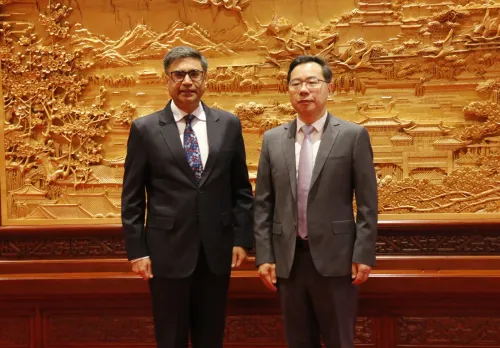
Ambassador Vikram Doraiswami met Quanzhou Party Secretary Zhang Yigong on 9 July 2026 to discuss commercial, investment, and cultural cooperation.
Doraiswami and Consul General Gince Mattom visited the 7th-century Kaiyuan Temple in Quanzhou, Fujian, received by Chief Monk Ven.
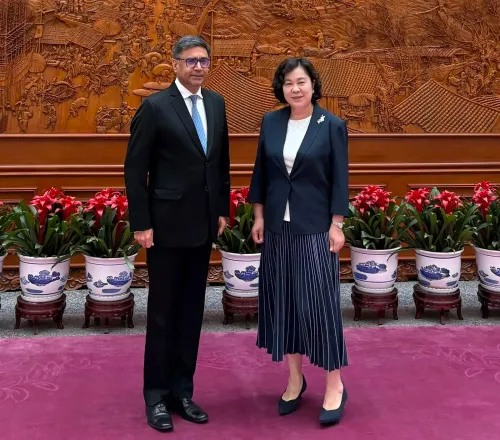
On 6 July 2026 , Doraiswami held his introductory meeting with Chinese Vice Foreign Minister Hua Chunying , agreeing to advance stable and mutually beneficial bilateral relations.
Vice Minister Hua assured China's support for India's BRICS Presidency .
The Ambassador also met Wu Ken , President of CPIFA , to discuss Track II and Track 1.5 people-to-people dialogue frameworks.
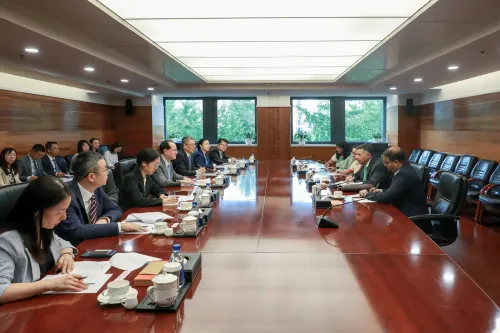
India's Ambassador to China, Vikram Doraiswami, on Thursday, 9 July 2026, held a cordial meeting with Quanzhou Party Secretary Zhang Yigong in Fujian province, discussing avenues to deepen bilateral cooperation in commercial, investment, and cultural domains. The visit is part of a busy week of diplomatic engagements that underscores a gradual warming in India–China ties following years of border-driven strain.
What Was Discussed in Quanzhou
According to a post by the Embassy of India in Beijing on X, both sides highlighted the long-standing historical connections between India and Quanzhou, and expressed support for building on these shared links to deepen future engagement. The discussions covered the commercial, investment, and cultural sectors — three pillars that diplomats on both sides have identified as relatively insulated from geopolitical friction.
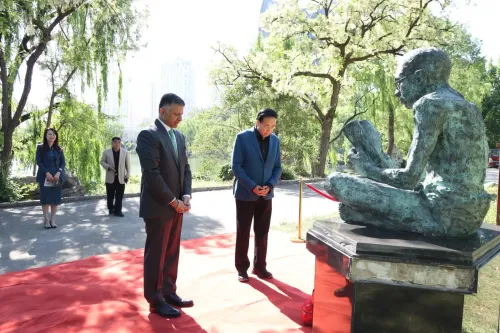
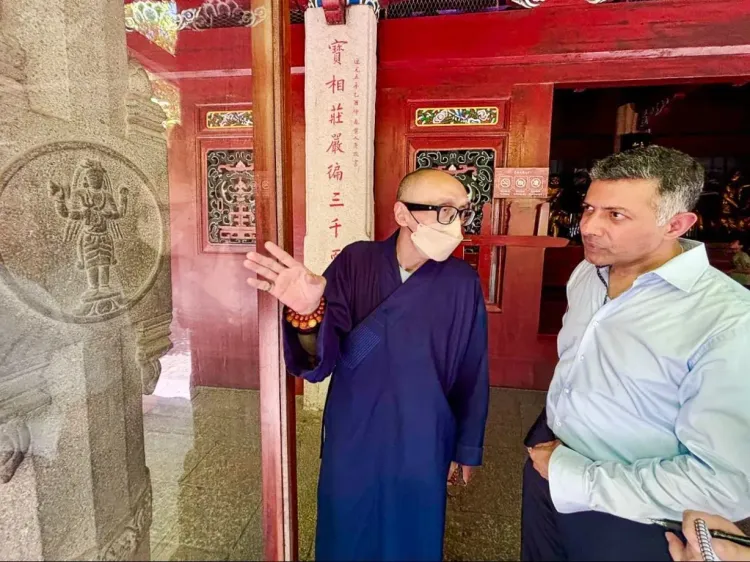
Ambassador Doraiswami and Consul General Gince Mattom also visited the 7th-century Kaiyuan Temple in Quanzhou, Fujian, where they were received by Chief Monk Ven. Shi De Sheng. The Embassy described the temple as 'a testament to centuries of India–China cultural exchanges,' noting that it reflects artistic and architectural influences of both local and ancient Indian traditions.
High-Level Beijing Meetings Earlier in the Week
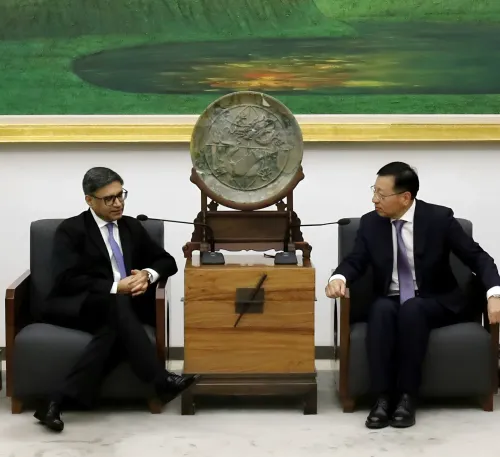
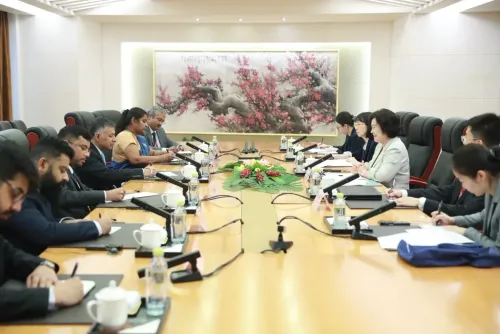
On Wednesday, Ambassador Doraiswami met Wu Ken, President of the Chinese People's Institute of Foreign Affairs (CPIFA). The Embassy noted that the Ambassador expressed appreciation for CPIFA's contributions to promoting people-to-people exchanges, including through Track II and Track 1.5 dialogues — back-channel formats that have historically served as pressure valves in bilateral relations.
Crucially, on 6 July 2026, Doraiswami held his introductory meeting with Hua Chunying, Vice Minister of Foreign Affairs of China. Both sides agreed to strengthen efforts to fully implement the vision of the leaders of the two countries for stable and mutually beneficial relations that deliver tangible benefits to the peoples of both countries. They also exchanged views on expanding bilateral cooperation in trade, economy, and people-to-people exchanges. Notably, Vice Minister Hua assured China's support for India's BRICS Presidency — an assurance Ambassador Doraiswami formally welcomed.
Why This Diplomatic Push Matters
This comes amid a broader, if cautious, diplomatic reset between New Delhi and Beijing following the 2020 Galwan Valley standoff, which had frozen high-level engagement for years. The flurry of meetings — spanning a Vice Foreign Minister, a think-tank president, and a provincial party secretary — signals that both sides are keen to rebuild institutional channels across multiple tracks simultaneously.
Quanzhou itself carries symbolic weight: the city was historically one of the world's busiest maritime trade ports, and its centuries-old links with Indian traders make it a natural anchor for cultural diplomacy. The Kaiyuan Temple visit, in particular, sends a soft-power signal that the two civilisations share a pre-modern heritage that transcends current political tensions.
What Comes Next
Observers will watch whether these engagements translate into concrete deliverables — particularly on trade facilitation and visa normalisation for business travellers, two areas where friction has persisted despite political thaw. The BRICS Presidency assurance could also open space for India to advance its multilateral agenda with Chinese cooperation, though analysts caution that border management remains the ultimate litmus test for any durable reset.
Point of View
Think-tank president, provincial party secretary, and a Buddhist temple — is not accidental. It reflects a deliberate Indian strategy to rebuild ties on multiple tracks at once, reducing dependence on any single channel that could be frozen by the next border incident. Yet the real test remains unspoken: none of these meetings addressed the Line of Actual Control, where the underlying friction that ruptured ties in 2020 has not been structurally resolved. Diplomatic warmth and territorial disputes have coexisted before in India–China relations — and the latter has invariably won. China's BRICS support is a useful tactical concession, but India will need more than temple visits and track dialogues to call this a genuine reset.
NationPress
8 Oct 2026
Frequently Asked Questions
Who did Indian Ambassador Vikram Doraiswami meet in Quanzhou?
Ambassador Vikram Doraiswami met Quanzhou Party Secretary Zhang Yigong on 9 July 2026 to discuss bilateral cooperation in commercial, investment, and cultural sectors. He and Consul General Gince Mattom also visited the 7th-century Kaiyuan Temple in Quanzhou, Fujian.
What was agreed in Ambassador Doraiswami's meeting with Vice Minister Hua Chunying?
During their introductory meeting on 6 July 2026, both sides agreed to strengthen efforts to fully implement the vision of their respective national leaders for stable and mutually beneficial India–China relations. They also exchanged views on expanding cooperation in trade, economy, and people-to-people exchanges.
What is the significance of China supporting India's BRICS Presidency?
Vice Foreign Minister Hua Chunying assured China's support for India's BRICS Presidency, which Ambassador Doraiswami formally welcomed. This backing could help India advance its multilateral agenda within BRICS, though analysts note broader bilateral tensions remain unresolved.
Why is Quanzhou significant for India–China relations?
Quanzhou was historically one of the world's busiest maritime trade ports and has centuries-old links with Indian traders and cultural exchanges. The 7th-century Kaiyuan Temple in the city reflects artistic and architectural influences from both local and ancient Indian traditions, making it a natural site for cultural diplomacy.
What is the CPIFA and why did Ambassador Doraiswami meet its president?
The Chinese People's Institute of Foreign Affairs (CPIFA) is a prominent Chinese think-tank that facilitates people-to-people and Track II diplomatic exchanges. Doraiswami met CPIFA President Wu Ken on Wednesday to express appreciation for the institute's role in promoting India–China dialogue through informal and semi-official channels.