Will Indian Stock Markets Continue to Rise Ahead of Budget 2026?
Synopsis
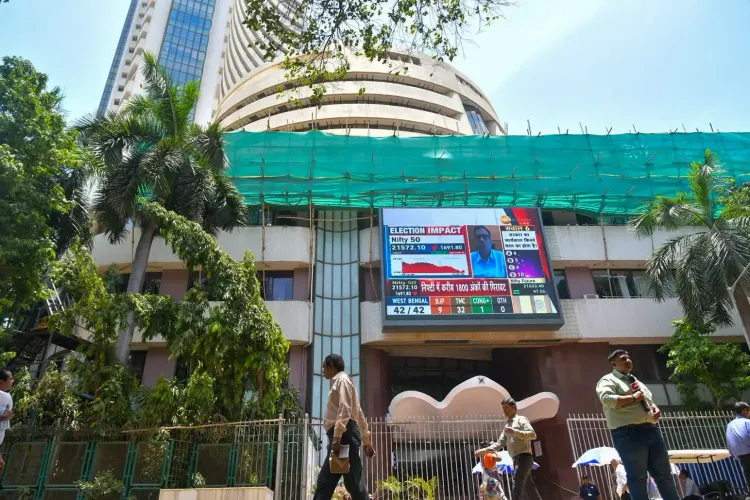
This week, Indian equity benchmarks rose about 1 percent, amid a backdrop of volatility and cautious optimism as traders await the upcoming Union Budget 2026. With mixed global cues and geopolitical tensions, market dynamics are shifting, and analysts are closely watching potential policy impacts.
Key Takeaways
Indian equity benchmarks increased by approximately 1 percent this week.
Nifty closed at 25,320 , while Sensex settled at 81,537 .
Sector performance was varied, with metals and oil & gas performing well.
Investors should be wary of inflation and its implications on financial conditions.
Upcoming Union Budget 2026-27 is a key event to watch.
Mumbai, Jan 31 (NationPress) The Indian equity indices experienced a rise of approximately 1 percent this week, despite facing significant volatility during trading sessions. This cautious optimism stemmed from mixed global signals and escalating geopolitical tensions.
As the week progressed, risk appetite diminished ahead of the Union Budget 2026-27, with volatility re-emerging due to ongoing FII outflows and depreciation of the rupee, resulting in losses during the final trading session.
Nifty recorded a gain of 1.09 percent over the week but fell 0.39 percent on the last trading day, closing at 25,320. The Sensex dropped 296 points or 0.36 percent to settle at 81,537, having gained 0.90 percent throughout the week.
Sector-wise performance was mixed, with diversified consumer services and hardware technology sectors suffering the most, declining between 2.5 to 3.7 percent. The FMCG, media, and software sectors also saw a drop of more than 1 percent.
On the upside, metal and oil & gas stocks emerged as the top performers, climbing over 2 percent. However, the Nifty metal index faced a steep decline of over 5 percent in the final trading session. Analysts noted that profit booking was prevalent in IT stocks, influenced by a stronger dollar and global liquidity concerns, alongside caution regarding the incoming Fed Chair.
Weakness was evident in the automotive and beverage sectors amid rising competitive pressures.
Broader indices showed robust gains this week, with the Nifty Midcap100 increasing by 2.25 percent and the Nifty Smallcap100 seeing a rise of 3.2 percent.
The week opened with subdued market sentiment due to renewed tariff concerns and mixed corporate earnings. Nevertheless, optimism surrounding the India–EU trade agreement provided support, especially to trade-oriented sectors.
Mid-week, market sentiment improved following a favorable economic survey that bolstered expectations for solid FY27 growth and a favorable inflation outlook.
Analysts caution that the markets remain vigilant, as a potentially heightened focus on inflation could extend tight financial conditions and impact emerging markets negatively.
Looking forward, the markets are likely to be driven by events, with the Union Budget serving as a critical domestic catalyst. Cyclical sectors may exhibit relative resilience if supported by policy initiatives, while IT and export-driven stocks are expected to be sensitive to global economic indicators.
aar/na
Point of View
I believe that the current fluctuations in the Indian equity markets reflect a complex interplay of global and domestic factors. The upcoming Union Budget is pivotal, and its outcomes could significantly influence market sentiment. We must remain vigilant and informed as we navigate these challenging times.
NationPress
22 Sept 2026
Frequently Asked Questions
What drove the market gains this week?
The market gains were primarily driven by cautious optimism ahead of the Union Budget 2026-27, despite mixed global signals and geopolitical tensions.
Which sectors performed the best this week?
Metal and oil & gas stocks were the top performers this week, with gains of over 2 percent.
How did the Nifty and Sensex perform?
Nifty rose by 1.09 percent over the week but dipped by 0.39 percent on the last trading day, while Sensex fell by 0.36 percent.
What factors are influencing market volatility?
Market volatility is being influenced by ongoing FII outflows, rupee depreciation, and cautious sentiment surrounding the upcoming budget.
What can investors expect in the coming weeks?
Investors should prepare for event-driven markets, particularly with the Union Budget acting as a critical catalyst for future movements.