Why Did the Indian Stock Market Fall Over 2% This Week?
Synopsis
The Indian stock market faced a significant decline this week, dropping over 2.5%. Factors such as FII outflows, profit-booking, and global trade tensions contributed to this downturn. Investors are now looking ahead to upcoming events including the Union Budget 2026 for potential market recovery signals.
Key Takeaways
Indian stock market fell over 2.5% this week.
All sectoral indices closed in the negative.
The Realty sector saw the largest decline at 11.33%.
Investors are cautious ahead of the Union Budget 2026.
FII outflows exceeded Rs 36,500 crore this month.
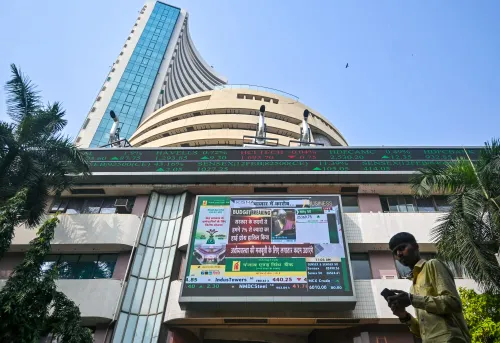
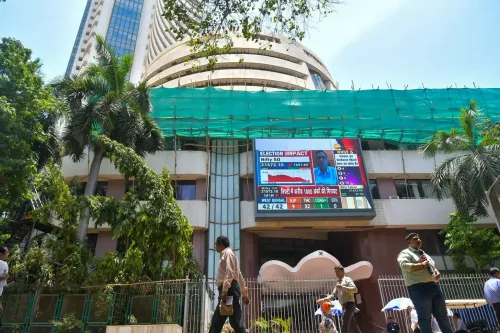
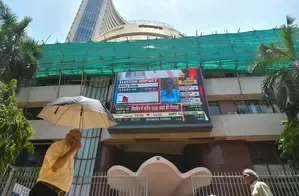
Mumbai, Jan 24 (NationPress) The Indian equity benchmarks concluded this week with a decline exceeding 2.5 percent due to profit-booking, ongoing foreign institutional investor (FII) outflows, and renewed worries over global trade disruptions stemming from U.S. tariff discussions.
All sectoral indices closed in the negative this week, with the Realty sector experiencing the steepest decline, plummeting 11.33 percent. Other sectors such as consumer durables, telecom, and consumer discretionary also fell by over 5 percent.
The Nifty index fell by 2.51 percent during the week and 0.95 percent on the final trading day, settling at 25,048. The Sensex, at the close, was down 769 points or 0.94 percent at 81,537, marking a 2.43 percent dip for the week.
The broader indices experienced more significant losses, with the Nifty Midcap100 decreasing by 4.58 percent and the Nifty Smallcap100 dropping by 5.81 percent.
Bank Nifty concluded the week with a bearish technical outlook after a decisive breakdown below the crucial support level of 58,800.
Analysts noted that the early-week sentiment received some support from positive earnings updates in select IT and banking stocks, but subsequent earnings disappointments and muted results from sectoral peers weighed heavily on market sentiment.
Escalating geopolitical tensions—especially regarding the U.S. administration’s assertive stance on Greenland and tariff threats—disturbed global markets, leading to a widespread sell-off across domestic equities.
Moreover, rising global bond yields and uncertainty surrounding the U.S. Supreme Court’s review of tariffs from the Trump administration further restricted risk appetite.
Since January 1, 2026, both the Sensex and Nifty have dropped by over 4 percent. The global risk-off sentiment has led to aggressive selling by foreign portfolio investors, who have divested equities worth more than Rs 36,500 crore this month.
The Indian rupee has weakened to nearly 92 per U.S. dollar, raising concerns about imported inflation.
Investors are closely monitoring upcoming cues from the Union Budget 2026 and guidance from the Federal Reserve regarding future interest rate cuts.
Analysts assert that high FII short positions, oversold momentum indicators, and pre-Budget positioning could lead to instances of short covering.
However, the sustainability of any recovery is expected to hinge on global cues, the continuation of earnings, and investor positioning ahead of the Union Budget, they added.
aar/na
Point of View
It is imperative to highlight that the recent downturn in the Indian stock market reflects broader global economic concerns. The fluctuations underscore the interconnectedness of our markets with global events, and it is crucial for investors to remain vigilant and informed.
NationPress
19 Sept 2026
Frequently Asked Questions
What caused the decline in the Indian stock market this week?
The decline was primarily due to profit-booking, continued FII outflows, and renewed concerns over global trade disruptions linked to U.S. tariff discussions.
How much did the Nifty and Sensex fall?
Nifty fell by 2.51% to 25,048, while Sensex dropped by 769 points or 0.94% to 81,537.
What sectors performed the worst?
The Realty sector performed the worst, declining by 11.33%, along with significant losses in consumer durables and telecom.
What are investors watching for in the near future?
Investors are keenly awaiting guidance from the Union Budget 2026 and insights from the Federal Reserve regarding interest rates.
What is the significance of FII outflows?
FII outflows indicate a lack of confidence from foreign investors, which can lead to further market instability and impacts on the Indian rupee.