Why Did Sensex and Nifty Decline by Approximately 2.5% This Week Amid Global Uncertainties?
Synopsis
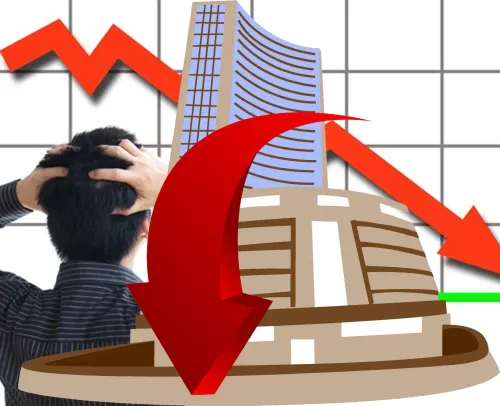
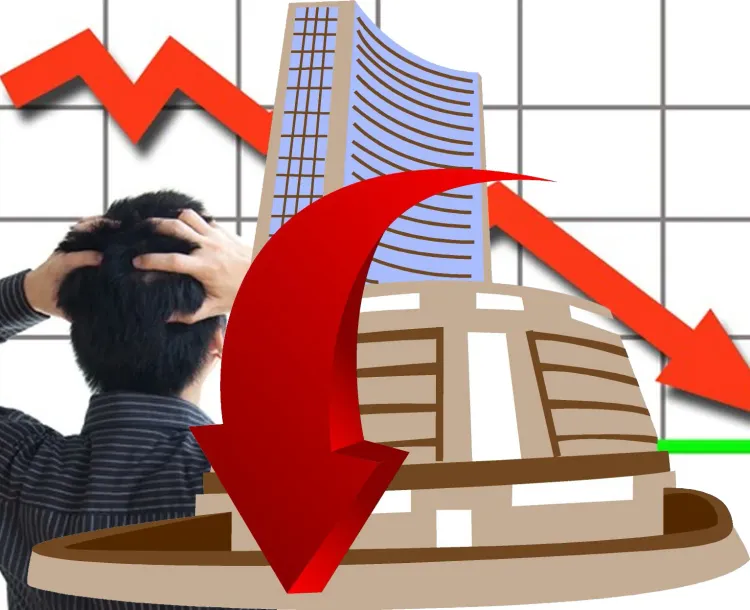
In this week's financial roundup, the Indian equity benchmarks faced a notable decline of approximately 2.5%, driven by ongoing global uncertainties surrounding trade talks and geopolitical tensions. As investors brace for the upcoming IT earnings, market volatility is anticipated to persist. How will this impact the future of the Indian stock market?
Key Takeaways
Indian equity benchmarks fell by 2.5% this week.
Profit-booking in autos , metals , and oil and gas sectors contributed to the decline.
The Nifty index ended at 25,638 , down 0.75% on the last trading day.
Analysts predict ongoing volatility due to external risks.
Key Q3 FY26 IT earnings are anticipated next week.
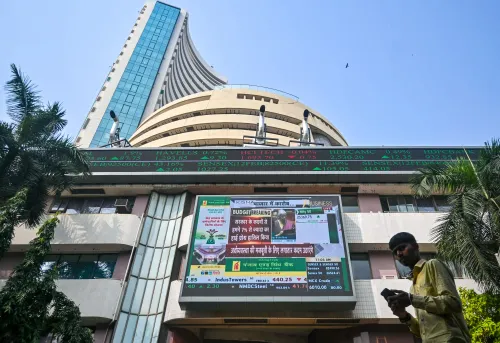
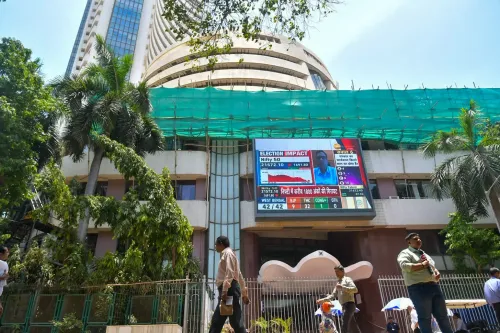
Mumbai, Jan 10 (NationPress) The Indian equity benchmarks experienced a decline of roughly 2.5 percent this week, marking a continued downturn over five trading sessions due to ongoing uncertainty surrounding the US-India tariff discussions and rising geopolitical tensions. Profit-taking in sectors such as automobiles, metals, and oil and gas exerted pressure on the indices, while modest buying in consumer durables provided a fleeting sense of relief amidst hopes for a demand recovery.
The Nifty index fell by 2.45 percent for the week, with a 0.75 percent drop on the final trading day, concluding at 25,638. The Sensex also showed a decline, dropping 604 points or 0.72 percent to settle at 83,576, reflecting a 2.55 percent decrease over the week.
According to analysts, the Bank Nifty has formed a dark cloud cover candlestick pattern on the weekly chart, indicating potential selling pressure at elevated levels.
Domestic markets have remained risk-averse, particularly due to concerns regarding potential US trade actions linked to sanctions against Russia. Market sentiment has been dampened by global challenges, including the Venezuela-US tensions, worries over Russian oil imports, restrictions from China on rare earth exports, and persistent foreign institutional investor (FII) outflows.
Broader market indices mirrored the benchmark indices this week, with the Nifty Midcap100 down by 2.64 percent and the Nifty Smallcap100 declining 3.08 percent.
Investors are closely watching for the upcoming key Q3 FY26 IT earnings, scheduled for release next week.
Additionally, a ruling from the court is anticipated regarding US President Donald Trump’s invocation of the International Emergency Economic Powers Act (IEEPA) to impose broad global tariffs, which include a 10 percent base levy and higher reciprocal duties on significant trading partners.
According to analysts, volatility is expected to persist in the near term, particularly in US-sensitive sectors like metals and oil and gas.
Overall, analysts predict that the markets will remain range-bound with a mixed outlook, balancing external risks against domestic fundamentals.
aar/na
Point of View
It is essential to acknowledge the impact of external economic factors on the Indian market. The ongoing geopolitical tensions and trade discussions require careful analysis and monitoring. Our approach remains dedicated to providing accurate and timely updates, ensuring our audience stays informed amidst this uncertainty. We stand with the nation, prioritizing transparency and trust in our reporting.
NationPress
19 Sept 2026
Frequently Asked Questions
What caused the decline in the Indian equity markets this week?
The Indian equity markets declined due to ongoing uncertainties regarding US-India tariff discussions and rising geopolitical tensions, leading to profit-booking in various sectors.
How much did the Nifty and Sensex drop this week?
The Nifty dropped by approximately 2.45 percent, while the Sensex fell by around 2.55 percent over the week.
What sectors are showing signs of weakness?
Sectors such as automobiles, metals, and oil and gas are experiencing significant selling pressure.
What upcoming events should investors watch for?
Investors should keep an eye on the key Q3 FY26 IT earnings scheduled for release next week.
What patterns are analysts observing in the market?
Analysts noted that the Bank Nifty formed a dark cloud cover candlestick pattern, indicating potential selling pressure at higher levels.