Indian Navy ships reach Philippines for ADMM-Plus maritime drills
Synopsis
INS Sahyadri and INS Kulish docking at Subic Bay for ADMM-Plus drills is more than a routine port call — it is the naval expression of a fast-deepening India-Philippines Strategic Partnership, cemented just last year, and comes weeks after Modi and Marcos met at the BRICS Summit. In the contested waters of the Indo-Pacific, India's visible maritime presence alongside ASEAN partners is a message as much as an exercise.
Key Takeaways
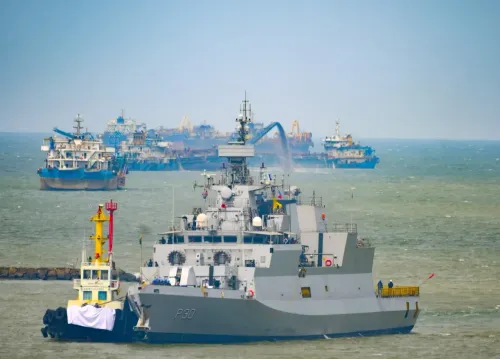
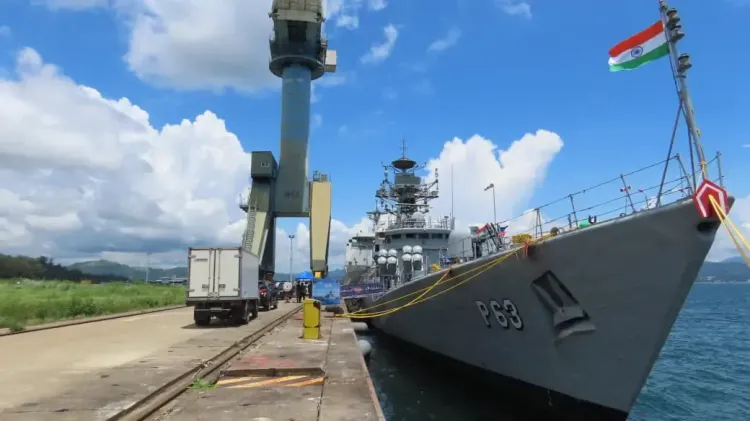
INS Sahyadri and INS Kulish arrived at Subic Bay , Philippines, on 21 September 2026 for the ADMM-Plus Joint Cooperation Activity (JCA) .
The deployment is aligned with India's Act East Policy and the MAHASAGAR vision for regional maritime security.
India and the Philippines established a Strategic Partnership in August 2025 during President Marcos's state visit to India.
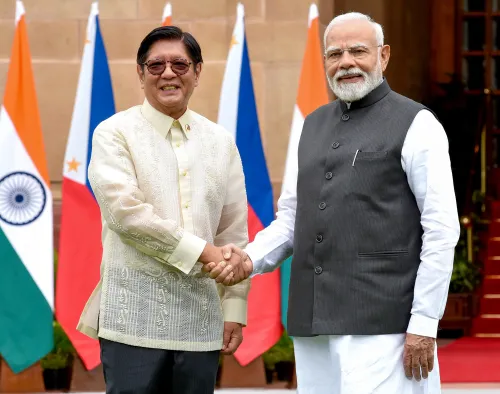
PM Modi and President Marcos reviewed the partnership on 13 September 2026 on the sidelines of the 18th BRICS Summit .
The ADMM-Plus format includes maritime forces from ASEAN Member States and eight Plus countries , focused on interoperability and regional maritime cooperation.
PM Modi also welcomed the Philippines' decision to join the Coalition for Disaster Resilient Infrastructure .
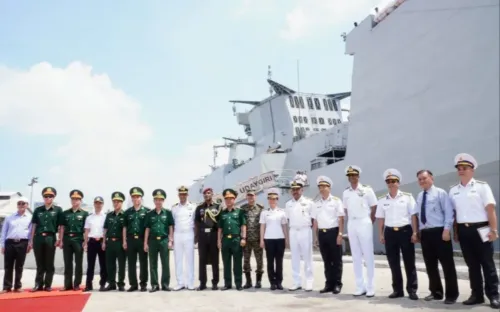
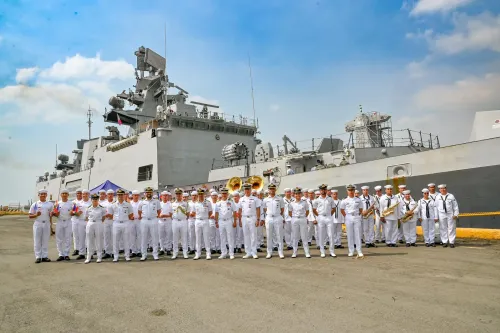
Indian Naval Ships Sahyadri and Kulish arrived at Subic Bay port in the Philippines on Sunday, 21 September 2026, to participate in the ASEAN Defence Ministers' Meeting (ADMM)-Plus Joint Cooperation Activity (JCA). The deployment is part of the Indian Navy's operational rollout and directly reflects New Delhi's Act East Policy and the MAHASAGAR (Mutual and Holistic Advancement for Security and Growth Across Regions) vision.
What the ADMM-Plus Exercise Involves
The ADMM-Plus JCA brings together maritime forces from ASEAN Member States and eight Plus countries for professional and operational engagements. According to the Ministry of Defence, the primary objectives are enhancing interoperability, fostering mutual understanding, and strengthening cooperation across the maritime domain.
The presence of Sahyadri and Kulish will enable the Indian Navy to engage with participating maritime forces through joint professional activities, contributing to a deeper understanding of shared challenges — from freedom of navigation to humanitarian assistance and disaster relief.
India-Philippines Ties: Growing Strategic Depth
The port call comes at a moment of measurable momentum in the bilateral relationship. India and the Philippines formalised a Strategic Partnership in August 2025, during the state visit of Philippine President Ferdinand R. Marcos Jr. to India. The Ministry of Defence noted that the current deployment builds directly on that foundation, offering an opportunity to deepen professional linkages between the two navies.
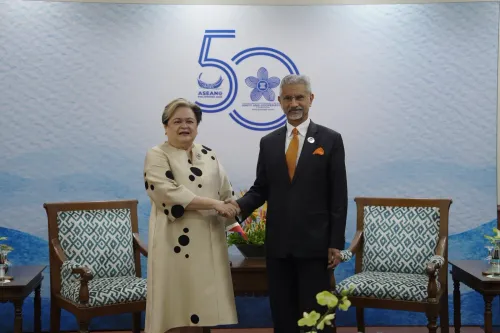
This visit is not isolated. On 13 September 2026, Prime Minister Narendra Modi and President Marcos held a bilateral meeting on the sidelines of the 18th BRICS Summit, reviewing progress under the Strategic Partnership. The Ministry of External Affairs (MEA) stated that both leaders 'expressed satisfaction at the progress made in bilateral cooperation across all areas and agreed to further deepen and expand collaboration in the fields of defence and security, trade and investment, space, railway infrastructure, fintech, education, tourism, science and technology, innovation and people-to-people ties.'
BRICS Summit and ASEAN Linkages
Prime Minister Modi welcomed the Philippines' participation in the BRICS Summit in its capacity as the current ASEAN Chair. He also welcomed Manila's decision to join the Coalition for Disaster Resilient Infrastructure — a multilateral platform championed by India — signalling convergence on climate resilience and disaster-preparedness as emerging pillars of the partnership.
This comes amid an increasingly active Indo-Pacific strategic environment, where India's maritime posture and ASEAN engagement have taken on added significance. Notably, the ADMM-Plus format is one of the few multilateral platforms where India, China, and Western Indo-Pacific partners all participate, making India's visible role in the exercise diplomatically significant.
India's Broader Indo-Pacific Deployment
The arrival of INS Sahyadri and INS Kulish at Subic Bay is part of a sustained operational deployment pattern by the Indian Navy in the Indo-Pacific. India has progressively expanded port calls, passage exercises (PASSEX), and multilateral drills across Southeast Asia, reflecting a policy commitment to being a 'net security provider' in the region. The Subic Bay visit reinforces that posture, with analysts noting that India's naval presence in Philippine waters sends a calibrated signal of solidarity with a country navigating its own maritime pressures in the South China Sea.
How the two navies leverage the ADMM-Plus JCA framework for deeper bilateral exercises in the months ahead will be closely watched.
Point of View
Space, fintech, and infrastructure threads, all knotted tighter at the BRICS sidelines just days ago. India's choice to participate prominently in ADMM-Plus exercises in Philippine waters — with all the South China Sea symbolism that implies — is a calibrated signal that New Delhi is prepared to stand with ASEAN partners on maritime order. The question is whether that signalling translates into the kind of sustained interoperability — joint patrols, white-shipping data-sharing, coordinated HADR — that would give the partnership strategic weight beyond summit communiqués.
NationPress
21 Sept 2026
Frequently Asked Questions
Why have Indian Naval Ships arrived in the Philippines?
INS Sahyadri and INS Kulish arrived at Subic Bay on 21 September 2026 to participate in the ASEAN Defence Ministers' Meeting (ADMM)-Plus Joint Cooperation Activity, a multilateral maritime exercise involving ASEAN member states and eight partner countries including India. The deployment reflects India's Act East Policy and its MAHASAGAR vision for regional maritime security.
What is the ADMM-Plus Joint Cooperation Activity?
The ADMM-Plus JCA is a multilateral maritime exercise that brings together naval forces from the ten ASEAN member states and eight dialogue partners — including India, the US, China, Japan, and Australia — to enhance interoperability and cooperation in the maritime domain. It is one of the region's most inclusive naval engagement formats.
How does this visit relate to the India-Philippines Strategic Partnership?
India and the Philippines formalised a Strategic Partnership in August 2025 during President Marcos's state visit to India. The Ministry of Defence stated that the Subic Bay port call builds on that partnership and provides an opportunity to deepen professional and operational ties between the two navies.
What did PM Modi and President Marcos discuss at the BRICS Summit?
On 13 September 2026, Prime Minister Modi and President Marcos met on the sidelines of the 18th BRICS Summit, reviewing progress under the bilateral Strategic Partnership. According to the MEA, both leaders agreed to deepen collaboration in defence, trade, space, fintech, education, tourism, and people-to-people ties.
What is India's MAHASAGAR vision?
MAHASAGAR stands for Mutual and Holistic Advancement for Security and Growth Across Regions. It is India's framework for maritime engagement across the Indo-Pacific, emphasising collective security, humanitarian cooperation, and economic connectivity with regional partners.