Indian Railways: Catalyst for Economic Growth with 3,000 Million Tonnes Freight Capacity by 2030
Synopsis
The Indian Railways is transforming into a crucial economic driver, targeting a freight capacity of 3,000 million tonnes by 2030. With recent advancements and increased private participation, the railways are set to enhance India's logistics efficiency and global competitiveness.
Key Takeaways
Target freight capacity: 3,000 million tonnes by 2030 Current rail freight movement: 30 percent Key initiatives: Dedicated Freight Corridors, electrification Logistics cost: 7.97 percent of GDP Track expansion: 31,000 km added in the last decade
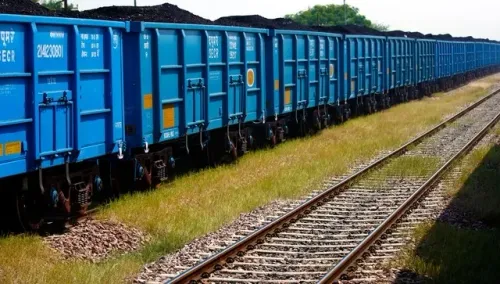
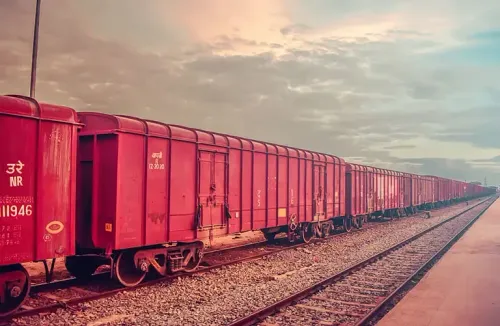
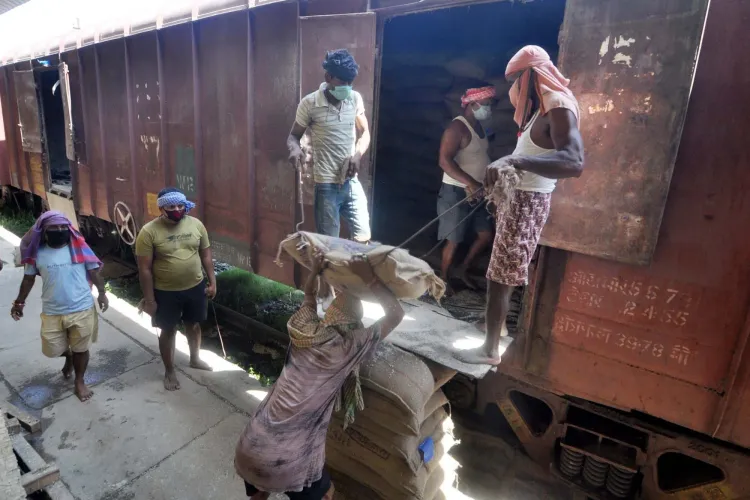
New Delhi, April 9 (NationPress) The Indian Railways is poised to be a pivotal factor in bolstering the nation's economic landscape as it aims for a staggering freight capacity of 3,000 million tonnes by 2030, according to a recent report.
The ASSOCHAM-AESCLA report reveals that the railways currently handle approximately 30 percent of freight transport, signifying a significant opportunity for growth.
This transformation is being fueled by initiatives such as Dedicated Freight Corridors and nearly complete electrification, leading to enhanced efficiency and sustainability.
Furthermore, the report emphasizes the necessity of boosting rail's modal share through capacity enhancements, further establishment of Dedicated Freight Corridors, increased private sector involvement, and improved last-mile connectivity.
Reducing logistics costs, which presently hover around 7.97 percent of GDP, is also crucial for elevating India's global competitiveness.
Dr. Surendra Kumar Ahirwar, Executive Director (Traffic Commercial) of the Railway Board, commented on the swift evolution of Indian Railways into a future-ready system. He pointed out that the railways are not merely facilitating economic growth but actively contributing to it through a robust manufacturing and service ecosystem.
Key aspects of this transformation include improved safety measures, rapid capacity growth, ongoing technology upgrades, the adoption of artificial intelligence, and a focus on comprehensive logistics solutions with effective first and last-mile connectivity. He also mentioned the importance of lowering container production costs.
Ahirwar noted that over the last decade, Indian Railways has expanded its network by nearly 31,000 km, demonstrating a remarkable pace of infrastructure development.
Sanjay Bajpai, Advisor to the Railways Council at ASSOCHAM, stated that the Indian Railways is transitioning from a conventional transport entity to a vital catalyst for logistics efficiency, industrial competitiveness, and economic growth. He stressed the need for modernized terminals, enhanced port connectivity, and seamless multimodal transport integration.
With freight loading already surpassing 1.6 billion tonnes annually, the sector is well-positioned for robust growth, bolstered by infrastructure enhancements, policy reforms, and digital advancements.
Point of View
It is clear that the Indian Railways stands at the forefront of India's economic ambitions. With strategic initiatives and a focus on sustainability, the railways not only promise to enhance logistics efficiency but also contribute significantly to the nation's overall economic growth.
NationPress
16 Sept 2026
Frequently Asked Questions
What is the target freight capacity for Indian Railways by 2030?
The target freight capacity for Indian Railways by 2030 is 3,000 million tonnes.
How much of India's freight movement is currently handled by railways?
Railways currently account for approximately 30 percent of freight movement in India.
What initiatives are driving the transformation of Indian Railways?
Key initiatives include the establishment of Dedicated Freight Corridors and nearly complete electrification.
What is the current logistics cost as a percentage of GDP in India?
The current logistics cost is around 7.97 percent of India's GDP.
How much track has Indian Railways added in the past decade?
Indian Railways has added nearly 31,000 km of track over the past decade.