Indian Railways: A Catalyst for Economic Growth as 2030 Freight Goals Set
Synopsis
Discover how the Indian Railways is transforming into a powerful engine for growth, aiming for a freight capacity of 3,000 million tonnes by 2030. This report highlights the sector's expansion potential and critical initiatives driving this change.
Key Takeaways
Indian Railways aims for a freight capacity of 3,000 million tonnes by 2030.
Current rail freight movement is around 30 percent .
Key initiatives include Dedicated Freight Corridors and electrification.
Logistics costs need to be reduced to enhance global competitiveness.
Significant infrastructure expansion with 31,000 km of new track added.
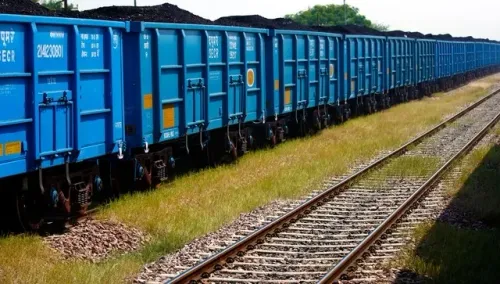
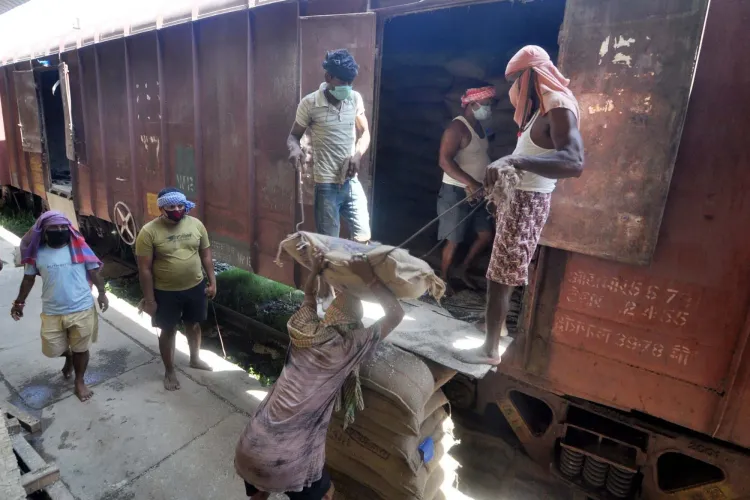
New Delhi, April 9 (NationPress) The Indian Railways is poised to significantly contribute to the nation's economic advancement, aiming for a freight capacity of 3,000 million tonnes by 2030, according to a recent report.
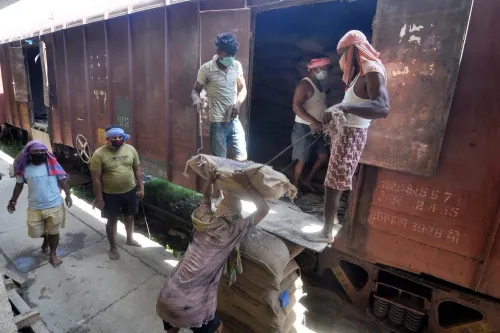
The ASSOCHAM-AESCLA report indicates that railways currently facilitate approximately 30 percent of freight transportation, showcasing their immense potential for expansion.
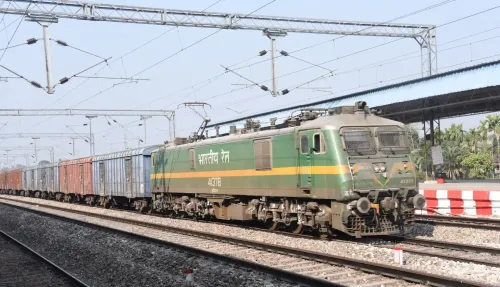
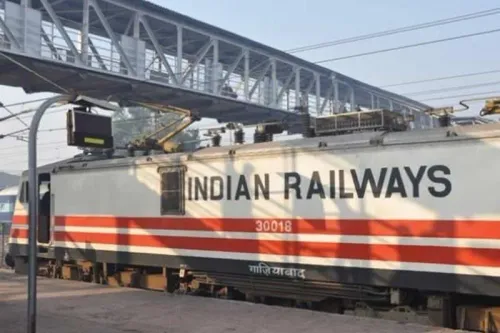
This sector is undergoing a swift transformation, propelled by initiatives such as Dedicated Freight Corridors and nearly complete electrification, which enhance both efficiency and sustainability.
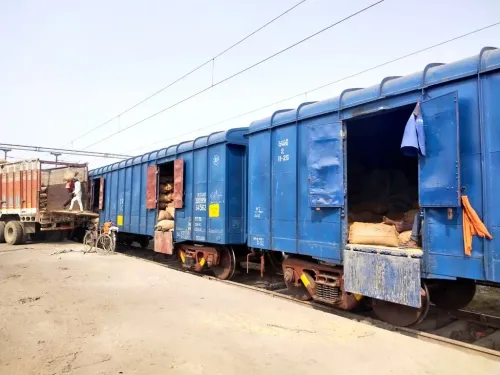
The report underscores the necessity of increasing the rail sector's modal share through expanding capacity, further developing Dedicated Freight Corridors, encouraging greater private sector involvement, and enhancing last-mile connectivity.
It also emphasizes the critical need to lower logistics costs—currently around 7.97 percent of GDP—to bolster India’s international competitiveness.
Dr. Surendra Kumar Ahirwar, Executive Director (Traffic Commercial) of the Railway Board, stated that Indian Railways is experiencing rapid transformation, evolving into a future-ready system. He highlighted that the railways not only support economic growth but also contribute through an extensive manufacturing and service ecosystem.
He pointed out key factors driving this transformation, which include enhanced safety standards, swift capacity growth, ongoing technology upgrades, the adoption of AI, and a shift towards comprehensive logistics solutions with robust first and last-mile connectivity. He also noted the necessity of reducing container production costs.
Ahirwar added that Indian Railways has expanded its network by nearly 31,000 km in the last decade, exemplifying a rapid pace of infrastructure growth.
Sanjay Bajpai, an advisor to the Railways Council at ASSOCHAM, remarked that Indian Railways is shifting from a conventional transporter to a pivotal force in enhancing logistics efficiency, industrial competitiveness, and economic growth. He stressed the importance of modern terminals, better port connectivity, and seamless multimodal integration.
With freight loading surpassing 1.6 billion tonnes annually, the sector is well-positioned for substantial growth, bolstered by infrastructure advancements, policy reforms, and digitalization.
Point of View
Showcasing its potential not just as a transportation entity but as a major driver of economic development. This transformation aligns with India's broader goals for infrastructure and logistics efficiency, making it a crucial topic for national discourse.
NationPress
18 Sept 2026
Frequently Asked Questions
What is the target freight capacity for Indian Railways by 2030?
The target freight capacity for Indian Railways by 2030 is 3,000 million tonnes.
How much of India's freight movement is currently handled by railways?
Currently, railways account for approximately 30 percent of freight movement in India.
What initiatives are driving the transformation of Indian Railways?
Key initiatives include Dedicated Freight Corridors, electrification, and technology upgrades.
What are the current logistics costs as a percentage of GDP?
Logistics costs are currently around 7.97 percent of India's GDP.
How much track has been added by Indian Railways in the last decade?
Indian Railways has added nearly 31,000 km of track over the past decade.