Gadkari launches Nadi Sanjivani river-road initiative in Bihar
Synopsis
Union Minister Nitin Gadkari has launched 'Nadi Sanjivani' in Bihar, an initiative that combines scientific river desilting for flood mitigation with channelling extracted material into new road construction, linking environmental restoration with Gati Shakti-aligned highway development.
Key Takeaways
Nadi Sanjivani was launched by Union Minister Nitin Gadkari on November 3, 2026 for Bihar.
The initiative uses silt extracted from river beds as raw material for road construction, cutting costs and reducing dumping on flood plains.
Bihar's river system — including the Ganga, Gandak, Kosi, and Bagmati — makes it a high-priority target for scientific desilting.
The scheme aligns with PM Gati Shakti National Master Plan (2021) and the earlier Bharatmala Pariyojana (2015) .
Bihar state leadership, including BJP's Samrat Choudhary , has been tagged in the rollout, indicating coordinated state-centre execution.
Exact funding, scope, and timelines remain to be formally announced by the ministry.
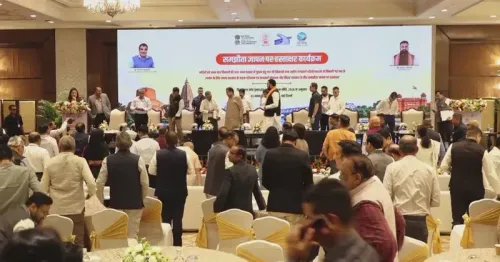
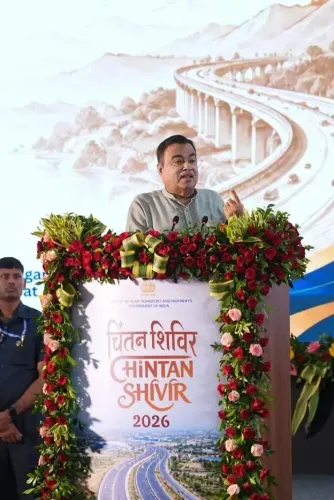
Bihar's rivers and its crumbling road networks have long been treated as separate problems — Union Road Transport and Highways Minister Nitin Gadkari just announced a plan to solve both at once. On Tuesday, November 3, 2026, Gadkari unveiled the 'Nadi Sanjivani: Nadi Punarjeevan – Sadak Navnirman' initiative, an ambitious scheme that extracts silt from Bihar's river beds to rejuvenate waterways and simultaneously channels that very material into new road construction.
One river bed, two solutions — how Nadi Sanjivani works
The concept is elegantly practical. Bihar sits atop one of India's most silt-choked river systems — seasonal flooding deposits enormous volumes of sediment that raises river beds, narrows channels, and worsens inundation year after year. Scientific desilting addresses that ecological pressure directly. But the extracted material — sand, gravel, and soil — is also exactly what road builders need. By routing desilt into highway construction, the initiative slashes raw-material costs while putting the spoil to productive use rather than dumping it on flood plains.
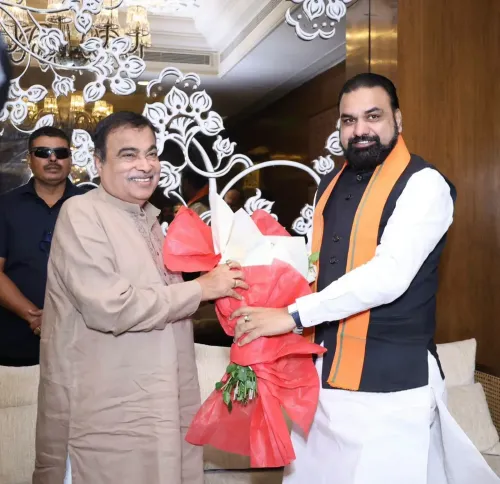
Gadkari's post carried the hashtags #नदीसंजीवनी, #ScientificDesilting, and #GatiShakti, tagging Bihar BJP leader Samrat Choudhary — signalling coordinated state-centre execution from the outset.
Where Nadi Sanjivani sits in Gadkari's infrastructure playbook
This is not a stand-alone experiment. The initiative plugs directly into the PM Gati Shakti National Master Plan, launched in 2021, which mandates integrated planning across roads, railways, and waterways under a single coordination framework. Before that, Bharatmala Pariyojana — announced in 2015 — set the template of resource-efficient highway corridors that Nadi Sanjivani now builds upon. Together, they form a layered architecture: Bharatmala defines optimal corridors, Gati Shakti synchronises ministries, and Nadi Sanjivani wrings environmental and construction value out of the same physical intervention.
Bihar is a logical launch state. Its dense river network — fed by the Ganga, Gandak, Kosi, Bagmati and their tributaries — makes it both the most silted and, arguably, the most materially rich ground for this kind of dual-purpose operation. The state's road infrastructure deficit has also been a persistent constraint on economic mobility in one of India's most populous regions.
What to watch as the initiative rolls out
The announcement sets the strategic direction; the operational details are what will determine impact. Key metrics to track include the volume of desilted material actually diverted to highway projects, the stretch of river channels restored to functional depth, and any formal memoranda between the Ministry of Road Transport and the Bihar state government that lock in timelines and funding splits. Gadkari's ministry has a track record of attaching hard targets to such announcements — those numbers, when they emerge, will tell the real story of Nadi Sanjivani's ambition.
A minister who built his reputation on converting India's highway backlog into completed kilometres is now applying that same conversion logic to rivers. Bihar's flood-hit communities will be watching closely — and counting.
Point of View
Echoing the cost-recovery logic that defined his early compressed-biogas and ethanol-blending pushes in the road sector. Embedding it under the Gati Shakti umbrella gives the scheme multi-ministry legitimacy and insulates it from single-department budget cycles, a political design choice as much as an administrative one. Bihar, heading into a period of heightened political salience, is not an accidental launch venue — flood relief and connectivity are both electoral touchstones in the state. The real test will be whether desilting volumes actually reach construction sites at scale, or whether the announcement remains a framework without the logistics to back it.
NationPress
3 Nov 2026
Frequently Asked Questions
What is Nadi Sanjivani scheme launched by Gadkari?
Nadi Sanjivani is an initiative launched by Union Minister Nitin Gadkari in Bihar that combines scientific desilting of river beds to restore water channels with using the extracted material for constructing new roads, serving both flood mitigation and highway development goals.
Which rivers in Bihar will benefit from Nadi Sanjivani?
Bihar's extensive river network — including the Ganga, Gandak, Kosi, and Bagmati — is prone to severe siltation and flooding, making these waterways the primary candidates for desilting under the Nadi Sanjivani initiative, though specific river stretches have not yet been officially announced.
How is Nadi Sanjivani connected to PM Gati Shakti?
Nadi Sanjivani aligns with the PM Gati Shakti National Master Plan launched in 2021, which integrates planning across road, rail, and waterway infrastructure across ministries, and Gadkari explicitly used the GatiShakti hashtag when announcing the scheme.
Why is Bihar the launch state for Nadi Sanjivani?
Bihar has one of India's most silt-heavy river systems, with annual flooding raising river beds and damaging infrastructure. The state also has a significant road construction deficit, making it an ideal ground for an initiative that addresses both problems simultaneously.
What is scientific desilting and how does it differ from regular dredging?
Scientific desilting involves systematic, planned removal of accumulated sediment from river beds using measured techniques to restore the river's natural depth and flow, as opposed to ad hoc dredging. The 'scientific' framing also implies controlled extraction to avoid ecological damage to river banks and aquatic life.