Piyush Goyal Engages Students at Kirori Mal College Forum
Synopsis
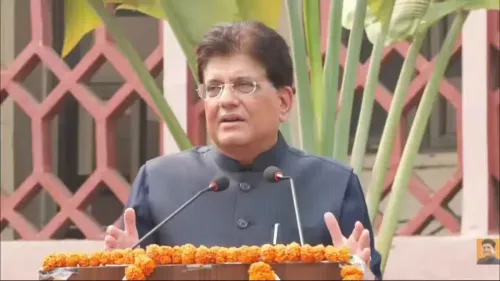
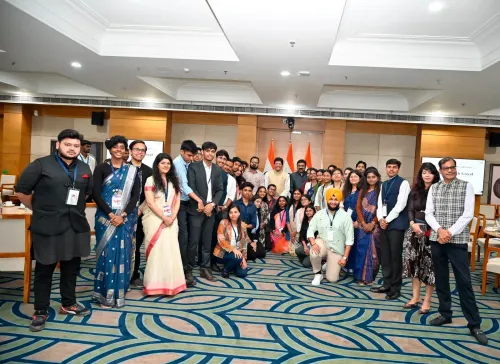
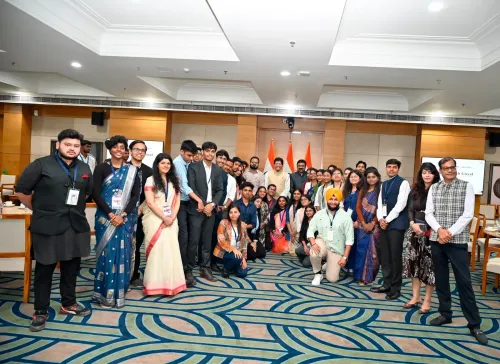
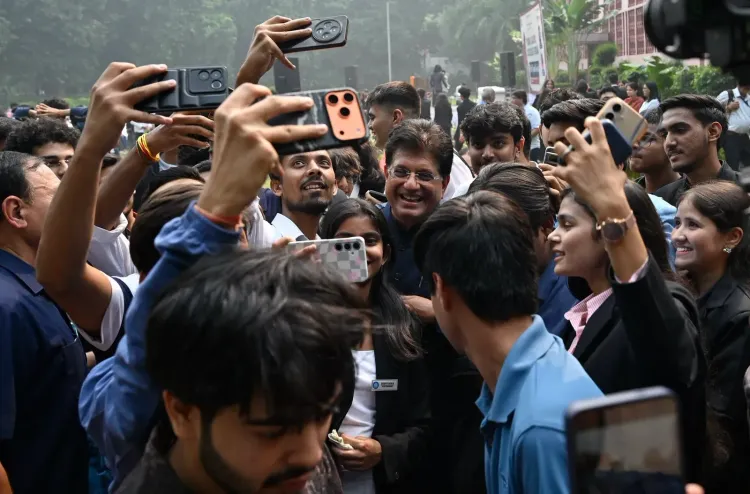
Union Commerce Minister Piyush Goyal visited Kirori Mal College, Delhi University, on November 3 to address the Young Leaders Discourse Forum, engaging students on India's economic growth journey and the opportunities it offers young contributors.
Key Takeaways
Union Commerce Minister Piyush Goyal participated in the Young Leaders Discourse Forum at Kirori Mal College, Delhi University on November 3, 2026 .
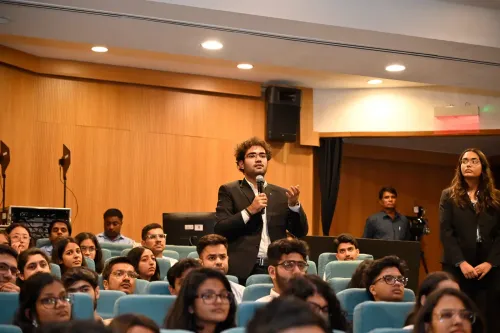
Students posed questions on India's growth journey and how they could contribute meaningfully to the country's economic development.
Goyal described the session as 'wonderful' and noted the high quality of student questions.
Kirori Mal College , established in 1954 , is a constituent college of Delhi University , one of India's largest central universities.
A live video of the session was streamed on YouTube, broadening reach beyond the campus audience.
The visit aligns with the National Education Policy 2020 's emphasis on industry-academia linkages and student exposure to national development goals.
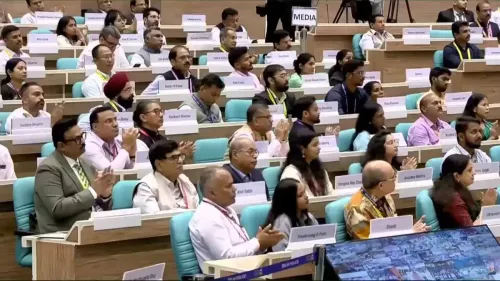
India's growth story found a live classroom on Tuesday when Union Commerce and Industry Minister Piyush Goyal walked into Kirori Mal College, Delhi University, for a candid session with young students at the Young Leaders Discourse Forum — fielding questions on the country's economic trajectory and what opportunities it holds for the next generation.
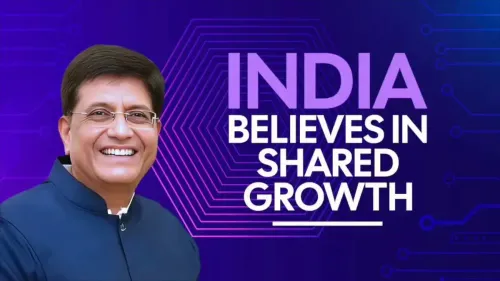
Goyal described the interaction as 'wonderful', noting that students came prepared with 'excellent questions on how India is charting its growth journey' and how they could 'contribute meaningfully' to it. A live recording of the session was shared on YouTube.
Kirori Mal's Young Leaders Forum steps up
Kirori Mal College, a constituent college of Delhi University established in 1954, has long been a hub of student-led intellectual activity. The Young Leaders Discourse Forum is a student initiative that brings policymakers, industry figures and public intellectuals directly to the campus to discuss leadership and national development — giving undergraduates rare direct access to sitting Cabinet ministers.
Tuesday's session fits a broader pattern of Cabinet ministers making periodic visits to Delhi University colleges to build awareness among students about India's growth priorities in trade, manufacturing and services, part of what the government frames as the Viksit Bharat vision for a developed India by 2047.
Commerce Ministry's youth outreach and NEP goals
The visit also echoes the spirit of the National Education Policy 2020, which called for deeper industry-academia linkages and greater student exposure to national development priorities. For a minister who oversees trade policy and economic diplomacy, a direct dialogue with college students bridges the gap between macro-level policy and the career choices of young Indians entering a rapidly transforming economy.
As India pushes to expand its share of global exports and build out domestic manufacturing capacity, interactions like these serve a dual purpose: demystifying complex trade and commerce policy for students, and signalling that the government sees youth participation as central to that ambition.
The session's questions, by the minister's own account, were substantive — a small but pointed reminder that India's classrooms are not passive audiences for its economic narrative, but increasingly engaged participants in shaping it.
Point of View
Turning to the classroom is also a soft-power move — framing India's economic ambitions as a generational project that students can personally own. The Young Leaders Discourse Forum at Kirori Mal College, one of Delhi University's most prominent colleges, provides a credible, non-partisan venue for that message. Whether such outreach translates into tangible skill-linkage programmes between the Commerce Ministry and universities remains the metric worth watching.
NationPress
3 Nov 2026
Frequently Asked Questions
Why did Piyush Goyal visit Kirori Mal College?
Piyush Goyal visited Kirori Mal College, Delhi University, to address the Young Leaders Discourse Forum, a student-led initiative that invites policymakers to discuss national development and leadership with undergraduates.
What is the Young Leaders Discourse Forum at Kirori Mal College?
The Young Leaders Discourse Forum is a student initiative at Kirori Mal College that hosts interactions between students and senior policymakers, industry leaders and public figures on issues of national importance.
What topics did Piyush Goyal discuss with Delhi University students?
Goyal discussed how India is charting its economic growth journey and what opportunities exist for young people to contribute meaningfully to the country's development.
What is Kirori Mal College known for?
Kirori Mal College is a constituent college of Delhi University established in 1954, known for its strong academic culture and active student forums on public affairs and leadership.
How does this visit relate to India's National Education Policy 2020?
The National Education Policy 2020 emphasises industry-academia linkages and student exposure to national development priorities, a spirit that direct campus interactions between Cabinet ministers and students are designed to fulfil.