How is the Indian Rupee Performing Amid RBI Interventions?
Synopsis
As the Indian rupee rises for a second consecutive session due to RBI's interventions, market analysts note significant volatility in currency movements. With implications for trade deficits and foreign investment, this article delves into the factors influencing the rupee's performance and what lies ahead.
Key Takeaways
The Indian rupee rose for the second consecutive session.
RBI interventions are crucial to currency stability.
Volatility remains a key concern for market analysts.
89.20 is a critical level for the rupee's future performance.
Foreign portfolio investments are shifting towards Indian equities.
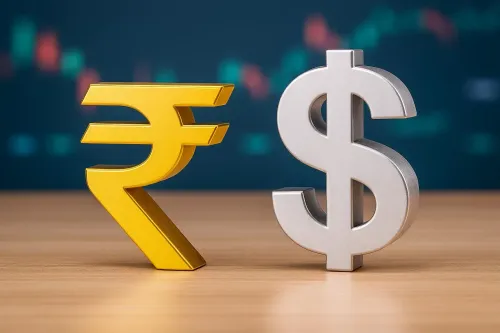
New Delhi, Dec 22 (NationPress) The Indian rupee has appreciated for the second straight session on Monday, recovering from recent lows thanks to ongoing interventions by the Reserve Bank of India (RBI).
The currency began the day at 89.41 against the US dollar, climbing 24 paise after having closed at 89.65 on December 19.
Market analysts pointed out that volatility remains a key concern as the rupee makes a comeback, and the continuation of RBI actions alongside global dollar movements is vital in the near term.
Watchers of the currency market have identified 89.20 as a significant threshold, suggesting that a sustained dip below this level might lead to a decline toward the 88.50–88.30 range shortly.
The rupee’s recent increase could be bolstered by a narrower trade deficit in November and foreign portfolio investors shifting to buyers of Indian equities while selling dollars.
On Friday, the rupee had gained 0.67 percent in a single day, briefly surpassing the psychologically important 90-mark against the US dollar before retreating but still ranking as the top-performing currency among its Asian counterparts.
Persistent selling by foreign institutional investors (FIIs) weighed on the Indian rupee throughout November, while domestic investments provided support to equity markets, causing bond yields to rise.
India’s external balance showed improvement as the merchandise trade deficit shrank to $24.5 billion in November from a hefty $42 billion in October.
The surplus in services continued to provide a cushion for India’s external balance, as highlighted in the report.
In December, foreign portfolio investors were net sellers in nine out of eleven trading days. A report from Bank of Baroda indicated that the rupee may continue to experience volatility until a deal with the US is finalized, potentially by March 2026.
The Bank of Baroda report emphasized the significance of FIIs, spot interventions by the RBI, and movements in the forwards segment in explaining fluctuations in currency.
Daily current account flows, including IT receipts and remittance payments, as well as capital flows like foreign direct investment and external commercial borrowings, also influence the market, although these are not captured daily, limiting their direct impact on rupee fluctuations, the bank noted.
Point of View
It's essential to recognize the Indian rupee's fluctuating performance amid global economic pressures and RBI interventions. While the rupee's rise signals temporary relief, the ongoing volatility indicates a need for cautious optimism. Our analysis will remain focused on how these dynamics affect the broader economic landscape and investor sentiment.
NationPress
11 Sept 2026
Frequently Asked Questions
Why is the Indian rupee rising?
The Indian rupee is rising due to ongoing interventions by the Reserve Bank of India, as well as a narrowing trade deficit and increased foreign portfolio investments.
What does the recent performance of the rupee indicate?
The recent performance indicates volatility in currency markets and highlights the importance of continued RBI actions and global dollar movements.
How does the trade deficit impact the rupee?
A reduced trade deficit can strengthen the rupee by improving India's external balance and attracting foreign investments.